
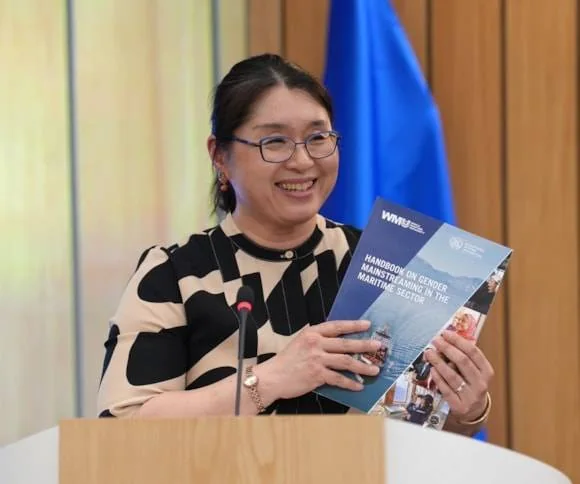
The global maritime industry has taken a significant step towards addressing persistent gender inequality with the release of a new Handbook on Gender Mainstreaming. The handbook, authored by Professor Momoko Kitada, aims to close the gender gap in the sector, where women make up only 1% of the world's seafaring workforce and hold 19% of ministerial roles responsible for maritime affairs. This initiative is a crucial move towards creating a more inclusive and equitable industry.
The handbook provides practical guidance for maritime administrations, shipping companies, ports, shipyards, and maritime education institutions on how to integrate gender considerations into policies, recruitment, training, workplace safety, and leadership development. It includes tools tailored to maritime organizations for gender analysis, the development of gender equality action plans, and monitoring and evaluation.
The publication is the first of its kind, marking a significant milestone in the industry's journey towards gender mainstreaming. The handbook's launch coincides with the International Day for Women in Maritime on May 18, highlighting the importance of promoting women's empowerment and equality in the sector.
Professor Kitada emphasized that gender mainstreaming is an effective strategy, process, and methodology that works for everyone's benefit. She stressed that leadership is crucial in implementing this approach, regardless of one's role or level within an organization.
The IMO Secretary-General Arsenio Dominguez highlighted the need for measurable action, stating that a more diverse maritime workforce is more competent and better equipped to tackle the industry's challenges. This sentiment underscores the importance of addressing gender inequality in the sector.
Gender mainstreaming transforms organizational culture by establishing systemic change through a lens of gender equality as a core value. This approach enables maritime organizations to move beyond simply increasing the number of women and fundamentally changing the systems, policies, and informal norms that perpetuate inequality.
The handbook's message is clear: gender mainstreaming is not just about adding a 'women's component' to existing activities but rather transforming the systemic structures and practices that sustain gender inequality. This approach aims to ensure that all policies and actions benefit everyone equitably.
By adopting this approach, maritime organizations can create a safer, more respectful environment for everyone, including men, who may also be constrained by rigid gender roles. This, in turn, will lead to increased productivity, better decision-making, and improved overall performance.
As the industry continues to evolve, it is essential that we prioritize inclusivity, diversity, and equality. The release of this handbook marks an important step towards achieving these goals and creating a more equitable maritime sector for all.
Gender mainstreaming requires leadership to implement, benefiting everyone's benefit.