
The automotive industry is witnessing a significant shift towards electric vehicles (EVs), and this trend is being driven by several key players. The latest development in this context is Ford's reported decision to sell its factory space in Spain to the Chinese automotive giant Geely. This move marks an important milestone in the growing partnership between the two companies, which aims to capitalize on the increasing demand for EVs globally.
Geely's acquisition of the factory space at Ford's Valencia plant will enable the company to establish its first European manufacturing facility. The Body 3 assembly hall, where the factory is located, has a production capacity of 300,000 vehicles per year, which Geely plans to utilize primarily for building electric cars.
The factory space in question was previously used by Ford to manufacture various models, including the Mondeo, Galaxy, and S-Max. However, with the current focus on EVs, the annual production capacity of the factory is not being fully utilized. The sale of this facility to Geely will provide the company with a strategic location for expanding its European presence.
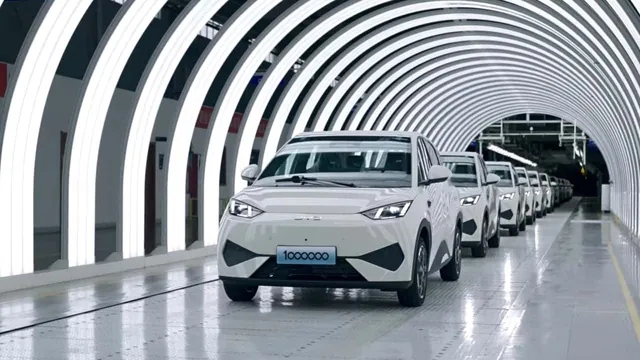
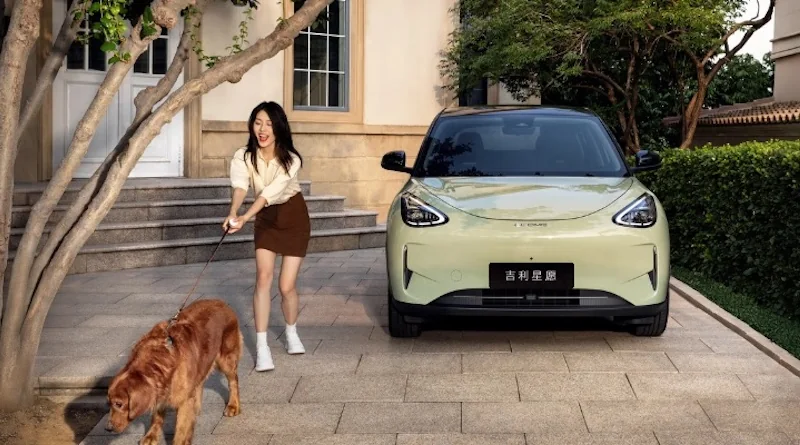
The first model that Geely plans to produce at the Valencia factory is the Galaxy EX2 compact electric crossover, which was the best-selling car in China last year. This move indicates Geely's commitment to establishing itself as a significant player in the EV market globally.
Furthermore, Geely aims to build other BEVs and plugin hybrids at the factory based on the GEA platform. The company's plans also include the possibility of producing Ford-badged vehicles using this platform, which would further underscore the growing partnership between the two companies.
The sale of the factory space to Geely is seen as a strategic move by both parties. For Geely, it provides access to a new manufacturing facility in Europe, while for Ford, it offers a much-needed cash boost. The deal also highlights Ford's willingness to partner with other companies to develop and build EVs.
The partnership between Ford and Geely marks an important step towards the growth of the global EV market. As more automakers invest in EV manufacturing, the demand for electric cars is likely to increase, driving innovation and competition in the industry.
Geely's expansion into European EV manufacturing will also have implications for suppliers in the region. Suppliers are already being contacted by Geely as part of the company's plans to establish its presence at the Valencia factory.
The deal between Ford and Geely serves as a reminder that the automotive industry is undergoing significant changes, driven by shifting consumer preferences and government regulations. As companies adapt to these changes, partnerships like this one will play an increasingly important role in shaping the future of EV manufacturing.
This deal highlights the growing trend of Chinese automakers expanding their European presence for EV manufacturing.