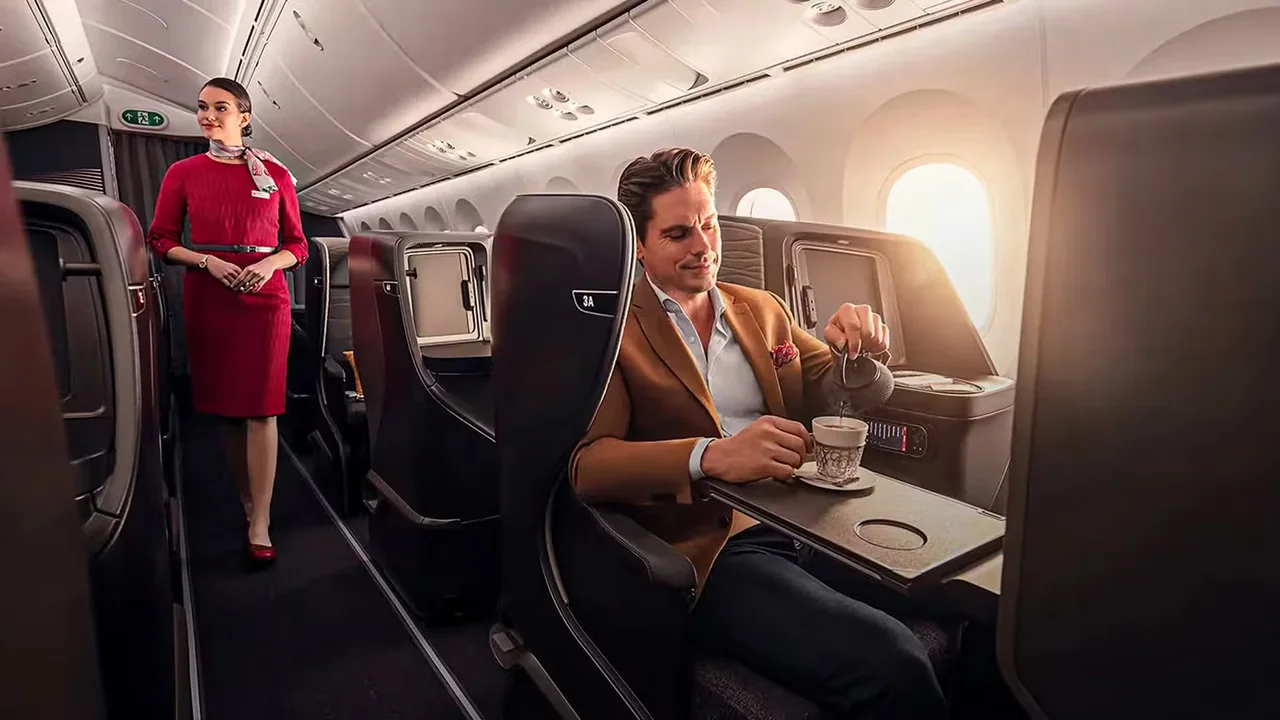
Business class is experiencing a significant boom, driven by growing demand from both corporate executives and leisure travelers. In 2024, the premium sector saw a 11.8% increase in passengers using premium classes, reaching 116.9 million. This trend is expected to continue as airlines compete to attract more customers with high-quality business class products.
The market for premium aviation has become increasingly lucrative, with carriers competing to deliver stronger business class offerings. However, this trend comes at a cost - literally. For every inch an airline adds to its business class bed length or entertainment screen, pounds are added to the aircraft. This increases costs and eats into profit margins, making it essential for airlines to balance weight gain with financial considerations.
The primary reason premium seats are getting heavier is due to passenger demand for a higher quality of service. Airlines are responding to this demand by incorporating advanced features such as hotel-level privacy, large entertainment systems, comfortable beds, and motorized components into their business class products.

According to Airbus, the average weight of an Airbus A350-900 business class seat has increased to around 220 lbs (100 kg) due to these advancements. This added weight requires a greater expenditure of fuel during flights, creating an engineering challenge as airlines strive to maintain optimal weight balance in their aircraft.
To address this issue, Airbus is filing patents for modular suite architectures that can manage mass distribution. These designs aim to optimize the weight balance of premium classes, which tend to be located at the front of the aircraft.
New business class products are emerging in the market, further driving the trend towards heavier seats. Turkish Airlines' 'Crystal' business class, set to launch in 2026, features industry-leading privacy with sliding doors, high sidewalls, and retractable dividers.

The Safran Unity platform powers this new product, which will be installed on retrofitted Boeing 777-300ER jets. As a result, executives will be able to see the additional costs incurred by the extra weight, raising questions about whether higher revenues from premium services can justify these expenses.
Ultimately, the trend towards heavier business class seats reflects the industry's focus on delivering premium experiences that cater to growing demand for luxury travel. Airlines must balance the need for quality with financial considerations and fuel efficiency to remain competitive in this rapidly evolving market.
As airlines continue to innovate and upgrade their business class products, it is clear that the pursuit of luxury will come at a cost - both financially and in terms of weight. The industry's focus on delivering premium experiences has led to a new era of competition, where carriers must weigh the benefits of quality against the drawbacks of added weight.

The trend towards heavier business class seats reflects the industry's focus on delivering premium experiences.