

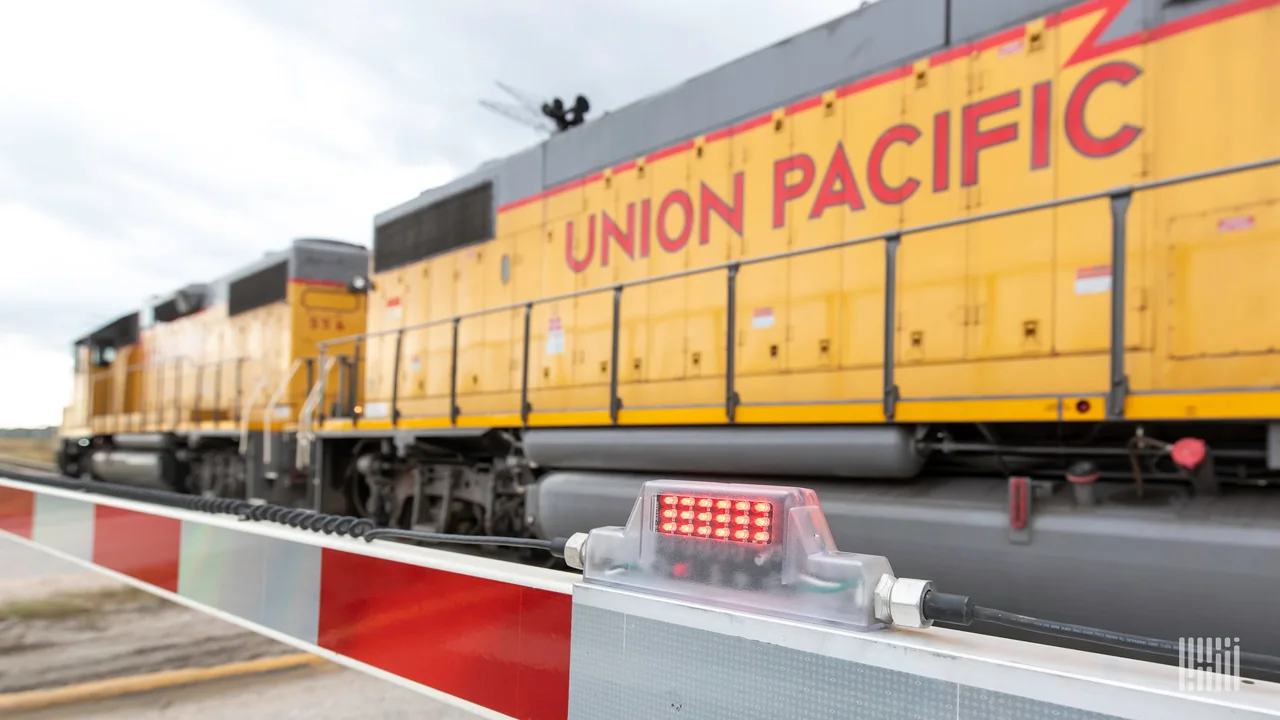
Union Pacific Railroad (UP) has responded to claims made by top law enforcement officials from six red states, denying that it failed to provide required information when filing a revised application with federal regulators for its merger with Norfolk Southern. The Covington law firm stated that the railroads met their obligations for additional information on market shares, downstream post-merger effects, planned divestments, and the use of their partial ownership of railcar pool TTX. This response comes as the Surface Transportation Board (STB) is expected to rule on the updated application this week.
The proposed merger between UP and Norfolk Southern has been met with resistance from competitors, who are concerned that a merged entity will face stronger competition from shippers in the states they serve. However, Union Pacific argues that the transaction will produce substantial pro-competitive benefits for shippers, particularly in the post-merger period.
The attorneys general's claims have been disputed by UP, which maintains that the merger will directly advance the administration's policies of reindustrialization and affordability. The company also asserts that the proposed transaction will transform the US supply chain, enhance American competitiveness, and energize virtually every sector of the economy.

s have noted that no merger application has been rejected twice in recent history, dating back to the 1990s. This suggests that Union Pacific's revised application may be well-positioned for approval by the STB.
The rail industry is closely watching the outcome of this merger, as it will have significant implications for the US transportation sector. A successful merger could lead to increased efficiency and competitiveness in the rail network, while a rejection could stifle innovation and growth.
Furthermore, the proposed merger has been touted as a key component of the administration's reindustrialization agenda. If approved, it would mark a major milestone in the government's efforts to promote economic growth and competitiveness through strategic investments in key sectors.
The STB's decision will also have significant implications for shippers and freight carriers, who stand to benefit from increased competition and improved service levels. As the agency weighs the merits of the proposed transaction, it is essential that all stakeholders remain engaged and informed about the process.
Ultimately, the outcome of this merger will depend on a range of factors, including the STB's assessment of the railroads' compliance with regulatory requirements and the potential impact on competition in the market. As the agency makes its decision, s will be watching closely to see how it plays out.
The rail industry is at a critical juncture, with significant investments and strategic partnerships being made to drive growth and competitiveness. The outcome of this merger will have far-reaching implications for the sector as a whole, and will likely shape the trajectory of US transportation policy in the years to come.
As the STB prepares to rule on the updated application, industry leaders are holding their breaths in anticipation of the decision. With so much at stake, it is essential that all stakeholders remain engaged and informed about the process, and that the agency makes a fair and informed assessment of the proposed transaction.
s weigh in on the implications of a successful merger.