
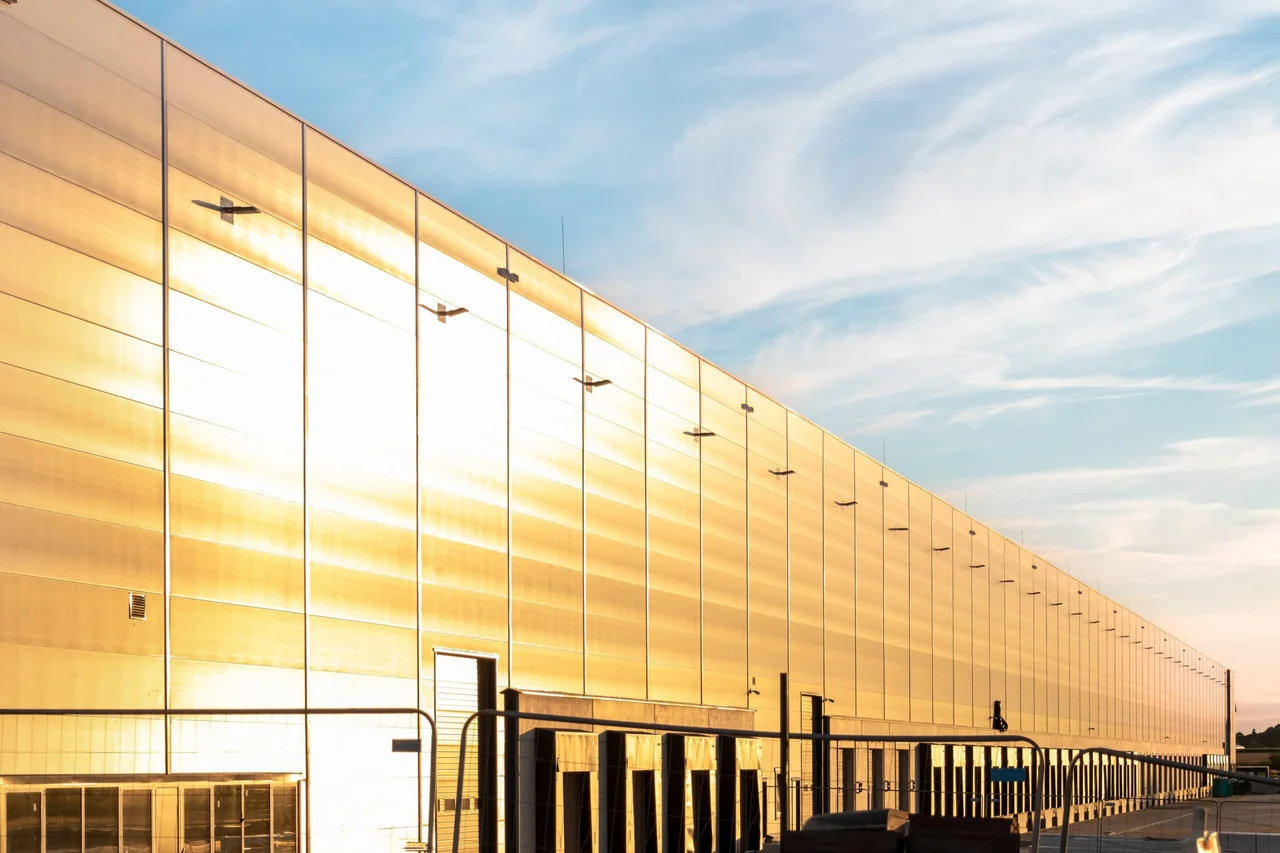
The industrial real estate market spent 2024 recalibrating after the frenzy of the COVID-era warehousing boom. Developers had responded aggressively to the pandemic-driven surge in demand, pushing new supply into markets that were already beginning to cool. The result was a period of oversupply, but that chapter now appears to be closing.
In an “Industrial Market Pulse” conversation with FreightWaves, Glenn Wylie, executive vice president and head of asset management at Link Logistics, says that the market is tightening. Link Logistics, one of the largest industrial real estate operators in the country with roughly half a billion square feet of warehouse space and approximately 5% of U.S. GDP flowing through its facilities, is seeing demand indicators that look increasingly favorable for owner-operators, particularly those positioned in infill, last-mile locations.
Wylie notes that the market correction had run its course, with leasing activity surging late last year and holding into 2024. This momentum has carried forward into this year, with December '25 being one of Link Logistics' highest leasing volumes since 2021.
Policy uncertainty, particularly around tariffs and trade, has influenced tenant decision-making in the industrial market. However, Wylie argues that this cycle feels different, with tenants continuing to push forward despite macroeconomic noise.
The willingness to commit to business decisions despite uncertainty is a meaningful signal of operational confidence. When tenants push forward, it signals that they are confident in their ability to navigate economic challenges.
Link Logistics' leadership team recently convened senior leaders from across its national footprint, and Wylie said the read from the field corroborated the data. The tone on the ground remains positive, with a sense of optimism among tenant operators.
The supply side is what makes this cycle different, though. Demand alone doesn't tighten a market. What makes the current moment notable is the convergence of improving demand with a construction pipeline that has pulled back dramatically.
Since Q3 of last year, availability at the national level has gone down for the first time since 2021. This decrease in new starts combined with reduced construction activity creates a favorable environment for owner-operators.
As the industrial real estate market tightens, it is likely to have a positive impact on the logistics sector, particularly those focused on last-mile delivery and infill locations.
The current cycle feels different due to improved demand and reduced construction pipeline.