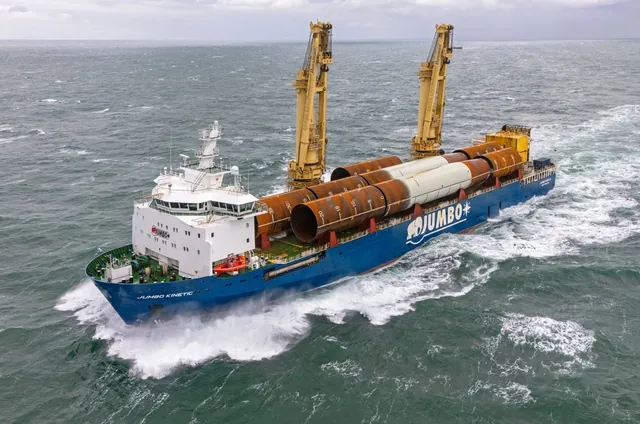
Methanol has been gaining attention in recent weeks, with several major announcements that highlight its potential as a sustainable alternative for shipping. A contract has been signed between Jumbo and Dajin Heavy Industry to construct two methanol-ready heavy lift vessels, marking a significant step forward for the technology.
The world's first dual-fuel methanol escort and rescue tug has also received full class certification from ABS, demonstrating the growing confidence in methanol as a viable fuel source. Meanwhile, X-Press Feeders' container ship Eco Levant is now operating on a methanol and ethanol mix after a pioneering bunkering operation at Rotterdam port.
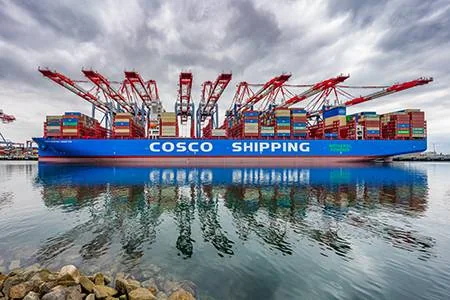
The Port of Long Beach's $1 million award for the first oceangoing vessel to refill with methanol on a commercial scale is a significant incentive for the industry to adopt clean fuels. This challenge aims to send a strong signal to the global market about the growing interest in expanding the availability of clean marine fuels.
According to Port of Long Beach CEO Dr. Noel Hacegaba, the award is intended to demonstrate the port's commitment to creating a North American market for methanol bunkering and provide an incentive for industry investment. Rising fuel costs are also strengthening the case for energy diversification and greater energy independence.
Methanol fuel offers significant environmental benefits compared to conventional marine fuel, with emissions reduced by up to 50% in nitrogen oxides, 95% in sulfur oxides, and 90% in particulate matter. Major shipping companies are investing heavily in dual-fuel methanol vessels, some of which are already visiting Long Beach.
However, the lack of availability of methanol fuel at the Port of Long Beach currently restricts the adoption of methanol-capable ships. Refueling a vessel with methanol would cost approximately $1.5 million per call, compared to around $1 million for conventional fuel. The award aims to offset this difference and provide additional funding for operational and safety procedures.
The investment in dual-fuel vessels is expected to have a significant impact on the shipping industry, reducing greenhouse gas emissions and improving air quality. As the industry continues to evolve, it will be interesting to see how the adoption of methanol fuels plays out in the coming years.
Despite the challenges and costs associated with adopting methanol fuel, the benefits are clear. The Port of Long Beach's award is a significant step forward for the industry, demonstrating its commitment to sustainable shipping practices.
As the global shipping market continues to navigate the transition to cleaner fuels, it will be crucial to monitor the progress made by ports and shipping companies in adopting methanol bunkering. The potential for methanol fuel to reduce emissions and improve air quality is significant, making it an exciting development for the industry.
The industry is on the cusp of a significant shift towards clean marine fuels.