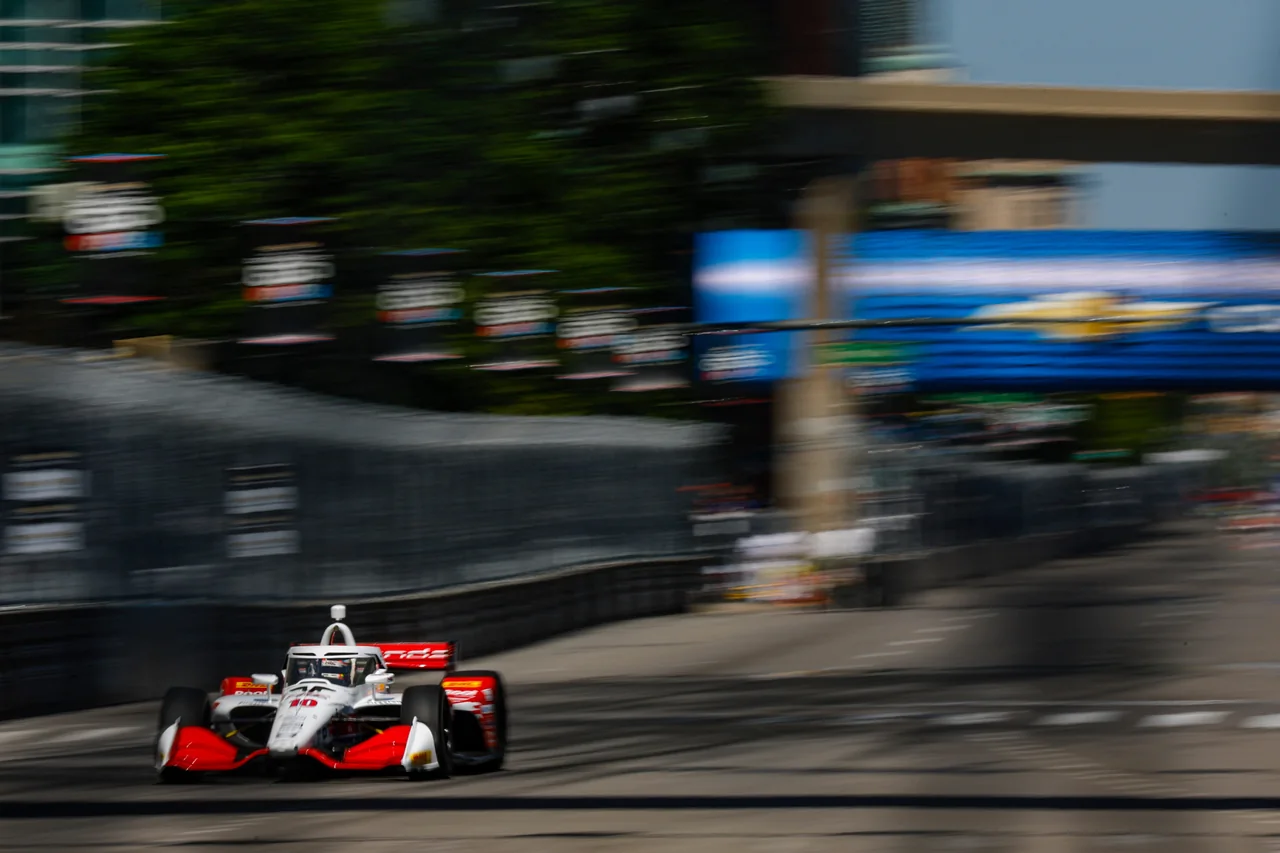
The Chevrolet Detroit Grand Prix presented by Lear will be the toughest challenge of the year for IndyCar drivers, with its narrow circuit posing significant difficulties.
The 100-lap race takes place on a nine-turn, 1.645-mile temporary circuit through the streets of downtown Detroit, which is expected to test drivers' skills and physical endurance.
Drivers have expressed concerns about the track's bumpy surface, low grip levels, and challenging layout, with many feeling that it requires a different approach than other tracks on the calendar.

The Indianapolis 500, which took place earlier this month, was mentally taxing for some drivers, while others found it physically demanding, and the Detroit course is expected to be similarly challenging.
Alex Palou, who rebounded from poor finishes at Indianapolis, was fastest in Friday's practice but acknowledged that getting a good lap on the Detroit course is difficult due to its unique characteristics.
The track's surface, which includes cement sections, can make it slippery and prone to tire degradation, making it essential for drivers to manage their tires effectively.

Power, who has won the Detroit Grand Prix three times, expects a tough race with many drivers struggling to find grip and speed on the challenging circuit.
O'Ward predicted that cars will be sliding around a lot due to cold tires and brakes, and that the track's layout does not provide much opportunity for significant speed gains.
The Detroit street course is a key test of IndyCar teams' ability to adapt to different environments and challenges, and drivers will need to be well-prepared if they are to succeed.
With the IMSA Weather Tech Series cars sharing the track with the IndyCar Series, the Detroit Grand Prix promises to be an exciting and unpredictable event that will push drivers to their limits.
The Detroit street course is a unique and demanding environment for IndyCar drivers.