
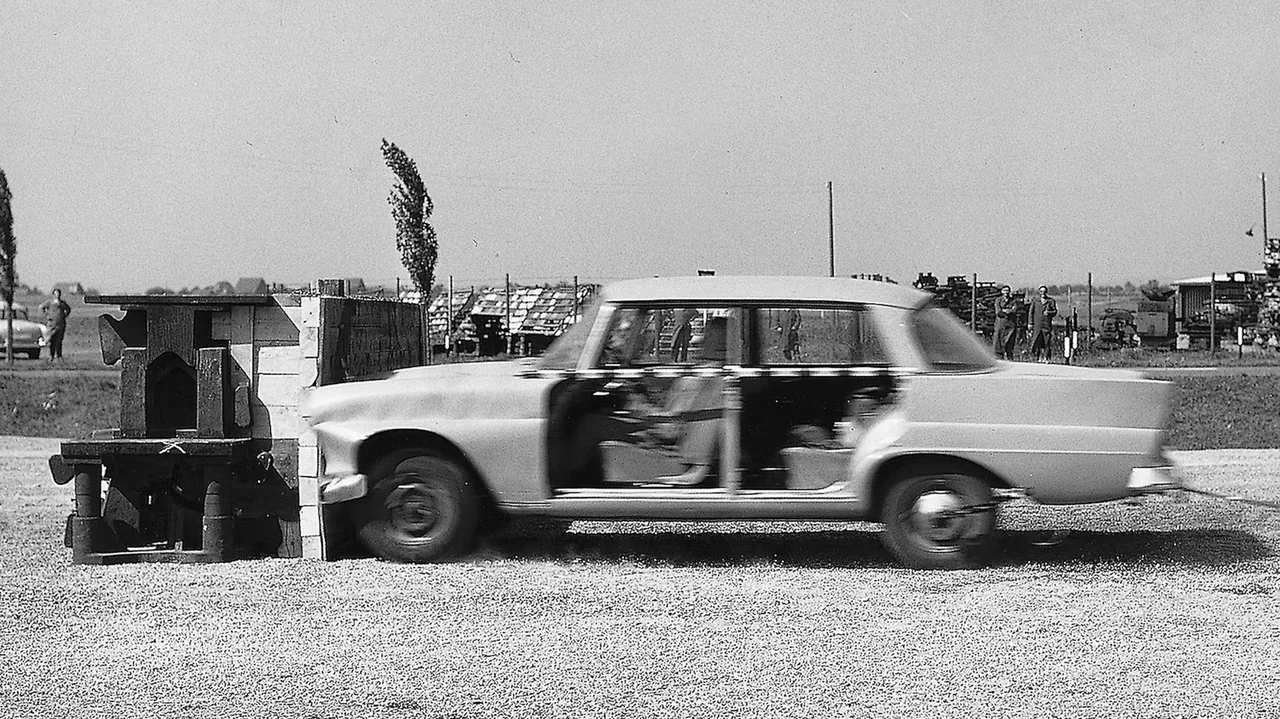
Mercedes-Benz has long been a pioneer in automotive safety, and its introduction of crumple zones in 1959 is a testament to this commitment. The technology has since become an industry standard, with every major automaker adopting the system. Despite being around for over 60 years, crumple zones remain a crucial aspect of passenger safety.
The concept of crumple zones may seem simple, but it's actually a complex and sophisticated design that requires careful engineering and testing. The idea is to create areas of the vehicle's body that can absorb impact energy, deflecting it away from the passenger cell in the direction intended by engineers.
Bèla Barènyi, the Hungarian engineer who is often referred to as the 'Father of Passive Safety', played a key role in the development of crumple zones. His research and innovations in the 1930s and 1940s laid the foundation for this critical safety feature.
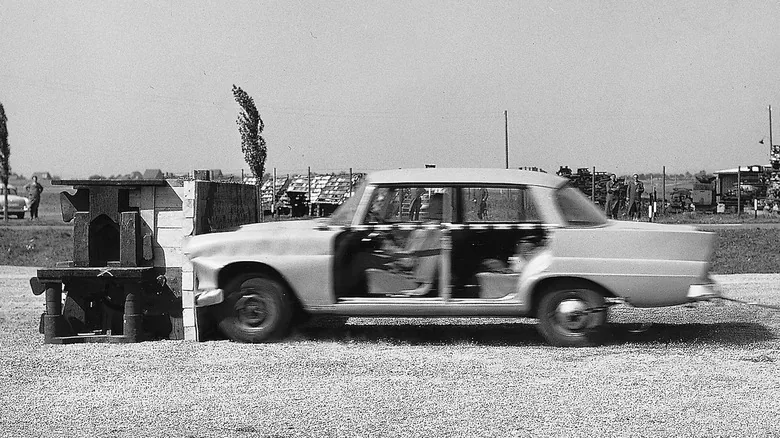
In 1959, Mercedes introduced crumple zones on its W111 and W112 chassis vehicles, setting a new benchmark for automotive safety. The system consisted of three sections: a front crumple zone, a rigid passenger cell, and a rear crumple zone. This design has since become the industry standard.
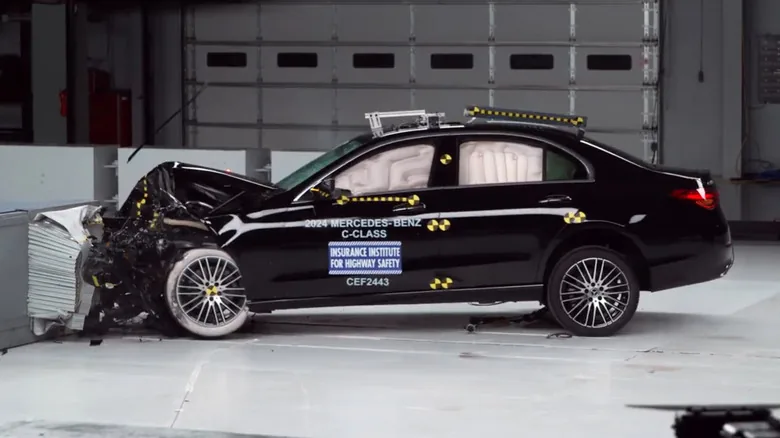
The impact of crumple zones cannot be overstated. By absorbing much of the impact energy of a crash, these zones help to protect passengers from serious injury or even death. As such, they remain an essential component of modern vehicles.
While Mercedes is often credited with introducing crumple zones, other safety innovations have also been developed by the company over the years. In 1949, for example, the conical door pin lock was introduced to keep doors closed during a crash.
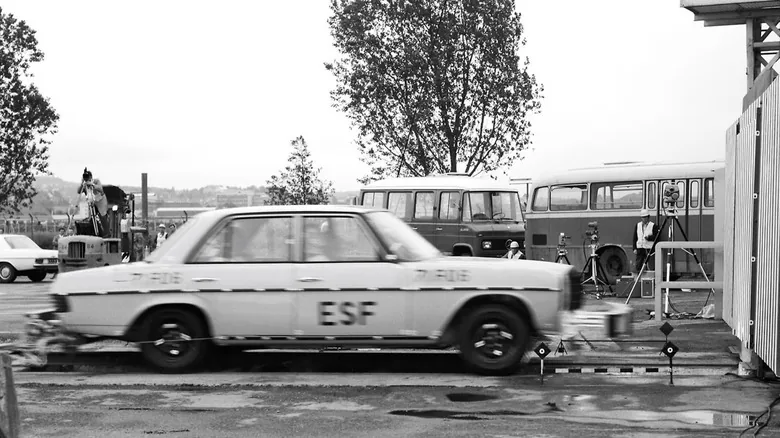
The development of crumple zones has had a lasting impact on the automotive industry. As such, it's essential that we continue to prioritize safety in our vehicles. By doing so, we can ensure that passengers are protected on the road.
In addition to crumple zones, Mercedes has also developed other safety features, including heated seatbelts and offset-frontal crash tests. These innovations have helped to improve passenger safety even further.
Today, crumple zones remain an essential component of modern vehicles. As such, it's crucial that we continue to prioritize safety in our designs and testing processes.
The legacy of Bèla Barènyi's work on automotive safety continues to be felt today. His innovations have had a lasting impact on the industry, and his influence will undoubtedly be remembered for generations to come.
The influence of Bèla Barènyi's work on automotive safety cannot be overstated.