
The European Union has proposed that the bloc's Aspides naval mission take a leading role in clearing mines in the Strait of Hormuz when conditions allow. This move comes as part of a Franco-British-led initiative to address the ongoing crisis in the region. The EU's proposal would require unanimity among its 27 member countries, but it remains unclear if this will be achieved.
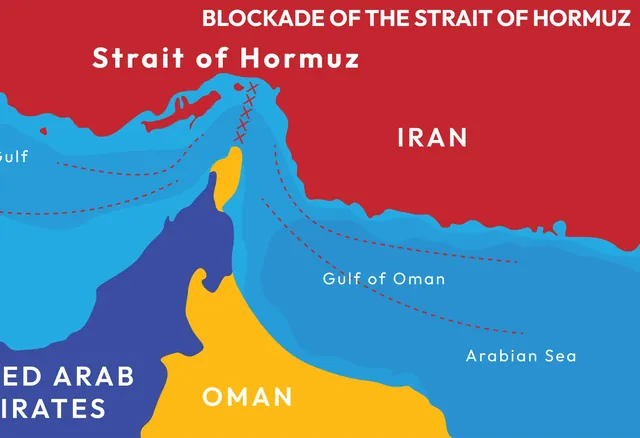
The Strait of Hormuz is a critical waterway that transports around 20% of the world's oil and liquefied natural gas supplies. Its closure has significant consequences for global energy security and regional stability. The de facto closure of the Strait has been in place since the US and Israel launched strikes on Iran, and tensions remain high with diplomacy showing little progress.
The EU's proposal to lead a naval mission to clear mines in the Strait of Hormuz is seen as a way to showcase the bloc's ownership and responsibility in addressing a situation affecting all member states. This move could also allow European countries to financially support their NATO allies who contribute to the operation.
France and Britain have taken the lead in putting together a coalition of countries that could help ensure safe transit through the Strait once the situation stabilises or the conflict is resolved. However, it remains unclear if Iran has placed mines in the waterway, which would add complexity to any potential mission.
The EU's diplomatic service argues that a European contribution to the naval mission would serve to demonstrate EU-wide ownership and responsibility in addressing a regional crisis. This could also provide an opportunity for Europe to strengthen its relationships with NATO allies and demonstrate its commitment to global security.
Reinforcing capabilities through a naval mission is seen as a way to address the immense shared consequences of the de facto closure of the Strait of Hormuz. The EU's proposal aims to alleviate pressure on regional countries and provide a more stable environment for international trade.
The proposed EU naval mission could have significant implications for regional stability and Europe's role in global energy security. A successful operation would demonstrate the bloc's ability to address complex crises and provide a sense of security for its member states.
However, the proposal also raises questions about the EU's capacity to lead such an operation. With 27 member countries, achieving unanimity on such a significant move may prove challenging.
The situation in the Strait of Hormuz remains fluid, with tensions continuing to escalate despite diplomatic efforts to halt the war. A naval mission to clear mines would require careful planning and coordination to ensure its success.
The proposed EU naval mission could have significant implications for regional stability and Europe's role in global energy security.