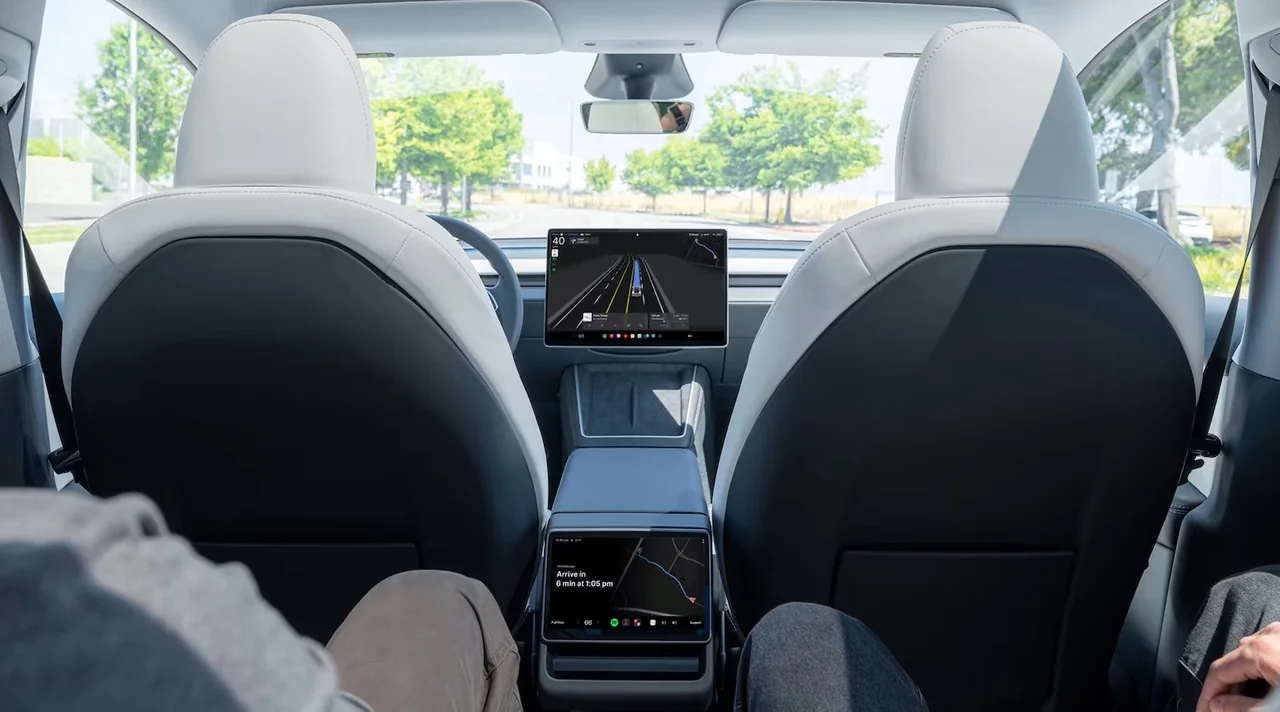
Tesla has been gradually expanding its unsupervised robotaxi service, which now covers the entire Austin metro area. The company has made significant progress in this regard, with the latest expansion bringing the service to all suburbs and highways within the city limits. This move is expected to enhance the overall user experience, making it easier for customers to access the service.
The expansion of Tesla's robotaxi service comes at a time when the company is still facing criticism from some quarters. While fans view every update as great news, critics point out that the operation remains tiny and imperfect, with remote drivers playing a crucial role in its success. Moreover, the service has been plagued by issues such as long wait times and limited fleet sizes.
Despite these challenges, Tesla has managed to increase the number of unsupervised robotaxis in Austin recently. According to data from Robotaxi Tracker, the number of unsupervised Tesla robotaxis in Austin decreased from 39 to 20 over a short period. This suggests that the company is actively working to improve its service and address customer concerns.
However, the expansion of the geofence may lead to worse service, at least initially. With only 20 cars covering the entire area, customers can expect longer wait times and reduced availability. It remains to be seen how Tesla will mitigate these issues and ensure that its robotaxi service meets the expectations of its users.
The latest expansion is Tesla's fifth in the Austin area, with previous expansions occurring in July, August, October 2025, and late October 2025. The company has more than doubled the size of the geofence since then, covering a wider range of areas including I-35 highways, Gigafactory Texas, and the Austin-Bergstrom Airport.
Tesla's robotaxi service is still far from perfect, with many critics arguing that it lacks human oversight and is prone to errors. While the company has made significant progress in this regard, there is still much work to be done to ensure that its service meets the standards of traditional taxi services.
The expansion of Tesla's unsupervised robotaxi service raises questions about its feasibility and scalability. Can the company sustainably provide a high-quality service with an increasingly large fleet size? Only time will tell.
Despite these challenges, Tesla remains committed to its vision of revolutionizing the transportation industry through autonomous vehicles. The company's robotaxi service is just one aspect of this broader strategy, which aims to reduce traffic congestion and promote sustainable mobility.
As the world becomes increasingly dependent on technology, the development of autonomous vehicle services like Tesla's robotaxi will play a crucial role in shaping our transportation landscape. With its latest expansion, Tesla takes a significant step towards realizing its vision of a futuristic transportation system.
The expansion of Tesla's unsupervised robotaxi service raises questions about its feasibility and scalability.