
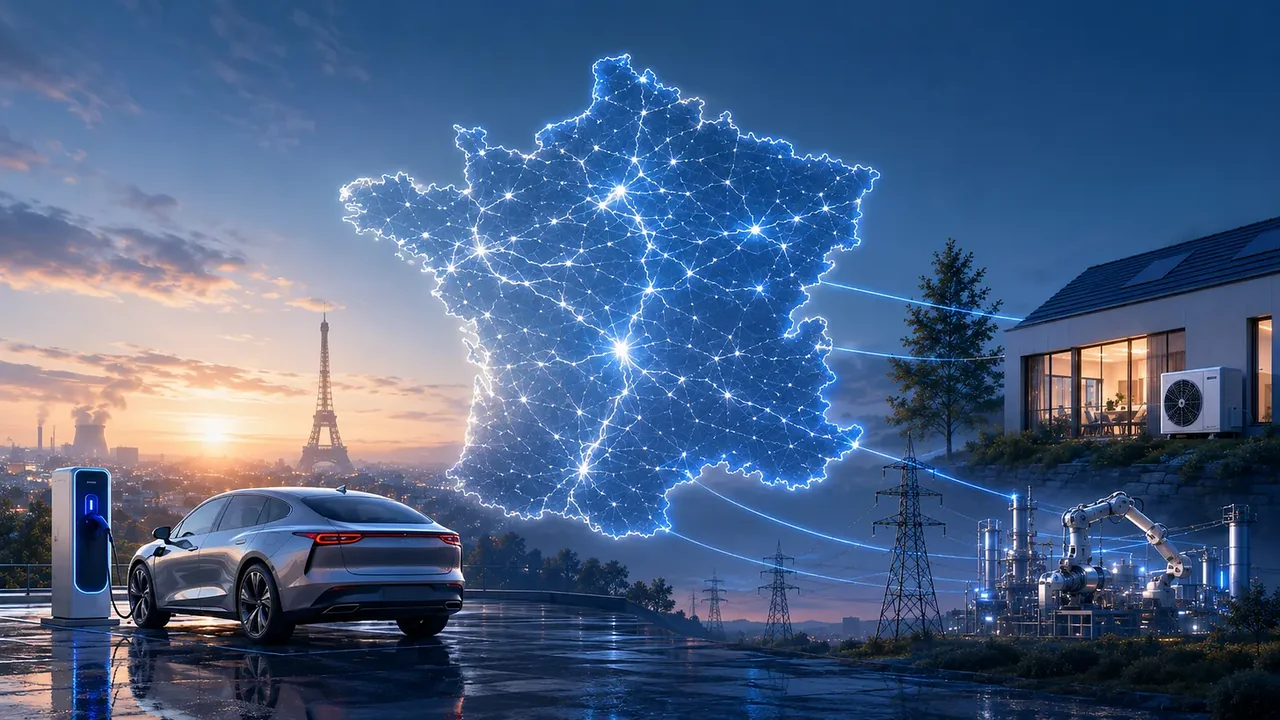
France has announced a national electrification push that is directionally correct in a way that a lot of energy policy still is not. It is treating electrification as energy security, industrial policy, household cost protection, and a way to stop other people’s fossil fuel problems from showing up in French bills. This approach recognizes the benefits of replacing imported oil and gas with domestically produced low-carbon electricity. By doing so, France can achieve several key goals simultaneously, including lower emissions, reduced exposure to fossil fuel price shocks, increased control over its energy system, and more industrial options.
The plan is not small, with President Emmanuel Macron signing a national electrification pact involving thousands of companies. The stated aim is to lift domestically produced electricity to 60% of France’s energy mix by 2030. This ambitious goal will require significant investment, with public support for electrification expected to double to €10 billion per year through 2030.
Some individual measures in the plan are exactly where they should be. France plans to push heat pumps hard, with a target of one million heat pumps per year by 2030. This is a crucial step towards reducing greenhouse gas emissions from heating and increasing energy efficiency. Additionally, the plan includes measures to support charging infrastructure, domestic EV production, grid expansion, and industrial electrification.
The French approach also corrects a persistent energy debate error. Too much discussion of energy security often starts with which molecule to import, store, subsidize, blend, burn or rename. However, a cleaner answer is simpler: use electricity directly where it can do the job, and reserve low-carbon molecules for the smaller set of uses where direct electrification is genuinely impractical.
By focusing on direct electrification, France is taking a more efficient approach to reducing emissions and improving energy security. This approach recognizes that heat pumps are an effective way to reduce greenhouse gas emissions from heating and can be used in a wide range of applications.
Furthermore, the plan creates or maintains over 600,000 jobs, which will have a positive impact on the French economy. The industrial story behind the plan is also noteworthy, as it highlights the importance of electrification in driving economic growth and competitiveness.
Overall, France's national electrification push is an important step towards reducing greenhouse gas emissions and improving energy security. By treating electrification as a key part of its energy policy, France is taking a proactive approach to addressing climate change and ensuring a sustainable future.
The plan also includes measures to support lower-income drivers, targeting electric vans and trucks, which will help to reduce emissions from transportation. This is a crucial step towards reducing greenhouse gas emissions from the transport sector.
As the world continues to transition towards a low-carbon economy, countries like France are taking a leading role in driving this change. By setting ambitious targets for domestic electricity production and investing in electrification measures, France is helping to create a more sustainable future for all.
By focusing on direct electrification, France is taking a more efficient approach to reducing emissions and improving energy security.