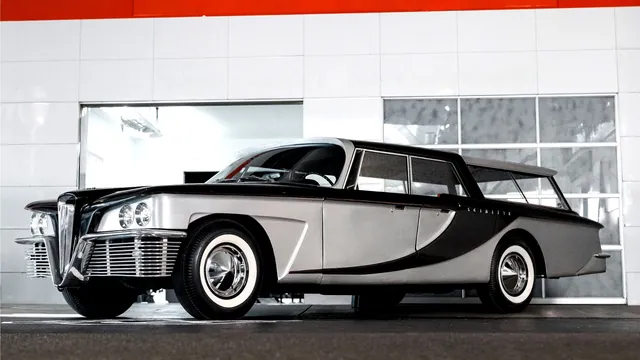


The concept of aerodynamics in car design dates back to the early days of motoring, with notable examples including the Tatra teardrop-shaped vehicle and the Chrysler Airflow from the 1930s. However, it wasn't until the 1970s that aerodynamics began to take hold in the industry.
The soaring costs of motoring during the '70s, combined with the oil crisis and increasing fuel efficiency concerns, drove designers to focus on aerodynamics. As a result, innovations such as ground effect aerodynamics transformed the sport of Formula One and mass-market cars.
Ground effect aerodynamics use the bottom of the car as an aero tool, helping it physically stick to the track. The Lotus 78 and 79 were pioneers of this technology in F1, achieving numerous victories on the track with their low-pressure zone created underneath the car.

The Brabham BT64B was another innovation that used an engine-driven fan beneath the car to achieve ground effect aerodynamics. Although banned from competing, its feature is still seen on modern cars like the GMA T.50 hypercar.
As F1 teams began to adopt new technologies, mass-market automakers focused on smart aero designs to improve fuel efficiency. By reducing drag coefficients, these designs enabled cars to cut through the air more easily, requiring less grunt to power them along at speed.
The 1980s saw the widespread adoption of aerodynamic designs in the auto industry, with companies like Chrysler and Ford incorporating features such as smooth body panels, flush-mounted windows, and streamlined Kammback designs into their vehicles.

These innovations led to significant improvements in fuel efficiency and performance, making them a key factor in the development of more environmentally friendly vehicles. Today, aerodynamics remains an essential aspect of car design, with manufacturers continuing to push the boundaries of what is possible.
The impact of aerodynamics on car design has been profound, transforming the industry forever. As the automotive world continues to evolve, it will be interesting to see how designers and engineers continue to innovate and improve upon these early advancements.
In conclusion, the adoption of aerodynamics in car design has had a lasting impact on the industry, driving improvements in fuel efficiency, performance, and environmental sustainability.

The adoption of aerodynamics in car design has led to significant improvements in fuel efficiency and performance.