
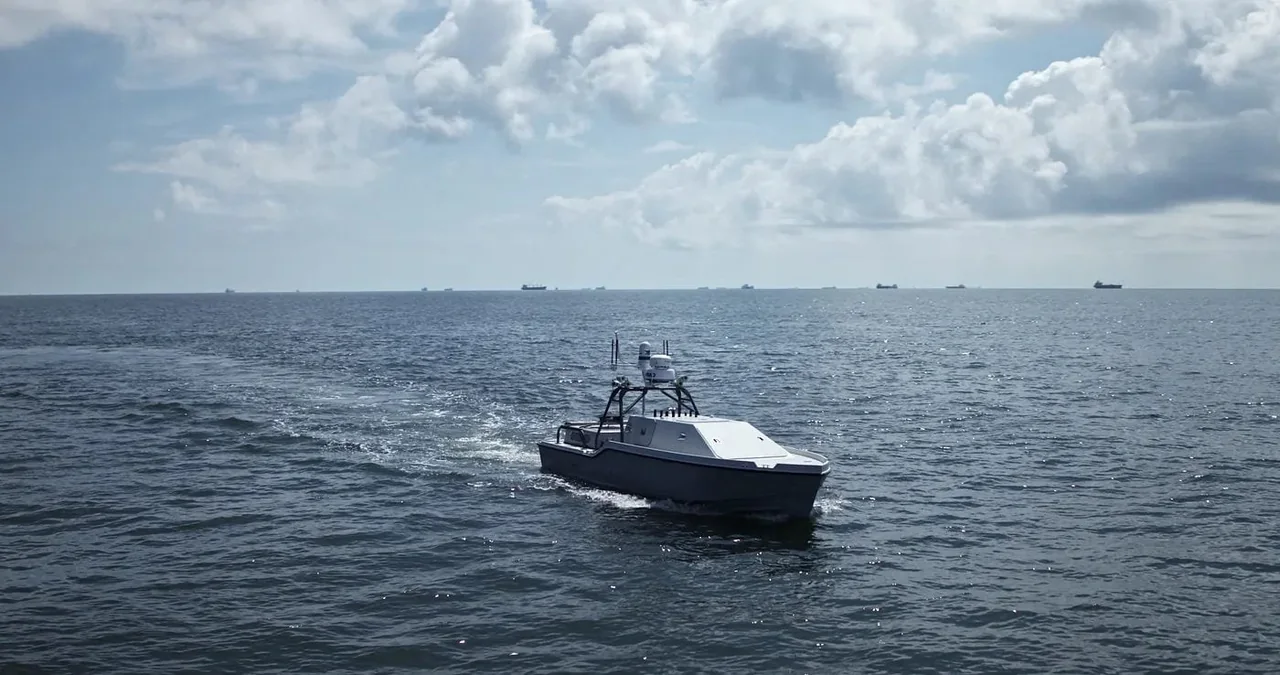
A U.S. Navy-operated autonomous surface vessel built by Saronic successfully rescued two U.S. Army aviators after their AH-64 Apache helicopter crashed off the coast of Oman, marking what appears to be the first publicly reported personnel recovery conducted by an unmanned surface vessel. The incident highlights the growing importance of autonomous technology in maritime operations.
The rescue was carried out by U.S. Naval Forces Central Command and U.S. 5th Fleet’s Task Force 59, the Navy’s dedicated unit for integrating unmanned systems and artificial intelligence into maritime operations. This milestone demonstrates the effectiveness of Saronic's Corsair autonomous surface vessel in complex recovery scenarios, where human intervention is not feasible.
The cause of the incident remains under investigation, but President Donald Trump later posted on social media that the Apache had been shot down by Iranian forces while operating over the Strait of Hormuz. This claim has sparked controversy and raised questions about the role of autonomous technology in military operations.
Saronic's Corsair is a 24-foot diesel-powered platform designed for maritime security, surveillance, force protection, and logistics missions. The vessel combines advanced radar, cameras, satellite communications, onboard computing, and autonomous navigation software to operate independently while maintaining awareness of surrounding traffic and hazards.
The successful operation comes just six months after the U.S. Navy awarded Saronic a $392 million production contract for its Corsair autonomous surface vessels, marking one of the fastest transitions from prototype to production in recent Navy history. This milestone underscores the growing demand for autonomous technology in maritime operations.
Saronic's Corsair is capable of carrying payloads of up to 1,000 pounds and operating over distances exceeding 1,000 nautical miles without a crew onboard. The vessel's autonomy allows it to operate under remote supervision or autonomously for extended periods, making it an attractive solution for military and civilian applications.
The U.S. military has acknowledged that a Saronic Corsair autonomous surface vessel was used in the recent rescue operation following the downing of a U.S. Army helicopter. The use of autonomous technology in this scenario demonstrates the potential for unmanned systems to augment human capabilities in high-stress environments.
As the US military continues to explore the capabilities of autonomous technology, this incident highlights the need for clear regulations and standards governing its use in maritime operations. The success of Saronic's Corsair in this operation underscores the importance of investing in research and development to further enhance the capabilities of these systems.
The historic rescue mission marks a significant operational milestone for both Task Force 59 and Saronic, one of the fastest-growing companies in the maritime autonomy sector. As the US military looks to integrate autonomous technology into its operations, it is clear that companies like Saronic will play a critical role in shaping the future of maritime security and defense.
The use of autonomous technology in maritime operations is becoming increasingly critical to the US military's ability to respond effectively to emerging threats.