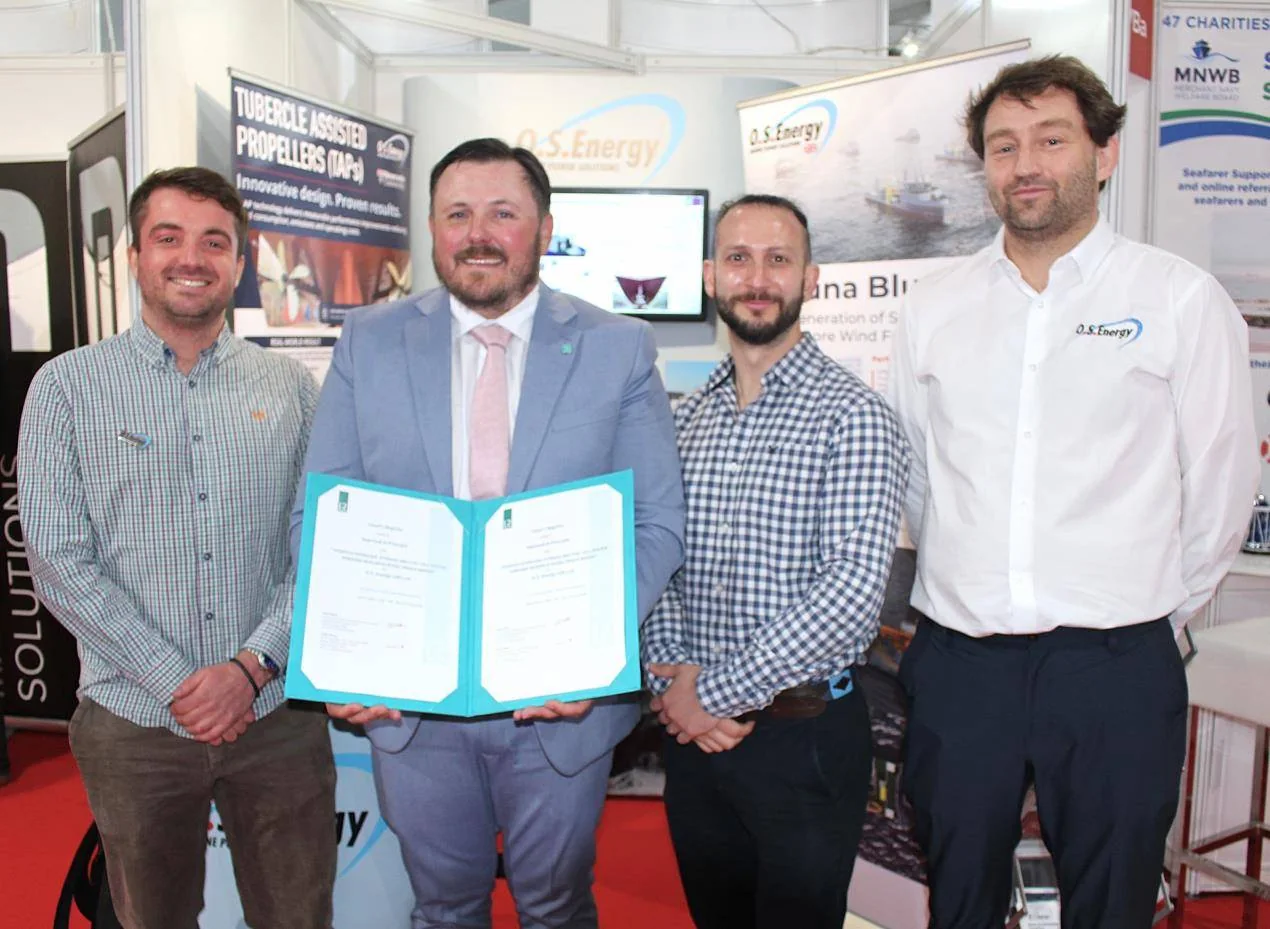
The UK-flagged research vessel Prince Madog has received certification for a hydrogen fuel cell retrofit, following approval by Lloyd’s Register (LR) under its ShipRight Risk Based Certification (RBC) framework. The certification was presented at Seaworks 2026 in Southampton. This milestone marks an important step towards decarbonizing the maritime sector.
A collaboration between O.S. Energy and Ecomar Propulsion delivered the vessel's gaseous hydrogen storage system and integrated fuel cell, battery, and ancillary systems. The project showcased the potential of hydrogen as a clean energy source for marine vessels, paving the way for further innovation in sustainable shipping.
Lloyd’s Register’s ShipRight RBC framework provides an assurance route for technologies that fall outside traditional regulatory frameworks. This approach enables projects to move forward while maintaining robust safety and risk management standards.
The certification follows LR’s recent Approval in Principle (AiP) for the design, recognizing the safe integration of the hydrogen system and its alignment with class requirements. The project was supported through the UK Government's Clean Maritime Demonstration Competition (CMDC).
This achievement highlights the growing interest in hydrogen fuel cell technology for maritime applications. As the industry continues to explore cleaner fuels, certifications like this one will be crucial for ensuring safe and efficient operations.
The UK Government's Clean Maritime Demonstration Competition (CMDC) played a significant role in supporting the project. The competition aims to accelerate the adoption of low-carbon technologies in the maritime sector.
Lloyd’s Register has published a report in its Fuel for thought series, providing an assessment of hydrogen’s potential role in maritime decarbonization. This report underscores the importance of continued innovation and collaboration in the pursuit of sustainable shipping solutions.
The certification of the Prince Madog vessel marks a significant step towards decarbonizing the maritime sector. As the industry continues to evolve, certifications like this one will be essential for ensuring the safe and efficient use of hydrogen fuel cell technology.
The future of sustainable shipping looks promising with the development of technologies like hydrogen fuel cells. However, it is crucial that these innovations are implemented safely and efficiently to minimize their environmental impact.
As the world shifts towards a low-carbon economy, certifications like this one will become increasingly important for the maritime industry. By promoting innovation and collaboration, we can accelerate the adoption of sustainable shipping solutions.
As the maritime industry shifts towards cleaner fuels, certifications like this one will be crucial for ensuring safe and efficient operations.