

Amazon's announcement of its full entry into the less-than-truckload market sent shares of publicly traded carriers modestly lower on Wednesday. The group was off 5% on the day, which is a relatively small move considering the space has run over 60% year-to-date as market indicators continue to signal a recovery.
Analysts largely looked past the news, too. They believe that Amazon's LTL footprint is not enough to become a more formidable full-fledged nationwide asset-based operator.
The company's use of an intermodal container pool likely suggests that its offering will primarily compete with the economy (3-4 day) sub-segment of the LTL market.
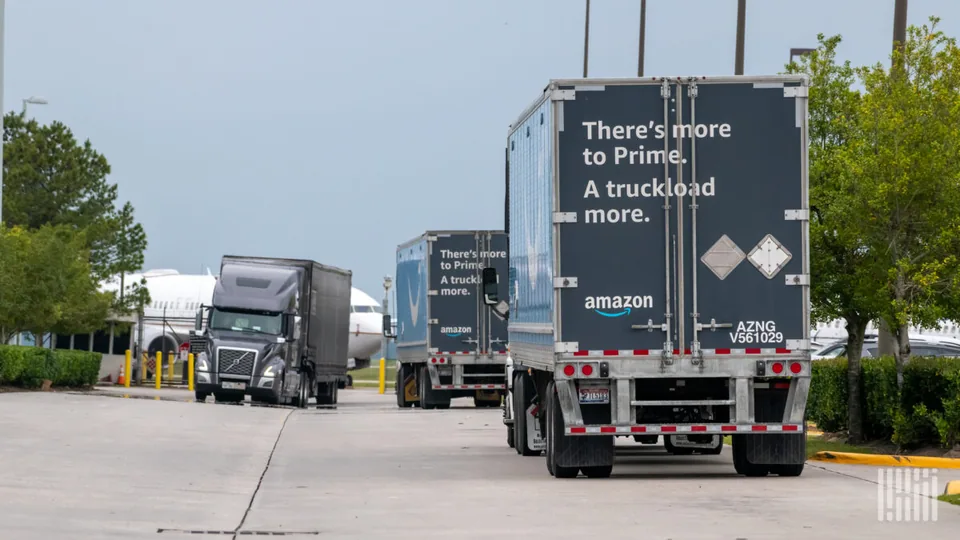
This approach could allow Amazon to take some market share 'on the margins' from legacy carriers without driving a mass exodus.
Amazon's latest LTL foray is targeting businesses of all sizes, with shipment sizes likely ranging from one to six pallets (150 to 15,000 pounds).
Customers can arrange next-day live pickup and same-day pickup through drop-trailer service. Volume shippers are eligible for recurring daily pickups.

The offering also includes EDI interfacing for ordering, real-time tracking, and invoicing. Amazon offers this service in major U.S. markets, with a decent density of coverage in the Eastern U.S.
Amazon's decision to expand its LTL services may be seen as an attempt to utilize latent capacity in its network. However, it remains to be seen whether this approach will lead to significant industry disruption.
The LTL market is relatively small compared to other segments of the logistics industry, and Amazon's asset-light model may not be the most effective way to achieve high margins and returns.
While Amazon has the financial resources to compete, its approach may be too targeted for significant impact.