
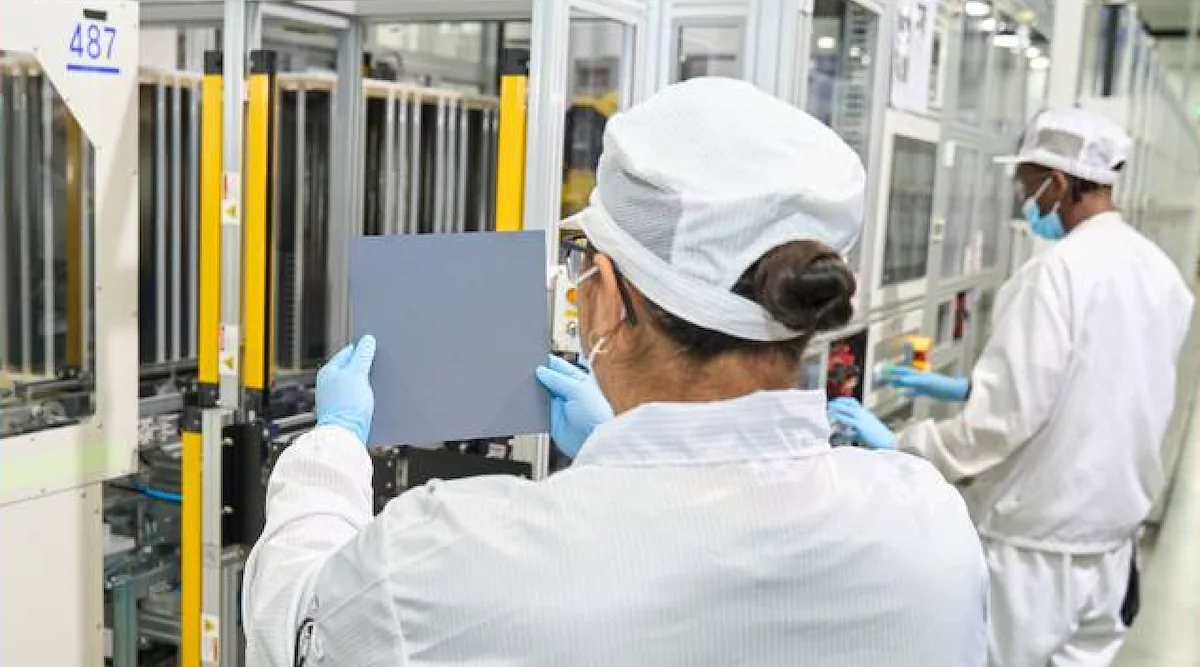
A new solar cell manufacturing operation has been established in Cartersville, Georgia, marking a significant development in the US solar industry. The facility, operated by Qcells, a Korea-headquartered company, is the first vertically integrated solar factory in America, producing solar modules with all-domestic content.
The announcement comes as part of Qcells' larger plans to invest heavily in clean energy projects in the US. In 2023, the company committed to making the largest clean energy investment ever made in the country, with Georgia as its primary focus. The Cartersville facility is a key component of this strategy, enabling Qcells to claim tax credits and support domestic content.
The growth of domestic solar manufacturing is a positive trend for the industry, but it also highlights the need for continued investment and support. As the US continues to transition towards renewable energy sources, it will be crucial to maintain a strong and competitive domestic manufacturing sector.

Qcells' decision to establish a vertically integrated facility in Cartersville reflects the company's commitment to American ingenuity and innovation. By producing solar cells from scratch, Qcells is able to control every stage of the fabrication process, ensuring high-quality products that meet the needs of the US market.
The new facility will produce 3.3 gigawatts per year, with full capacity expected in Q3. This represents a significant increase in production capacity for Qcells and its partner companies, enabling them to meet growing demand for solar energy solutions.
Qcells' expansion into Cartersville is also part of a larger trend towards increased domestic manufacturing in the US solar industry. The company's recent expansion of its Dalton factory in Georgia further solidifies its commitment to American production, with cumulative capacity expected to reach 8.6 gigawatts per year.

The Made-in-the-USA element of Qcells' Cartersville facility is a significant development for the industry, as it represents the ability of domestic industrial sectors to rebuild and compete on the global stage. This trend has been driven in part by taxpayer support and favorable tax laws that favor domestic content.
As the US solar industry continues to evolve, it will be interesting to see how Qcells' Cartersville facility impacts the competitive landscape. With its focus on high-quality products and American ingenuity, Qcells is well-positioned to capitalize on growing demand for solar energy solutions.
The growth of domestic solar manufacturing in the US is a positive trend that highlights the potential for innovation and competition in the renewable energy sector. As the industry continues to evolve, it will be crucial to maintain a strong and competitive domestic manufacturing sector.
The growth of domestic solar manufacturing is a positive trend for the industry, but it also highlights the need for continued investment and support.