![World’s first: US Air Force deploys portable nuclear power station [video]](https://api.eazyinway.com/news/68495/image?variant=thumb&url=https%3A%2F%2Felectrek.co%2Fwp-content%2Fuploads%2Fsites%2F3%2F2026%2F02%2Fnuke_MAIN.png%3Fw%3D1600)
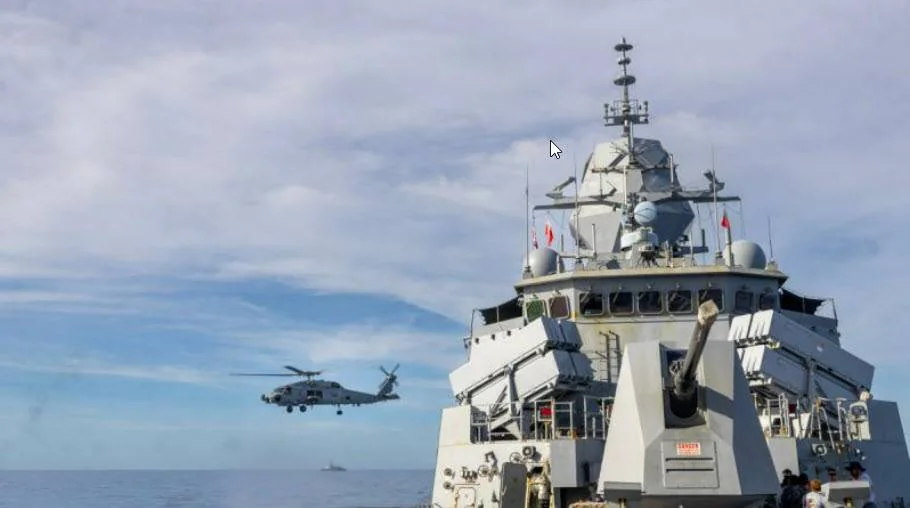
Australia has taken part in several high-profile naval exercises in the Indo-Pacific region, including the annual Exercise Talisman Saber, which brings together forces from Australia, the United States, Japan, and other countries. The recent transit of an Australian warship through the Taiwan Strait is another example of this growing cooperation between US allies in the face of rising tensions with China. This move is seen as a demonstration of Australia's commitment to regional security and its ability to operate independently in the Asia-Pacific region.
The Taiwan Strait, which connects the East China Sea to the South China Sea, has become a contentious issue in recent years due to China's increasing assertiveness over the island of Taiwan. Beijing views Taiwan as a renegade province that must be reunited with the mainland, while Taiwan's government sees itself as a sovereign state. The strait's strategic importance makes it a key location for military exercises and naval operations, which often draw criticism from China.
The recent transit of an Australian warship through the Taiwan Strait was part of a larger 'Regional Presence Deployment' in the Indo-Pacific region. This deployment is aimed at enhancing regional stability and security by demonstrating the commitment of US allies to the principles of freedom of navigation and the rule of law. The fact that all interactions with foreign ships and aircraft were described as safe and professional highlights the professionalism of Australian naval personnel.
China's state-backed Global Times newspaper reported on Saturday that Chinese military forces had tracked, monitored, and alerted operations throughout the transit. This move is seen as a response to the growing presence of US allies in the region, which China views as a threat to its national security interests. The Chinese government has repeatedly warned against what it sees as 'aggressive' behavior by foreign navies operating in the strait.
Taiwan's defence ministry stated that it closely monitors the skies and waters around the island and considers the Taiwan Strait an international waterway for which all countries enjoy the right of freedom of navigation. This stance is consistent with international law, which emphasizes the importance of unimpeded access to vital sea lanes. However, China has consistently challenged this principle by restricting the movements of foreign ships in the strait.
The recent transit of a US warship through the Taiwan Strait is not an isolated incident. U.S. naval vessels traverse the strait every few months, which has led to tensions with Beijing. Some US allies, including France and Canada, have also made occasional transits, further escalating the situation. The frequency and visibility of these operations are likely to continue to be a source of friction between China and its regional partners.
China's military presence around Taiwan has been increasing in recent years, with the country staging several large-scale war games near the island. These exercises have raised concerns among regional allies, who see them as a demonstration of Beijing's resolve to assert its claims over Taiwan. The situation remains highly sensitive, with both sides refusing to back down.
Taiwan's government rejects China's sovereignty claims, arguing that only the island's people can decide their future. This stance is rooted in the principles of democracy and self-determination, which are enshrined in international law. However, Beijing views Taiwan as a renegade province that must be reunited with the mainland, leading to ongoing tensions between the two sides.
The recent transit of an Australian warship through the Taiwan Strait serves as a reminder of the complex regional dynamics at play in the Asia-Pacific region. As China's military presence continues to grow, its allies are likely to remain vigilant and take steps to maintain their own security interests. The situation remains highly fluid, with both sides refusing to back down.
The recent incident highlights the need for greater transparency and communication between regional partners on issues related to freedom of navigation and the rule of law. As the Asia-Pacific region continues to evolve, it is essential that all stakeholders work together to promote stability and security in the face of rising tensions.
The recent transit of a US ally through the Taiwan Strait highlights the ongoing complexities in regional dynamics, with China's increasing assertiveness posing a challenge to freedom of navigation.