
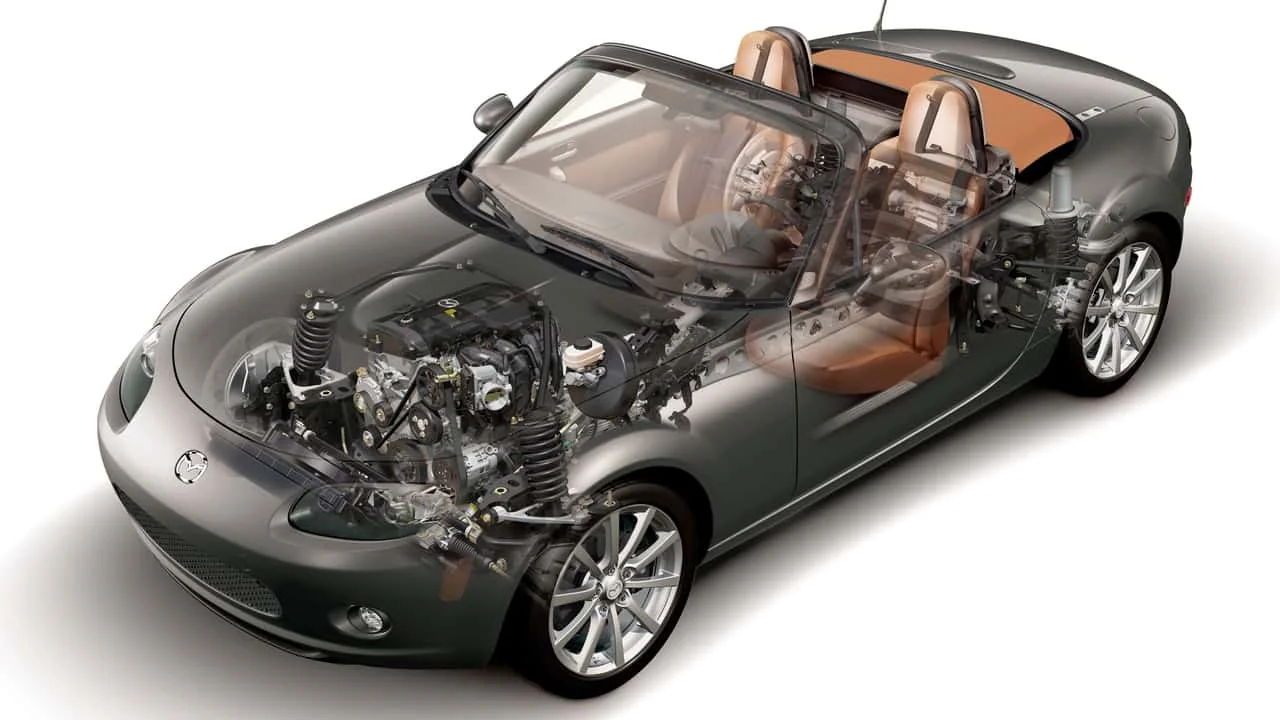
In a surprising move, Mazda engineers secretly built a V6-powered version of the iconic MX-5 Miata, only to have it scrapped in an effort to keep production costs low. This unusual decision was made after hours, when the factory was closed and the employees had gone home. The six-cylinder engine was not meant to be part of the original design, but rather a last-minute addition that would later prove to be a costly mistake.
The V6-powered Miata was built with a focus on performance, featuring a more aggressive suspension setup and upgraded brakes. However, despite its increased power output, the car's overall weight remained largely unchanged, which ultimately led to reduced fuel efficiency and higher emissions. This compromise in design may have been a result of Mazda's efforts to keep production costs low.
The decision to build the V6-powered Miata was likely made with the intention of creating a high-performance variant that could be sold separately from the standard model. However, this approach would ultimately backfire, as the added cost of the engine and other performance upgrades would make it difficult for Mazda to compete with rival manufacturers in terms of overall value.
Despite its initial success, the V6-powered Miata was eventually scrapped due to concerns over production costs and emissions. The car's high-performance capabilities were seen as a liability in this regard, making it less appealing to environmentally-conscious buyers. As a result, Mazda decided to stick with the original design and engine configuration.
The story of the secret V6-powered Miata serves as a reminder of the importance of careful planning and cost management in automotive production. In an effort to keep costs low, Mazda may have compromised on performance and emissions, which ultimately led to a costly mistake. This incident highlights the need for manufacturers to carefully weigh the pros and cons of different design options.
The use of a V6 engine in a lightweight sports car like the Miata is also noteworthy, as it would typically be associated with larger, heavier vehicles. However, Mazda's decision to experiment with this configuration demonstrates its willingness to push boundaries and challenge conventional wisdom.
In the end, the secret V6-powered Miata serves as a cautionary tale for manufacturers looking to balance performance and cost in their designs. While the pursuit of speed and agility is important, it must be balanced against concerns over emissions and production costs.
The incident also raises questions about the role of innovation in automotive design. While Mazda's decision to build a V6-powered Miata was undoubtedly innovative, it ultimately proved to be a costly mistake. As manufacturers look to the future, they will need to carefully consider the potential risks and rewards of new design approaches.