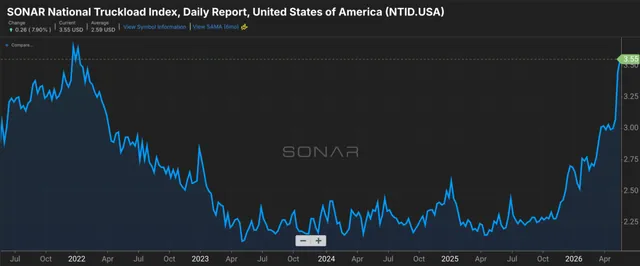

The benchmark diesel price has increased for the seventh consecutive week, with the latest increase being 9.8 cents/gallon, bringing the average weekly retail diesel price to $3.809/g. This marks the highest number since November 24, when the price was $3.831/g. The recent surge in prices is a significant departure from the stability seen in the futures market for ultra low sulfur diesel (ULSD) over the past few weeks.
The Department of Energy/Energy Information Administration average weekly retail diesel price has increased by 9.8 cents/gallon, with the latest increase being attributed to a renewed surge in ULSD prices on the CME commodity exchange. The price increase is a result of a big move in ULSD during the last week, which saw the settlement price rise from $2.3598/g to $2.5187/g on February 17.
The recent increase in ULSD prices has led to a sharp rise in retail diesel prices, with the latest increase being more than 9 cents per gallon. This is a significant increase, especially considering that the price of WTI crude oil has risen by only 5.2% since February 17. The upward move in ULSD prices has been even more pronounced, rising by 12.3% during the same period.
The surge in diesel prices is attributed to various factors, including the buildup of US military assets around Iran and sanctions on Russian exports. According to Paul Sankey, an independent oil analyst, the buildup of US military assets has been the primary driver of higher prices. The increased presence of US troops in the region has led to concerns about the potential for conflict and its impact on global oil markets.
The shutdown of Russian exports, including those from Iran, has also contributed to the rise in diesel prices. The sanctions imposed on these countries have slowed their ability to sell oil into the market, leading to a buildup of unsold barrels. This has put pressure on the market, driving up prices for diesel and other refined products.
The recent surge in diesel prices is also being driven by the fact that diesel is outpacing crude oil prices. Since February 17, the price of WTI crude oil has risen by only 5.2%, while ULSD has increased by 12.3% during the same period. This suggests that diesel prices are more sensitive to changes in global events than crude oil prices.
The market is still expected to be volatile, with many analysts predicting a collapse in prices at some point in the future. However, the recent surge in diesel prices highlights the need for caution and vigilance in the market. As Sankey noted, there is a significant buildup of unsold barrels, which could lead to a flood of oil into the market if tensions are resolved.
The recent increase in diesel prices has significant implications for trucking companies and other industries that rely on diesel fuel. With prices expected to remain high for the foreseeable future, these businesses will need to adjust their operations and budgets accordingly. The impact of this price surge will be felt across the supply chain, from producers to consumers.
The recent surge in diesel prices is a reminder of the complex and interconnected nature of global oil markets. As events unfold in key regions such as Iran and Russia, prices can quickly move in response. With the market still volatile, it is essential for businesses and individuals to stay informed and adapt to changing circumstances.
The recent surge in diesel prices is attributed to various factors, including the buildup of US military assets around Iran and sanctions on Russian exports.