
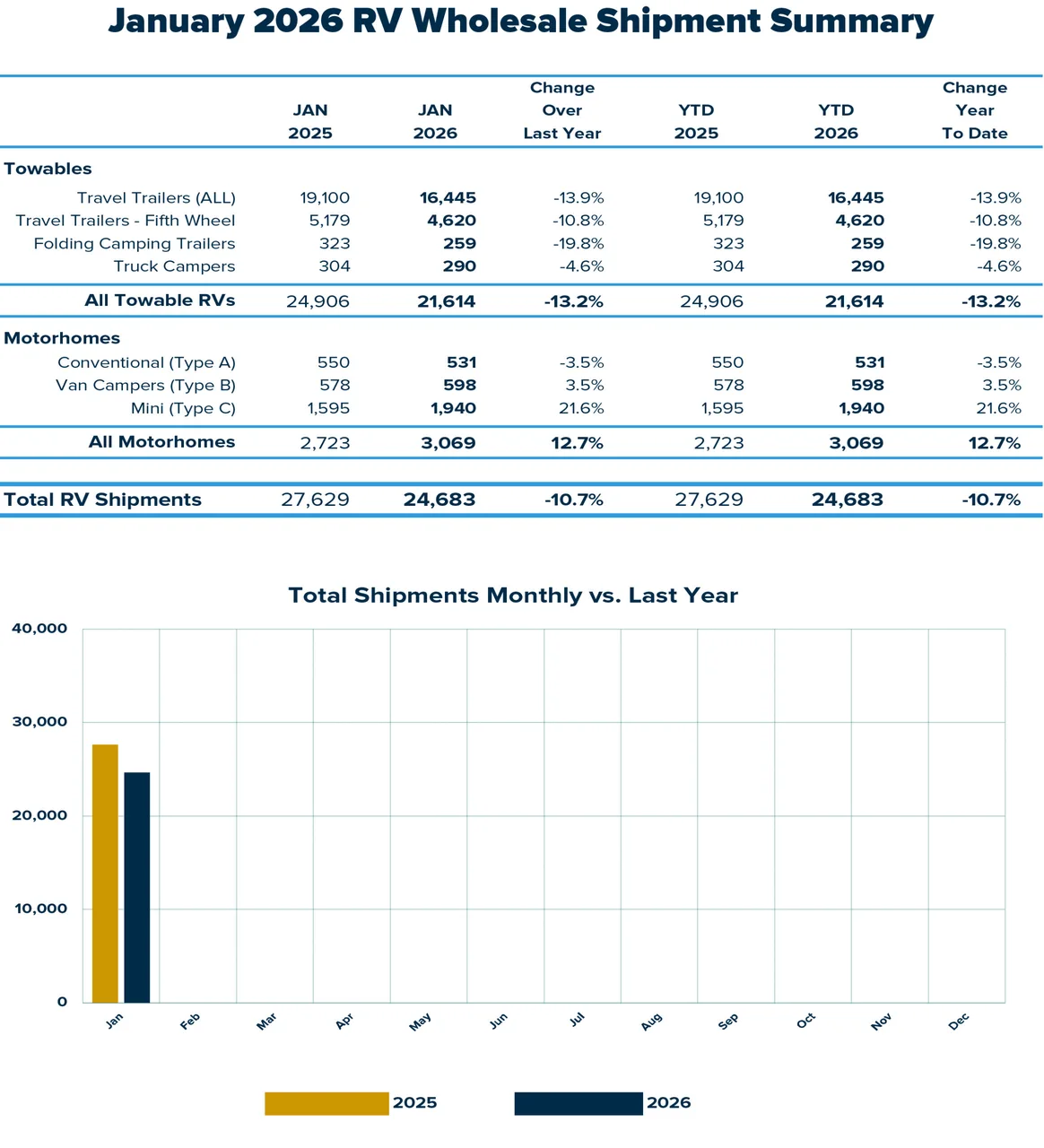
The RV Industry Association's January 2026 survey of manufacturers revealed a significant drop in total RV shipments, with 24,683 units delivered during the month. This represents a decline of 10.7% compared to the same period last year, when 27,629 units were shipped. The decrease is a stark contrast to the previous year's growth rate, which suggests that the industry may be experiencing a shift in demand patterns. As a result, manufacturers are likely to be closely monitoring consumer trends and adjusting their production strategies accordingly.
The decline in RV shipments was particularly pronounced for towable RVs, with conventional travel trailers leading the way. The segment saw a decrease of 13.2% compared to last January, resulting in 21,614 shipments. This drop is likely due to various factors, including increased competition and changing consumer preferences. As the industry continues to evolve, it will be interesting to see how manufacturers respond to these trends.
In contrast, motorhomes experienced a significant increase in shipments during the month, with 3,069 units delivered. This represents a growth rate of 12.7% compared to the same period last year. The surge in motorhome sales may be attributed to increased demand for larger, more luxurious RVs. However, it remains to be seen whether this trend will continue throughout the year.
Park model RVs also saw a notable increase in shipments during January, with 360 wholesale units delivered. This represents a growth rate of 22.9% compared to the same period last year. The surge in park model RV sales may be due to increasing demand for smaller, more affordable RV options. As the industry continues to grow, it will be essential to monitor these trends and adjust production strategies accordingly.
The decline in RV shipments is a concerning trend for the industry, with implications for manufacturers, dealerships, and consumers alike. To mitigate this trend, manufacturers may need to focus on producing more efficient, cost-effective RVs that meet changing consumer demands. Additionally, dealerships will need to adapt their sales strategies to cater to shifting market trends.
The recent decline in RV shipments highlights the importance of industry associations in providing valuable insights and data. The RV Industry Association's survey offers a comprehensive view of the industry's performance, allowing manufacturers and stakeholders to make informed decisions about production, marketing, and sales strategies.
While the decline in RV shipments may seem alarming at first glance, it is essential to consider the broader context of the industry. The RV market has experienced significant growth over the past few years, with increasing demand for recreational vehicles. However, this growth has also led to increased competition, which may be contributing to the decline in shipments.
The RV Industry Association's survey results provide a timely snapshot of the industry's performance, offering valuable insights into trends and patterns that will shape the market in the coming months. As the industry continues to evolve, manufacturers, dealerships, and consumers will need to stay attuned to these trends and adapt their strategies accordingly.
In conclusion, the decline in RV shipments is a significant trend that warrants close attention from industry stakeholders. By analyzing the data and understanding the underlying drivers of this trend, manufacturers and dealerships can make informed decisions about production, marketing, and sales strategies. As the industry continues to grow and evolve, it will be essential to stay adaptable and responsive to changing consumer demands.
The recent decline in RV shipments is a concerning trend for the industry, which may be attributed to changing consumer preferences and increased competition.