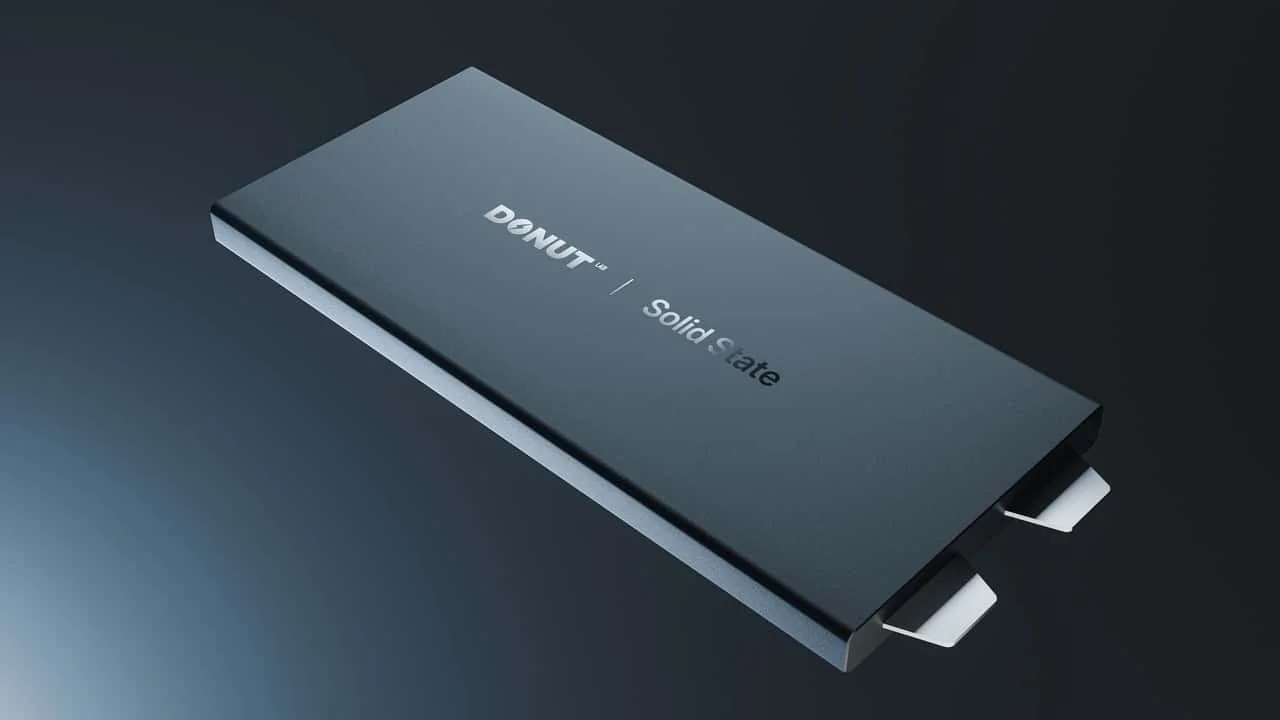
The development of solid-state batteries has been a topic of interest in recent years, with several companies vying for the top spot in this rapidly evolving field. One such company, Donut Lab, has recently made headlines with its breakthrough in fast charging capabilities. In an independent test, the individual cell charged in just five minutes, a significant improvement over traditional lithium-ion batteries.
The question on everyone's mind is whether this impressive result can be replicated at the pack level, where multiple cells are combined to form a battery pack. This is a crucial factor to consider, as it will determine the practicality and scalability of solid-state batteries in real-world applications. The results so far suggest that Donut Lab has made significant strides in this area.
However, experts still have questions about the long-term reliability and durability of these batteries. While fast charging is an exciting development, it's essential to consider whether it comes at the cost of reduced cycle life or increased risk of thermal runaway. Further testing is needed to confirm the viability of solid-state batteries in real-world scenarios.
The benefits of solid-state batteries are numerous, including improved safety, increased energy density, and faster charging times. However, these advancements come with significant technical challenges that must be addressed before they can be widely adopted. Donut Lab's breakthrough is a promising step forward, but it's essential to consider the broader implications for the industry.
The development of solid-state batteries has far-reaching implications for the automotive and energy sectors, among others. As technology continues to advance, we can expect to see more innovative solutions emerge from companies like Donut Lab. But for now, the focus remains on refining these batteries and addressing the technical challenges that lie ahead.
Industry experts are watching Donut Lab's progress with great interest, as the company's breakthrough has significant implications for the future of energy storage. While fast charging is an exciting development, it's essential to consider whether it will become a standard feature in electric vehicles and other applications. The answer may not be immediate, but one thing is certain: solid-state batteries are here to stay.
The road ahead for Donut Lab and other companies working on solid-state batteries is long and challenging. However, with continued investment and innovation, we can expect to see significant advancements in the coming years. As the technology continues to evolve, we'll be watching with great interest to see how these batteries shape the future of energy storage.
Despite the excitement surrounding Donut Lab's breakthrough, it's essential to maintain a level head and consider the broader implications for the industry. The development of solid-state batteries is a complex process that requires significant investment and expertise. As we move forward, it's crucial to prioritize research and development to ensure that these batteries meet the needs of real-world applications.
As Donut Lab continues to push the boundaries of what's possible with solid-state batteries, we can expect to see more innovative solutions emerge from this field. The future of energy storage is bright, and companies like Donut Lab are leading the charge. With continued investment and innovation, we can look forward to a future where fast charging and improved safety become standard features in electric vehicles and other applications.
As the industry continues to grapple with the challenges and opportunities presented by solid-state batteries, one thing is clear: the future of energy storage is exciting and rapidly evolving. Donut Lab's breakthrough has significant implications for the automotive and energy sectors, among others. As we move forward, it's essential to prioritize research and development to ensure that these batteries meet the needs of real-world applications.
While a significant milestone has been reached, further testing is needed to confirm the long-term viability of these batteries.