

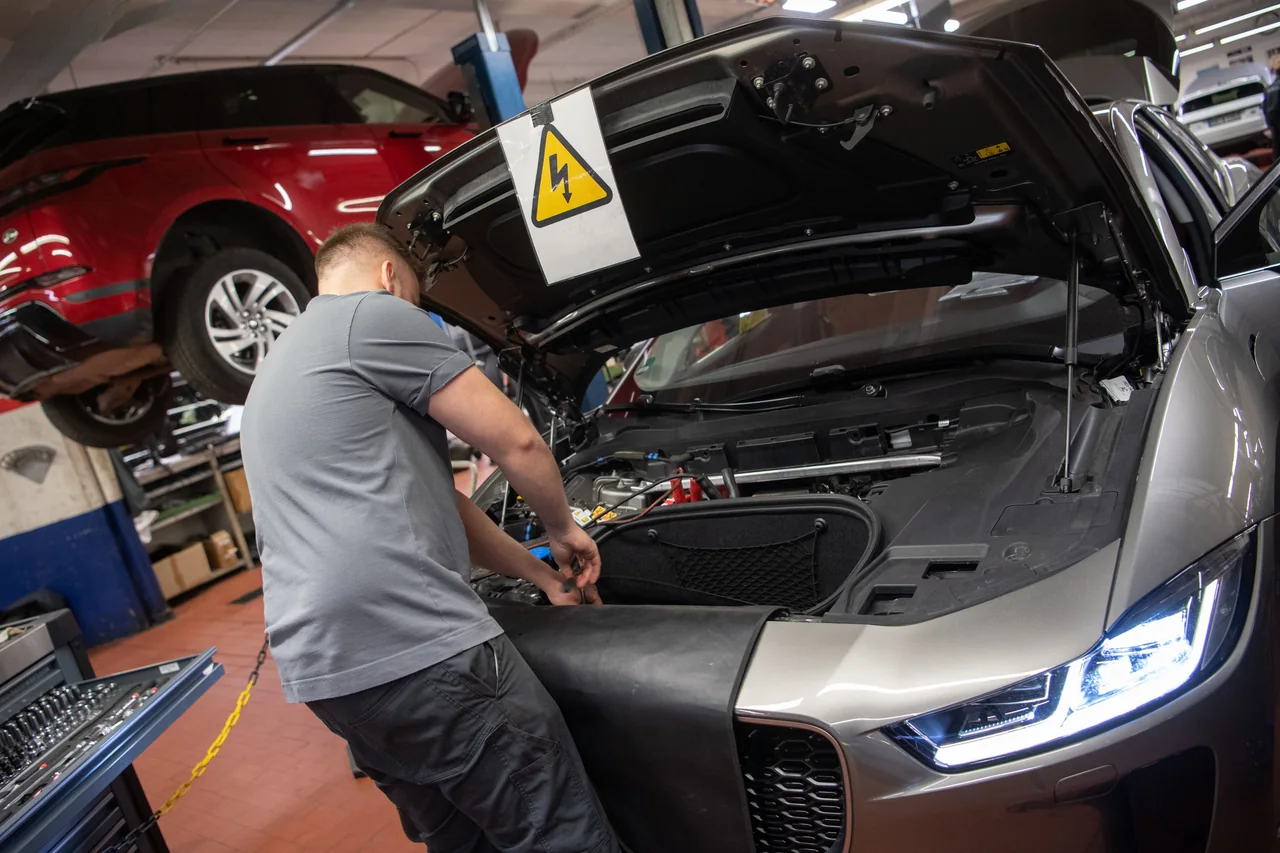
Electric vehicles require regular maintenance, including tasks such as rotating tires, replacing fluids, and changing cabin air filters. While they have fewer moving parts than gas-burning cars, EVs still need to be kept in top condition to ensure optimal performance and longevity.
The National Renewable Energy Laboratory predicts that today's EV batteries will have service lives between 12 and 15 years if used in moderate climates, falling to between 8 and 12 years in extreme environments. However, this doesn't mean EV batteries require extensive maintenance throughout their lifespan.
To extend the service life of an EV's battery pack, drivers can take steps such as avoiding extreme temperatures, which are detrimental to batteries. Automakers have developed auxiliary cooling and heating systems to mitigate this issue.

Fast charging, while convenient for rapid recharging, degrades battery packs at a quicker rate than slower charging methods. However, it's not necessary to avoid fast charging entirely; instead, drivers should be aware of the potential impact on battery life.
Batteries degrade more quickly when charged to full capacity or depleted of all energy. Many manufacturers prevent full-capacity charging and suggest charging to levels below 100% for daily use.
Electric vehicles need regular maintenance to keep their powertrain components cool, using either air or coolant to prevent overheating. Some owners may need to flush or recharge the cooling system periodically.
In addition to battery maintenance, EV drivers must also regularly refill windshield washer fluid and replace windshield wipers, as well as brake pads and rotors. The latter tend to wear less on EVs due to regenerative braking.
The frequency of tire replacements for EVs may be higher than for gas-powered cars, due in part to the extra weight of batteries. Owners should monitor their tires' tread depth and replace them when necessary.
Hybrid and plug-in hybrid vehicles have maintenance routines that are closer to those of gas-powered cars, but their electric motors still allow for regenerative braking, which can extend the service life of brake rotors and pads.

Regular maintenance is crucial for electric vehicles, despite their fewer moving parts compared to internal combustion engines.