
The European Union has taken a significant step towards strengthening its maritime industries with the adoption of an Industrial Maritime Strategy. This comprehensive plan is designed to drive competitiveness, innovation, and technological leadership in Europe's shipbuilding and shipping sectors. By focusing on three main pillars - Build, Equip and Repair; Transport and Connect; and Secure and Protect - the strategy aims to reinforce Europe's industrial sovereignty, trade flows, mobility, defense capabilities, and protection of its Exclusive Economic Zones' assets and resources.
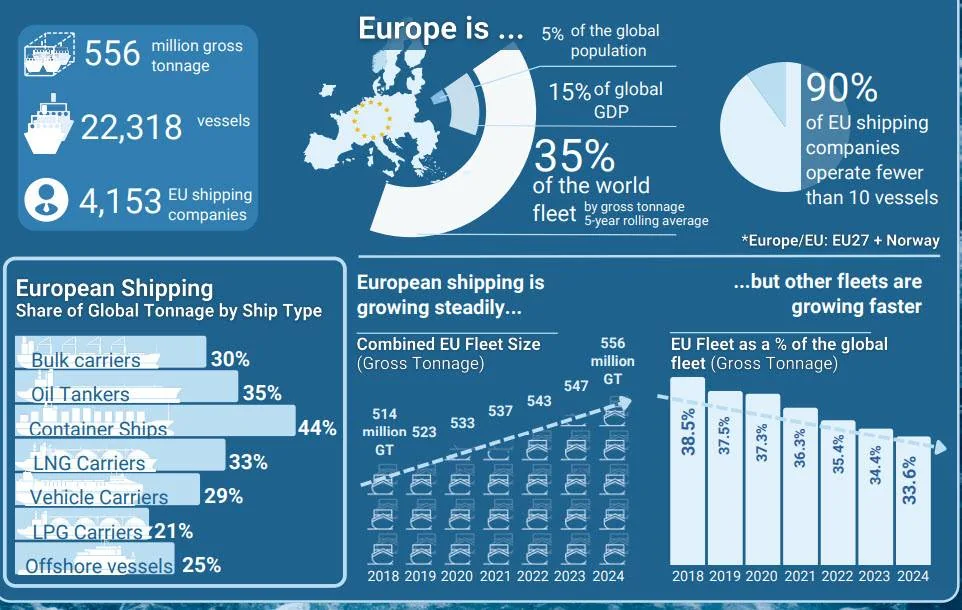
The EU's maritime industries play a vital role in the Union's strategic autonomy, with shipping representing around 35% of the global fleet. The European shipbuilding sector is also crucial for transporting energy and goods that underpin Europe's economy, with 87% of gas imports and 76% of EU's external trade moved by ships.
The new strategy introduces measures to strengthen these critical industries in the face of intensifying global competition and growing dependencies on third-country ship production. The Commission will launch an EU Industrial Maritime Value Chain Alliance to foster EU industrial sovereignty and create synergies across the maritime value chain.
This initiative aims to accelerate the digital and circular transformation of European shipyards, maximize public demand and funding, and improve the global level playing field for the EU industry. By taking these steps, the Commission hopes to bolster Europe's technological leadership and innovation in the sector.
The strategy also includes measures to simplify reporting and administrative procedures for shipping, support green and digital transition, promote quality shipping, and enhance agility and proactive stance in international relations.
Furthermore, the Commission will reinforce EU engagement at IMO on global maritime standards to help achieve a level playing field. The Strategy also announces the continued use of current state aid guidelines for maritime transport to retain today's market shares and encourage vessels to choose EU flags in the face of intense global competition.
The third pillar of the strategy focuses on bolstering Europe's naval, underwater, dual-use, and military mobility capabilities to step up security and resilience. This includes mobilizing various instruments to support naval production capacity, strengthen EU-level maritime domain awareness, and pursue a dual-use ferry construction support mechanism with enhanced military specifications.
Horizontal initiatives, including research and innovation, finance, and skills development, will also be supported by the Commission. The Strategy aims to mobilize EU, national, and private funding to support investments in fleet decarbonization, innovation, and defense.
The adoption of this strategy is a significant step towards promoting European shipping's competitiveness, while focusing on the energy transition and proposing measures to strengthen international engagement.
By committing to a fit-for-purpose regulatory and taxation framework, the Strategy sets the conditions for European shipping's competitiveness. The human element and upskilling and reskilling have also been put forward as a high priority for the sector in line with international law and regulations.
The European Commission's new Industrial Maritime Strategy aims to bolster Europe's maritime manufacturing capabilities, while promoting a clean and digital transition in the sector.