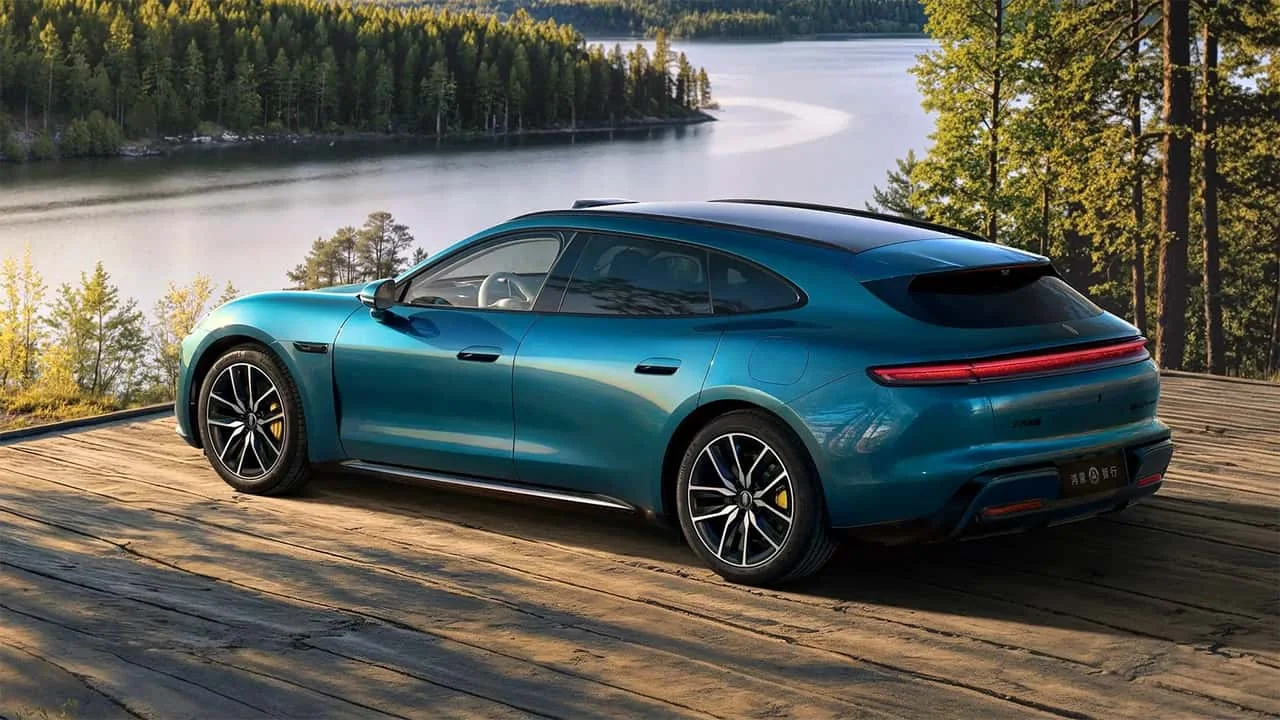
Chinese automaker SAIC has unveiled its latest electric vehicle, the Z7 EV, which is set to challenge established players like Porsche. The car's design is heavily influenced by the Porsche Taycan, with both sedan and wagon body styles available. This similarity in design language suggests that SAIC may be trying to capitalize on the success of the Taycan, which has been a benchmark for luxury electric vehicles. However, it remains to be seen whether the Z7 EV can match the Porsche's performance and quality at a lower price point.
The Z7 EV features a range of advanced technologies, including regenerative braking and a high-performance motor. While these features are becoming increasingly common in electric vehicles, their inclusion in the Z7 EV suggests that SAIC is committed to delivering a premium driving experience. This could be a key differentiator for the car, particularly if it can match or exceed the Porsche Taycan's performance capabilities.
The Z7 EV will also offer a range of safety features, including advanced airbags and a comprehensive suite of driver assistance systems. These features are designed to provide peace of mind for drivers, particularly in low-speed urban environments where electric vehicles often struggle with range anxiety. By incorporating these features, SAIC is positioning the Z7 EV as a safe and reliable choice for commuters.
The car's battery technology is also worth noting, as it will be based on a new generation of lithium-ion batteries that offer improved efficiency and range. While this may not necessarily translate to a significant increase in range, it could help to reduce the overall cost of ownership for drivers. As electric vehicles become increasingly popular, manufacturers are under pressure to improve their battery technology and reduce costs.
The Z7 EV will be priced competitively with other electric vehicles on the market, which is likely to make it an attractive option for budget-conscious buyers. However, this could also put pressure on SAIC's profit margins, particularly if the car is not able to match or exceed the Porsche Taycan's performance and quality at a higher price point. As the electric vehicle market continues to evolve, manufacturers will need to find ways to balance affordability with profitability.
The Z7 EV is set to go on sale in China later this year, although no official launch date has been announced yet. This will mark SAIC's entry into the highly competitive Chinese electric vehicle market, where established players like BYD and Geely already dominate the scene. By launching a car that can compete with the Porsche Taycan, SAIC is hoping to establish itself as a major player in this growing market.
The Z7 EV's success will depend on a number of factors, including its performance, range, and value proposition. If it can deliver on these fronts while also offering a competitive price point, it could be a game-changer for the electric vehicle market. However, if it fails to meet expectations, SAIC may struggle to establish itself as a major player in this growing market.
The Porsche Taycan has set a high standard for luxury electric vehicles, and any car that hopes to compete with it will need to match or exceed its performance and quality. While the Z7 EV is unlikely to match the Taycan's price point, it could potentially offer a more affordable alternative for buyers who are looking for a premium driving experience.
As the electric vehicle market continues to evolve, manufacturers are under pressure to innovate and improve their products. The launch of the Z7 EV represents an important step in this process, as SAIC looks to establish itself as a major player in this growing market. With its advanced technologies and competitive price point, the Z7 EV has the potential to be a real game-changer for electric vehicle buyers.
The success of the Z7 EV will also depend on how well it is received by consumers. If it can deliver on its promises and offer a unique value proposition that sets it apart from other electric vehicles on the market, it could be a major hit. However, if it fails to meet expectations, SAIC may struggle to establish itself as a major player in this growing market.
The Z7 EV's design is heavily influenced by the Porsche Taycan, which suggests that SAIC may be trying to capitalize on the success of its rival. While this approach may not be without risk, it could potentially pay off if the car can deliver on its promises and offer a unique value proposition that sets it apart from other electric vehicles on the market.
The Z7 EV's advanced technologies and competitive price point make it an attractive option for buyers who are looking for a premium driving experience. However, the car's success will depend on how well it is received by consumers, particularly in terms of its performance, range, and value proposition.
SAIC's decision to launch the Z7 EV marks an important step in the company's efforts to establish itself as a major player in the electric vehicle market. With its advanced technologies and competitive price point, the car has the potential to be a real game-changer for electric vehicle buyers.
The Z7 EV is set to go on sale in China later this year, which will mark SAIC's entry into the highly competitive Chinese electric vehicle market. By launching a car that can compete with the Porsche Taycan, SAIC is hoping to establish itself as a major player in this growing market.
Overall, the Z7 EV represents an important step in the evolution of the electric vehicle market. With its advanced technologies and competitive price point, the car has the potential to be a real game-changer for buyers who are looking for a premium driving experience.
}
The growing competition in the electric vehicle market is driving innovation and reducing prices.