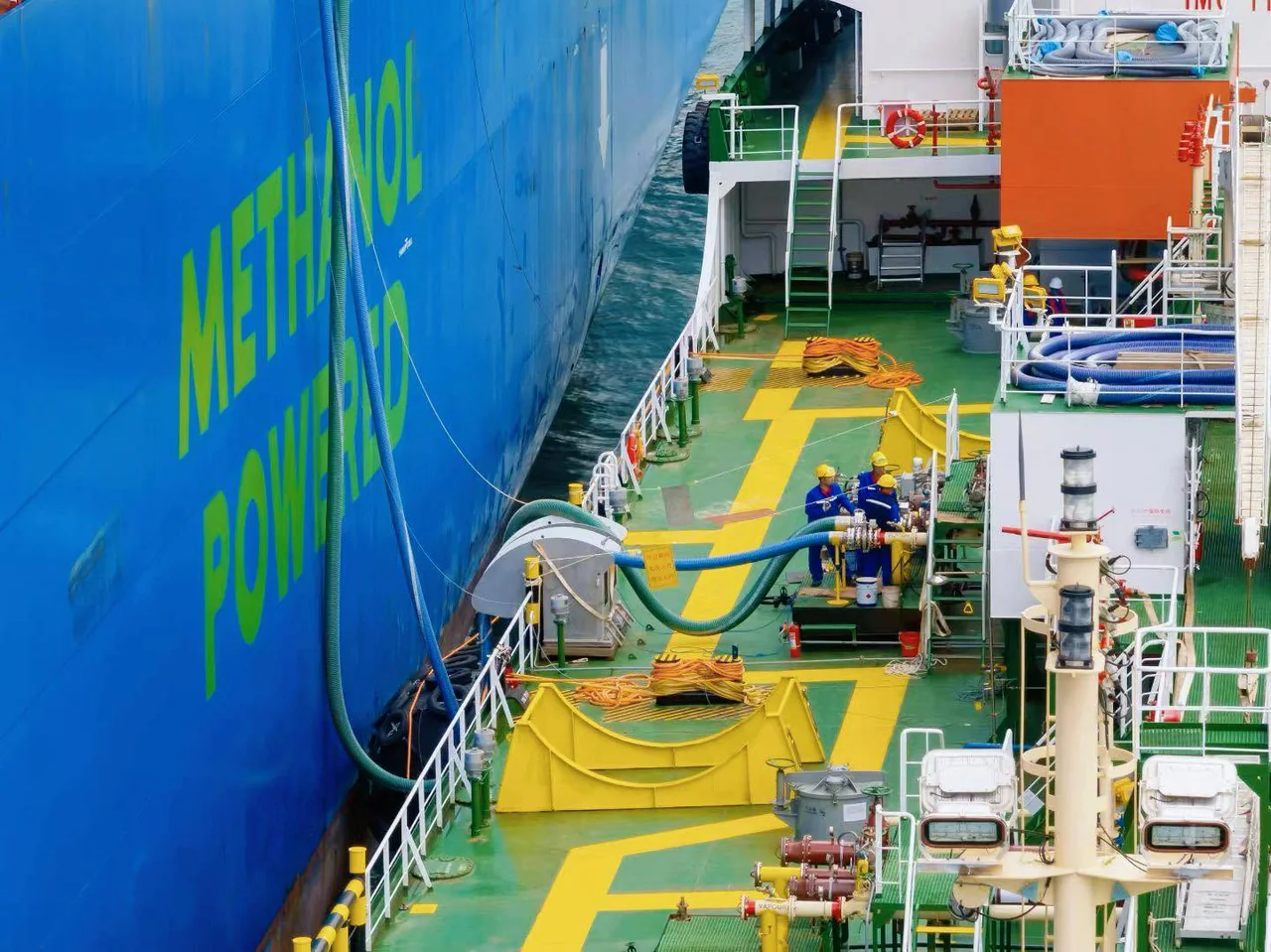
A significant milestone was achieved this week with CMA CGM and SIPG Energy successfully completing the bunkering of 3,643 tons of bio-methanol at Yangshan Port in Shanghai. This operation marks CMA CGM's first bio-methanol bunkering worldwide and sets a new national record for the largest single bio-methanol bunkering operation carried out at a Chinese port. The achievement underscores the growing importance of alternative fuels in reducing greenhouse gas emissions from shipping. As the industry continues to navigate the complexities of low-carbon energy, this milestone is a promising step towards a more sustainable future.
The CMA CGM Group's commitment to achieving Net Zero Carbon by 2050 is driving innovation in the sector. The company plans to operate around 200 dual-fuel container vessels by 2031, all capable of running on low-carbon energy, including bio-methanol and e-LNG. This ambitious goal highlights the need for rapid progress in alternative fuel adoption if shipping is to meet its carbon reduction targets.
In a separate development, China's first methanol dual-fuel bunker vessel, Da Qing 268, completed Hong Kong's maiden green methanol bunkering operation earlier this month. The bunker was delivered to CM Hong Kong, the world's first methanol dual-fuel ro-ro vessel. This achievement demonstrates the growing interest in methanol as a low-carbon fuel option for shipping.
The global methanol market is expected to expand significantly over the coming years. According to DNV's white paper 'Methanol fuel in shipping', there are currently over 450 methanol-capable vessels in operation and on order. This growing fleet will play a critical role in reducing greenhouse gas emissions from international trade.
China is poised to dominate the global low-GHG methanol production capacity, accounting for 43% of planned production capacity. The country's leadership in this area could help drive adoption of methanol as a low-carbon fuel option worldwide.
A recent partnership between Equinor and Wallenius Wilhelmsen marks an important step towards increasing the use of bio-methanol in European shipping. Supplies will commence in late 2026, positioning the partnership within key maritime hubs. This development highlights the need for more sustainable fuel options as the industry continues to navigate the complexities of low-carbon energy.
Methanol offers several advantages over traditional fuels, including being sulfur-free and producing negligible soot. Certain bio- and e-methanol pathways can deliver very low or even negative lifecycle emissions, making it an attractive option for environmentally conscious shipowners.
However, cost and availability remain significant barriers to the widespread adoption of methanol as a fuel source. Bio-methanol prices in 2025 average around USD 2,500 per tonne MGOe, roughly three times the cost of marine gas oil. Global production stands at just 2.2 million tonnes, far below the potential demand of up to 60 million tonnes by 2040.
A recent study published by UCL academics highlights the challenges associated with transitioning to alternative fuels in shipping. While LNG and methanol use as alternative fuels generate some knowledge spillovers and procedural regulatory learning, these benefits are likely outweighed by capital lock-in and the entrenchment of fossil fuel infrastructure.
The shift to bio-methanol is gaining momentum as companies and nations strive for a low-carbon future.