
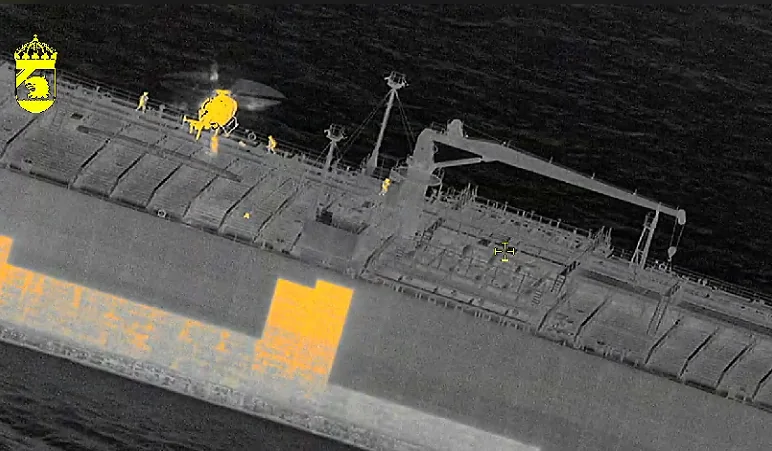
The Swedish coast guard has once again taken matters into its own hands, this time boarding and taking control of a suspected stateless vessel in the Baltic Sea. The 228-meter-long tanker Sea Owl I was flying the Comorian flag, and authorities suspect it was sailing under a false flag. This is the second such incident in less than a week, underscoring the growing concern over maritime safety and security in the region.
The coast guard's intervention is a clear indication of their commitment to protecting the environment and ensuring the integrity of international shipping. By taking control of the vessel, they are also preventing potential threats to global trade and commerce.
Sweden's minister for civil defence, Carl-Oskar Bohlin, has revealed that the ship was suspected of belonging to the Russian shadow fleet, adding fuel to the fire in the ongoing debate over maritime security. The fact that the vessel is on the sanctions list of several countries, including the EU, further highlights the complexity of the issue.
The Swedish coast guard's actions are a testament to their professionalism and dedication to upholding the rule of law at sea. By intervening against the vessel, they are also sending a strong message to other vessels that will attempt to skirt the law.
The increasing number of suspicious vessels being intercepted by the Swedish coast guard is a wake-up call for the shipping industry as a whole. It highlights the need for improved maritime security measures and greater cooperation between nations to prevent such incidents in the future.
Despite the growing concern over maritime safety, the Swedish coast guard's actions are also a reminder of the importance of vigilance and proactive policing at sea. By staying one step ahead of potential threats, they can help prevent accidents and protect the environment.
The fact that the vessel was flying a false flag is just one example of the many ways in which vessels can be used to evade international law. It underscores the need for greater transparency and cooperation between nations to prevent such incidents.
Sweden's decision to take action against the Sea Owl I is also significant because it highlights the country's commitment to upholding international law and protecting the environment. By taking control of the vessel, they are also sending a strong message to other nations that will attempt to exploit loopholes in the system.
The incident serves as a reminder that maritime security is a complex issue that requires a coordinated effort from governments, shipping companies, and regulatory bodies. By working together, we can reduce the risk of incidents like this occurring in the future.
The increasing number of suspicious vessels being intercepted highlights the need for improved maritime security measures.