
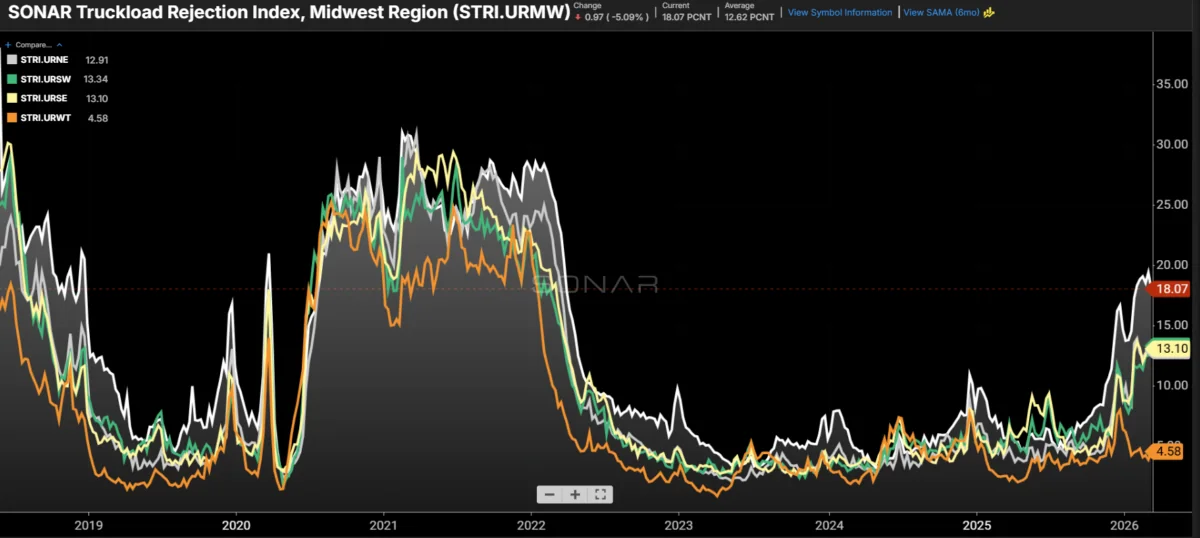
The truckload tender rejection rate chart for the Midwest and West Coast regions has revealed an unprecedented disparity, with the Midwest recording rejection rates above 18% for the past month, while the West Coast region saw its rejection rates peak near 5% in early February before retreating. This divergence is a stark contrast to the typical synchronization of regional tender rejection rates, which usually move in sync due to various market and seasonal factors.
The most obvious explanation for this disparity lies in seasonality, as the West Coast regional rejection rate typically reaches its lowest levels in the first few months of the year. However, this year's Lunar New Year holiday occurred later than usual, pushing the rebound in import volumes into April, which may contribute to the higher rejection rates on the West Coast.
The Midwest region has been under strain due to winter storms and transportation network failures over the past month, resulting in backlogs and uneven demand. The Southwest and Southeast were directly affected by these storms, yet the Midwest still recorded the highest rejection levels. This may be attributed to the fact that the region was already under strain before the recent disruptions.

The decline in long-haul or transcontinental truckload volume from the nation's largest West Coast markets is another factor contributing to the divergence. Tenders for loads moving more than 800 miles from Los Angeles and Ontario markets remain down 20-40% year over year, which suggests that some level of demand loss in the region is keeping truckload capacity more available.
The shift in demand patterns may also be attributed to intermodal conversion, as loaded domestic intermodal volumes have averaged roughly 10% higher year over year in recent weeks. However, this trend has not been consistent throughout the year, and international container demand has been weaker than in previous years for most of the year.
Furthermore, the divergence in rate trends between Midwest and West Coast lanes may be contributing to the disparity. Invoice data suggests that contract rates out of long-haul Los Angeles markets were rising late last year, while rates originating in Chicago were flat to slightly lower. This may indicate that even though overall demand was soft, loads moving by truck out of Los Angeles often carried greater urgency.

Regulatory pressures may also be playing a role, although it is difficult to measure precisely. Enforcement pressure appears to have been elevated in parts of the Midwest, prompting a lawyer to publish an article advising foreign-born drivers to avoid operating for a period last October.
The divergence between the Midwest and West Coast rejection rates is likely the result of several factors working simultaneously. As import demand returns in the coming weeks and produce season begins, conditions could shift quickly, particularly as many shippers are operating with leaner inventories — adding yet another layer of pressure to an already fractured freight market.
The chart of the week highlights the importance of real-time data in understanding the state of the freight markets. The SONAR truckload rejection index provides a valuable snapshot of the industry's performance, and the commentary offers insights into the factors driving this disparity between the Midwest and West Coast regions.

The divergent rejection rates between the Midwest and West Coast regions may be attributed to various factors, including seasonality, regulatory pressures, and shifts in demand patterns.