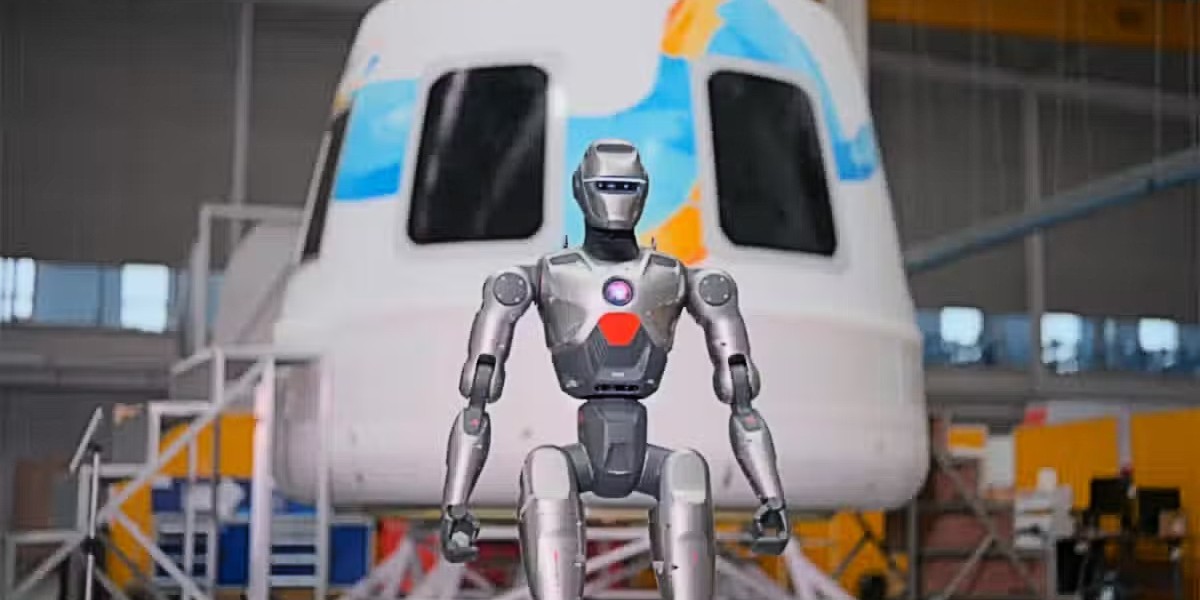
The world's first humanoid robot has successfully connected to a low-Earth orbit satellite, marking a significant milestone in the burgeoning field of humanoid robotics. Engine AI announced a new partnership with commercial space company Beijing Interstellar Human Spaceflight Technology to send their PM01 humanoid robot into space. Meanwhile, the 'Embodied Tien Kung' robot developed by the Beijing Innovation Center of Humanoid Robotics (X-Humanoid) established a stable link with a satellite from GalaxySpace, achieving synchronous transmission of the robot's visual data in what the company claims is a world's-first instance of a humanoid robot connecting simultaneously to a low-orbit satellite, a smartphone, and a computer.
This achievement demonstrates China's growing prowess in humanoid robotics, leveraging heavy investment, rapid iteration, and vertical integration to stay ahead of the competition. As the robot space race heats up, it remains to be seen which company will ultimately claim victory. With its high-precision sensing, millisecond-level motion response, and autonomous AI algorithms, Engine AI's PM01 robot is poised to make a significant impact in space exploration and beyond.
The partnership with Beijing Interstellar Human Spaceflight Technology not only marks a major step forward for the company but also underscores the growing importance of humanoid robots in space-related applications. By sending its PM01 robot into space, Engine AI aims to make history as the world's first humanoid robot astronaut. As the market for humanoid robots continues to grow, with 16,000 units sold globally in 2025 and expected to exceed 100,000 units by 2027, it is clear that China is emerging as a leader in this field.
The company's aggressive pricing strategy, starting at $25,000 for the commercial version and $39,500 for the educational/development version, has made its robots accessible to a wider range of customers. With the vast majority of humanoid robot sales taking place in China, it is likely that the country will continue to dominate the market in the coming years. As the robot space race reaches new heights, it remains to be seen which company will ultimately claim victory and what innovations will emerge from this competition.
The recent breakthroughs in humanoid robotics demonstrate China's growing capabilities in this field, leveraging heavy investment and rapid iteration to stay ahead of the competition. As the market for humanoid robots continues to grow, it is clear that China is emerging as a leader in this field.