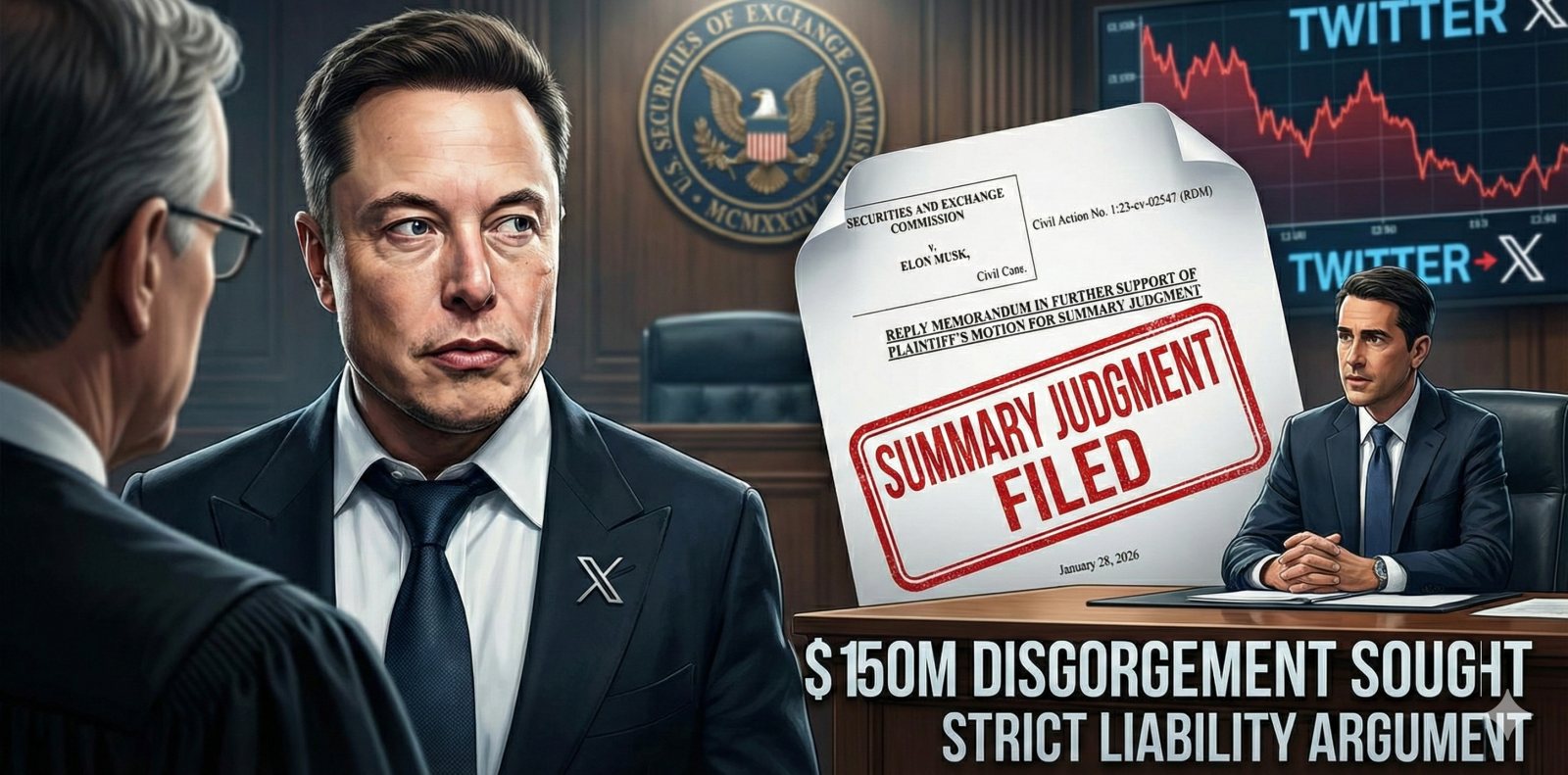
The Securities and Exchange Commission (SEC) is pushing forward with its case against Elon Musk, seeking over $150 million in damages for violating securities laws during his acquisition of Twitter. The regulator argues that the facts are clear-cut, and a trial is not necessary to prove Musk's liability.
Musk's takeover of Twitter has been a legal minefield from the start, with the SEC alleging that he failed to disclose his Schedule 13D holdings in a timely manner. The agency is seeking 'disgorgement', which would force Musk to pay back the money they claim he saved by keeping the market in the dark.
This includes the estimated $150 million Musk allegedly underpaid for shares purchased after his beneficial ownership report was due. The SEC's case hinges on the concept of 'strict liability', arguing that once Musk crossed the 5% ownership threshold, he had a mandatory 10-day window to disclose his holdings.
However, Musk has attempted to argue that he acted in good faith and relied on advisors like Morgan Stanley. The regulator is pushing back hard, stating that none of these arguments have merit.
The financial stakes are massive, with the SEC seeking to hold Musk accountable for his actions. This case highlights the importance of transparency in corporate dealings and the need for executives to prioritize compliance with securities laws.
This case serves as a reminder that even successful business leaders can be held accountable for their actions when it comes to securities law compliance. The SEC's pursuit of disgorgement demonstrates its commitment to protecting investors and maintaining market integrity.