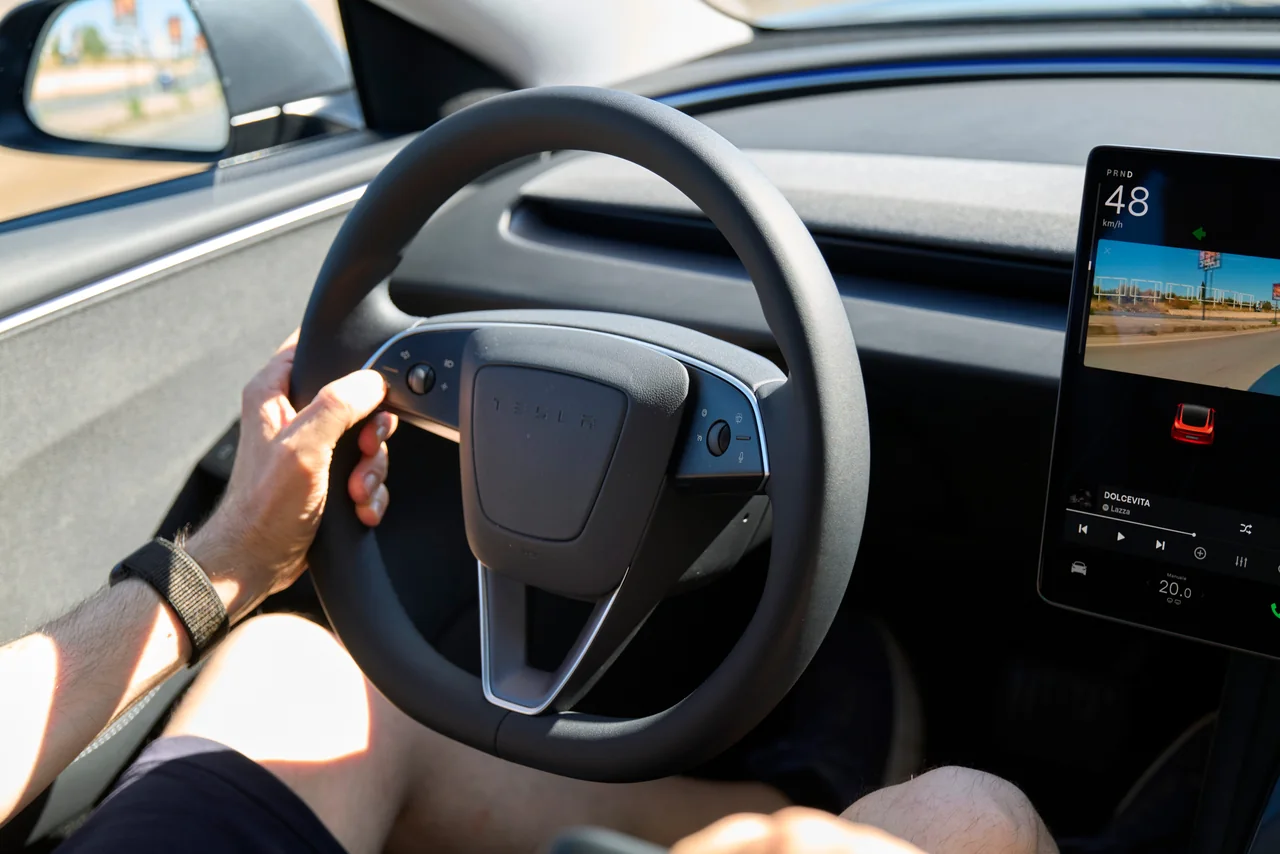
Tesla's semi-autonomous driving programs have been a subject of scrutiny since their release in 2015 and 2020. The company's Full Self-Driving Beta and Full Self-Driving (Supervised) versions are now under investigation by federal safety regulators, focusing on their performance in low visibility conditions.
The National Highway Traffic Safety Administration (NHTSA) launched its latest probe on March 18, examining Tesla's ability to detect degradation as roadway conditions decline. This includes how the system alerts the driver of reduced semi-autonomous function. With over 3.2 million Tesla vehicles included in this investigation, federal regulators are taking a close look at six recent incidents linked to the issue.
The impetus for this investigation comes after NHTSA initiated a preliminary probe of Tesla's Full Self-Driving system in 2025. The company's decision to switch from radar sensors to a camera-based system in 2021 raised concerns about degrading visibility, which has since been addressed with an updated degradation detection system in 2024.

However, federal regulators are still looking into whether the change was sufficient to address safety concerns. The NHTSA investigation announcement notes that available incident data raise concerns about Tesla's degradation detection system failing to detect and/or warn drivers appropriately under degraded visibility conditions such as glare and airborne obscurants.
In the crashes reviewed by the Office of Driver Services (ODI), the system did not detect common roadway conditions that impaired its ability to function safely. This highlights the need for ongoing testing and validation of autonomous driving systems, particularly in complex environments.
The NHTSA's investigation is a reminder that the development of safe and reliable autonomous vehicles requires careful consideration of multiple factors, including sensor technology, software design, and human factors. As the industry continues to push for more advanced driver-assistance features, regulators must ensure that these technologies are thoroughly tested and validated.

Tesla's Full Self-Driving system has faced scrutiny before, with some critics arguing that its performance is not yet reliable enough for widespread adoption. The NHTSA's investigation will likely shed more light on the challenges facing Tesla's autonomous driving technology.
The outcome of this investigation will be closely watched by the automotive industry and regulators alike, as it highlights the ongoing need for improved safety standards and testing protocols for autonomous vehicles.
As the development of autonomous vehicles continues to advance, it is essential that regulators prioritize transparency and accountability in their oversight of these technologies.
The NHTSA's investigation highlights the ongoing challenges of developing safe and reliable autonomous driving systems, particularly in low-visibility conditions. As the industry continues to push for more advanced driver-assistance features, regulators must ensure that these technologies are thoroughly tested and validated.