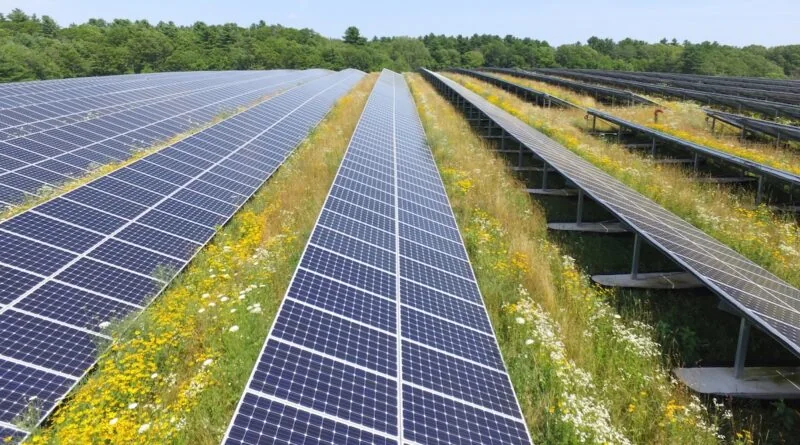
The US Department of Agriculture plays a crucial role in the development and funding of solar projects on farmland, providing grants and loan guarantees to help farmers save money on their energy costs. This initiative has been ongoing since 2002, with the Renewable Energy Systems and Energy Efficiency Improvements Program emerging during the presidency of George W. Bush.
The program was later transitioned into the present-day REAP (Rural Energy for America Program) initiative in 2008, just in time for Barack Obama to take office in January of 2009. By the time President Donald Trump first took office in 2017, REAP was in full solar mode, providing funds for solar-powered grain dryers and other solar projects.
However, Trump's administration suddenly froze REAP disbursements shortly after taking office, resulting in a loss of over $1 billion, including more than $600 million in signed commitments to farmers and small businesses. The case went to court, and in April, a federal judge ordered the REAP funds to be released.
Agriculture Secretary Brooke Rollins then staged a press event in August, announcing new restrictions on REAP that applied only to wind and solar power. These restrictions placed new documentation burdens on farmers, prevented them from expanding their business with wind or solar power, and cut them off entirely from revenue-producing opportunities through the sale of electricity off-site.
The restrictions were met with criticism, particularly from farmland conservationists who argued that they would exacerbate the loss of farmland to low-density housing and other development projects. In fact, researchers at the University of Tennessee note that the state already lost about 9% of its farmland within a 20-year period from 1997 to 2017, when the solar industry had yet to emerge in any substantial way.
The new restrictions on REAP have been seen as an attempt to restrict the growth of the solar industry, but it remains to be seen whether they will have a significant impact. The state's solar profile has ramped up since 2018, with just 1,206 megawatts installed, hardly enough to account for the loss of more than 1.2 million acres of farmland over the past 30 years.
The real issue at hand is not the growth of solar power itself, but rather the impact of low-density housing and other development projects on farmland conservation. Farmland conservationists argue that these projects are a major driver of farmland loss, particularly in rural areas.
In response to this issue, Tennessee established a new $25 million fund to buy conservation easements from farmers, taking the land out of production while preserving it for agriculture at some future date. This measure aims to stem the bleeding of farmland loss and promote sustainable agricultural practices.
The shift towards solar power may be driven by economic interests rather than ideological convictions.