

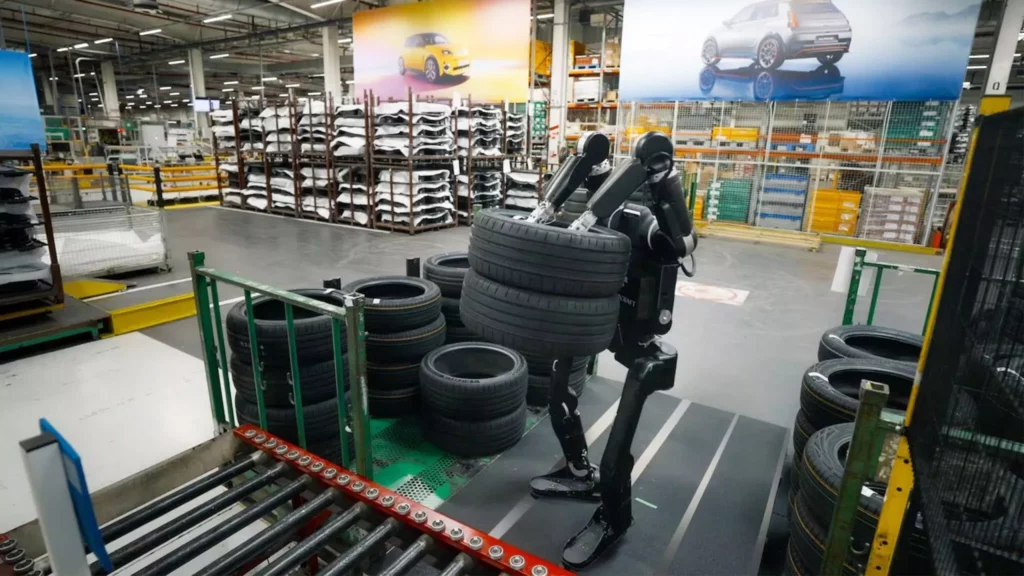
Renault has previewed its new robot, Calvin-40, developed in partnership with French startup Wandercraft, with the goal of increasing production speed and reducing costs. The robot is designed to perform simple and repetitive tasks, such as lifting and carrying heavy loads, rather than complex assembly line work. This approach allows Renault to focus on automating high-value tasks while minimizing the need for human workers in certain areas.
The Calvin-40 robot was developed in just 40 days, a testament to the innovative spirit of its creators at Wandercraft. The headless design of the robot is intentionally limited to prevent it from becoming too advanced and competing with human workers. Instead, Renault aims to utilize the robot's capabilities to augment human productivity, rather than replace it.
Thierry Charvet, Renault's head of production and quality, emphasized the importance of automation in reducing production times and costs. He noted that the first task in developing Calvin-40 was to relieve workers from painful and repetitive tasks, a common challenge faced by many manufacturers. By automating these tasks, Renault aims to improve worker safety and reduce the risk of injury.
The robot's large, circular hands are designed for lifting and carrying heavy loads, making it an ideal solution for tasks such as lifting tires and panels through the factory's body shop. However, human workers will still be needed to perform important work on the assembly lines, where dexterity and fine motor skills are required.
Renault's goal is to cut production hours per vehicle by 30 percent through the implementation of humanoid robots like Calvin-40, as well as other automation technologies. This reduction in production time has already allowed the company to slash production times for certain models, such as the 5 and Twingo EVs, to just 10 hours or less.
The introduction of Calvin-40 marks a significant shift in the automotive industry's approach to automation, with potential implications for job displacement and worker productivity. As manufacturers continue to explore new technologies, it is essential to consider the impact on workers and ensure that they are equipped with the skills needed to thrive in an automated workforce.
While Renault has taken steps to limit the robot's capabilities and prevent it from competing with human workers, the company's approach to automation raises questions about the future of work. As humanoid robots become more prevalent, it is crucial to prioritize worker safety, training, and support to ensure a smooth transition to an automated workforce.
The success of Calvin-40 will depend on its ability to integrate seamlessly into Renault's production lines and perform tasks efficiently. If successful, this technology could have far-reaching implications for the automotive industry, enabling manufacturers to increase productivity and reduce costs while minimizing the risk of job displacement.
As Renault continues to explore new technologies, it is essential to consider the broader implications of automation on the workforce. By prioritizing worker safety, training, and support, manufacturers can ensure a successful transition to an automated workforce and create a more efficient, productive, and sustainable industry.
The introduction of humanoid robots like Calvin-40 marks a significant shift in the automotive industry's approach to automation, with potential implications for job displacement and worker productivity.