


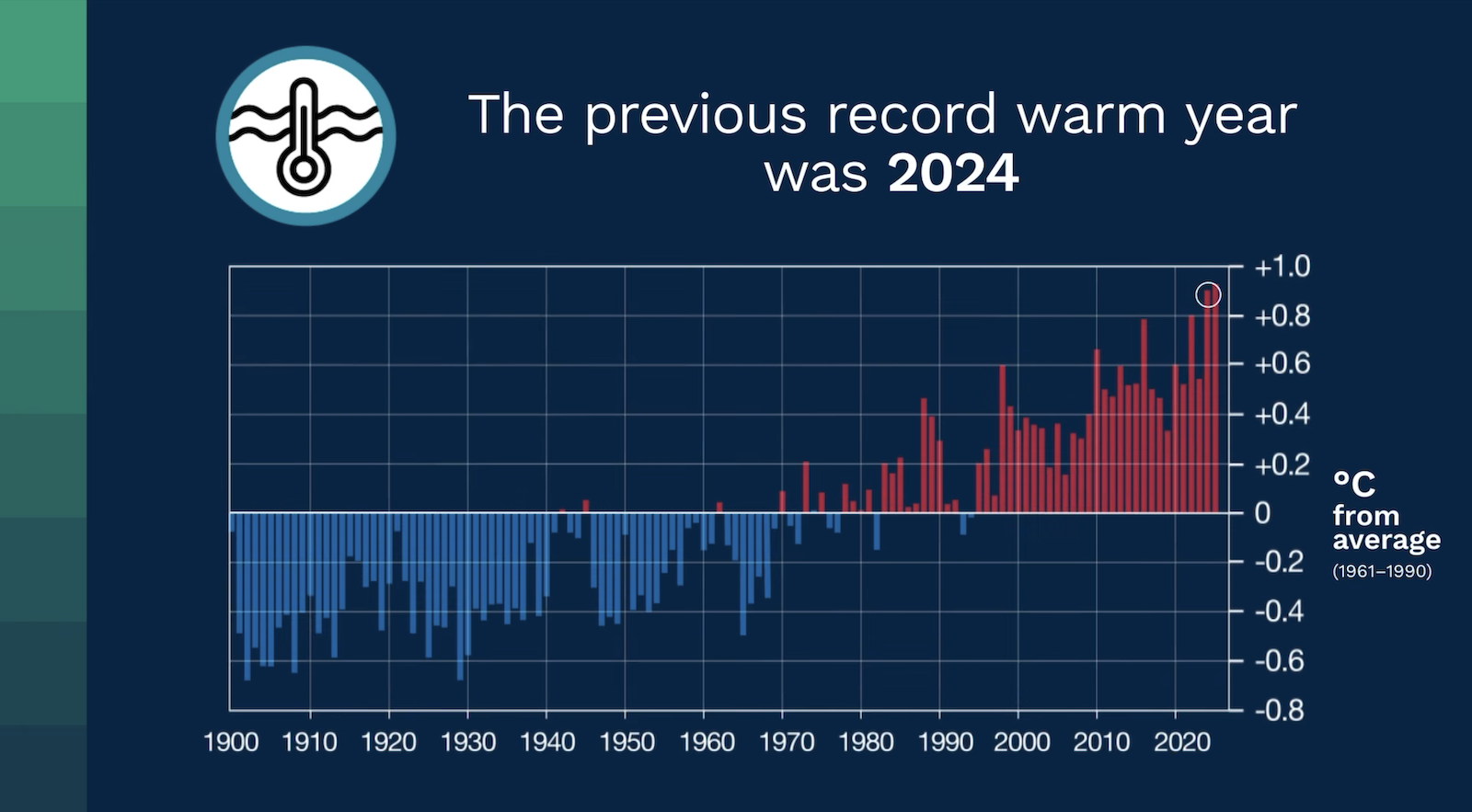
The world is facing an unprecedented climate crisis, with the past decade witnessing 11 consecutive years of record-breaking temperatures. This trend is a clear indication of the devastating impact of human activities on the environment. The evidence is irrefutable, and it's imperative that we take immediate action to mitigate the effects of climate change.
The latest State of the Climate report has confirmed that carbon dioxide levels in the atmosphere have reached a record high, with global emissions reaching unprecedented levels in 2025. This alarming trend is a stark reminder of our reliance on fossil fuels and the need for a rapid transition to cleaner energy sources.
Temperature records are also shattering, with 2025 experiencing its second or third warmest year on record, depending on the dataset used. The average global temperature was approximately 1.43°C above pre-industrial levels, a stark contrast to the expected cooling effect of La Niña conditions in the Pacific region.
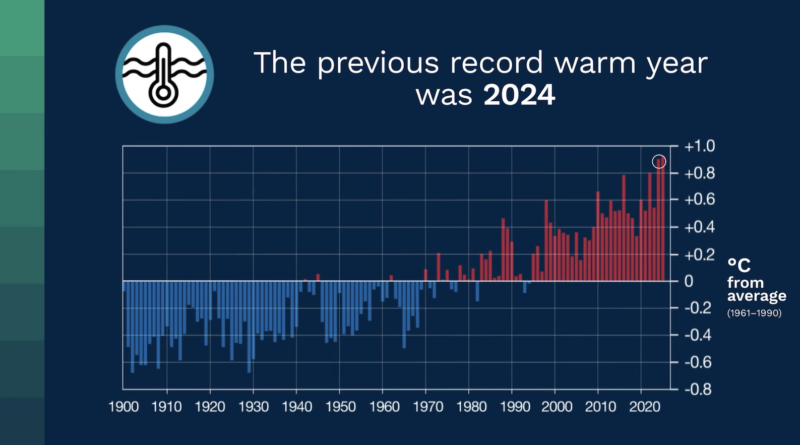
The fact that each of the last 11 years has been hotter than any previous year in the global temperature series is a clear indication of the accelerating rate of climate change. This trend is not unique to any particular dataset and highlights the need for continued monitoring and research into the impacts of climate change.
The world's oceans are also feeling the effects of rising temperatures, with heat held within the oceans reaching record highs in 2025. As a result, sea levels will continue to rise, posing significant threats to coastal communities and ecosystems.
Furthermore, the warming of the oceans is leading to increased acidification, which has devastating consequences for marine life. The report highlights that this process can have far-reaching impacts on the health of our planet's ecosystems.
The Arctic and Antarctic ice caps are also showing alarming signs of decline, with sea ice extent reaching record low levels in the Arctic. This trend is a clear indication of the urgent need to address climate change through reduced greenhouse gas emissions.
In addition to these physical changes, research has shown that many extreme weather events in 2025 were exacerbated by human-driven climate change. The heatwaves in Central Asia, wildfires in East Asia, and Hurricane Melissa in the Caribbean are just a few examples of how our actions are having devastating consequences.
The latest report serves as a stark reminder of the need for collective action to address the climate crisis. By transitioning to renewable energy sources, increasing energy efficiency, and implementing policies that reduce greenhouse gas emissions, we can work towards a more sustainable future for generations to come.
The alarming rate of global warming is a stark reminder of the urgent need for drastic action to reduce greenhouse gas emissions and transition to renewable energy sources.

