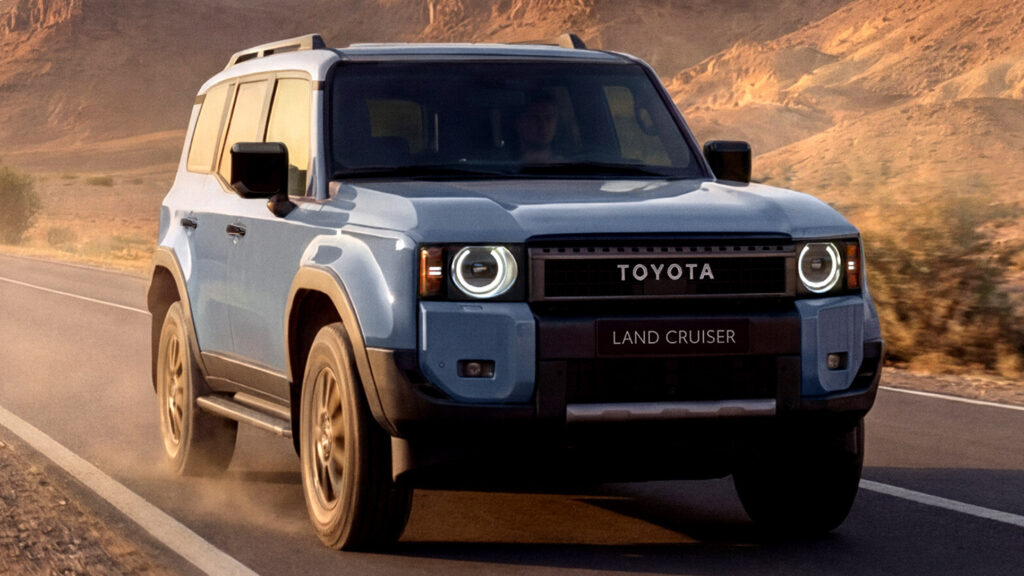
The latest development in the world of off-road vehicles has left many in the industry surprised. Toyota's 2026 European Land Cruiser has been accused of copying a design element from its American counterpart, the 2025 Toyota Land Cruiser. The design in question is the distinctive grille on both models. While it may seem like a minor detail, this feature has become an iconic part of each model's identity.
This copying of a design element raises questions about the role of innovation and originality in the automotive industry. As companies look to capitalize on successful designs, they must also ensure that their products are not simply copying others' work. This delicate balance can have significant implications for competition and the overall market landscape.
The Toyota Land Cruiser has long been a benchmark for off-road vehicles, with its reputation for durability and reliability. The 2025 American model has taken this to the next level, introducing new features such as improved suspension and advanced traction control systems. These advancements have made it an even more formidable opponent on the trails.
In contrast, the European Land Cruiser's design is more subdued, with a focus on understated elegance rather than raw power. While this approach may not be as attention-grabbing as its American counterpart, it has its own strengths and weaknesses. The question now is whether Toyota's decision to copy this design element will have a lasting impact on the market.
The copying of design elements is not unique to Toyota. Many companies in the industry have been accused of borrowing ideas from others, often without giving proper credit or recognition. This can lead to a lack of originality and innovation, which can ultimately harm consumers who are looking for something new and exciting.
However, it's also worth noting that copying design elements can be a way for companies to quickly adapt to changing market trends and consumer demands. In today's fast-paced industry, speed and agility are just as important as innovation and originality. Companies must find a balance between these competing priorities.
The impact of Toyota's decision to copy the Land Cruiser's design element will likely be felt across the industry. As companies look to capitalize on successful designs, they must also ensure that their products are not simply copying others' work. This delicate balance can have significant implications for competition and the overall market landscape.
Ultimately, the success of the Toyota Land Cruiser will depend on its ability to deliver on its promises and meet consumer demands. If it can do so without sacrificing its unique identity and originality, then it may be able to carve out a successful niche in the market.
As the automotive industry continues to evolve and adapt to changing market trends, companies must be mindful of the role of innovation and originality in their products. By finding a balance between these competing priorities, they can create products that are both competitive and unique.
The automotive industry is witnessing a trend of copying and adapting successful designs from other regions, which can have significant implications for innovation and competition.