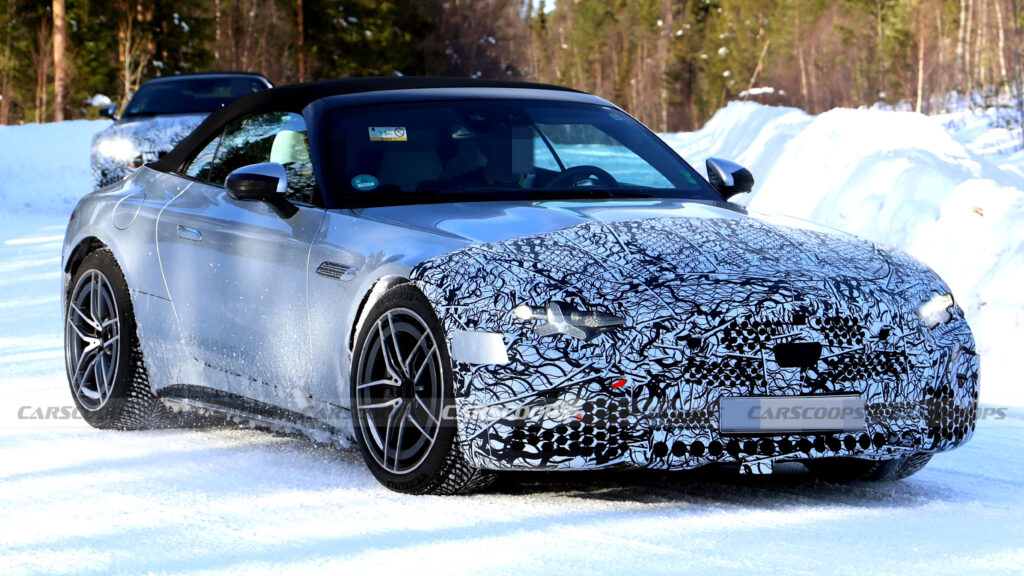
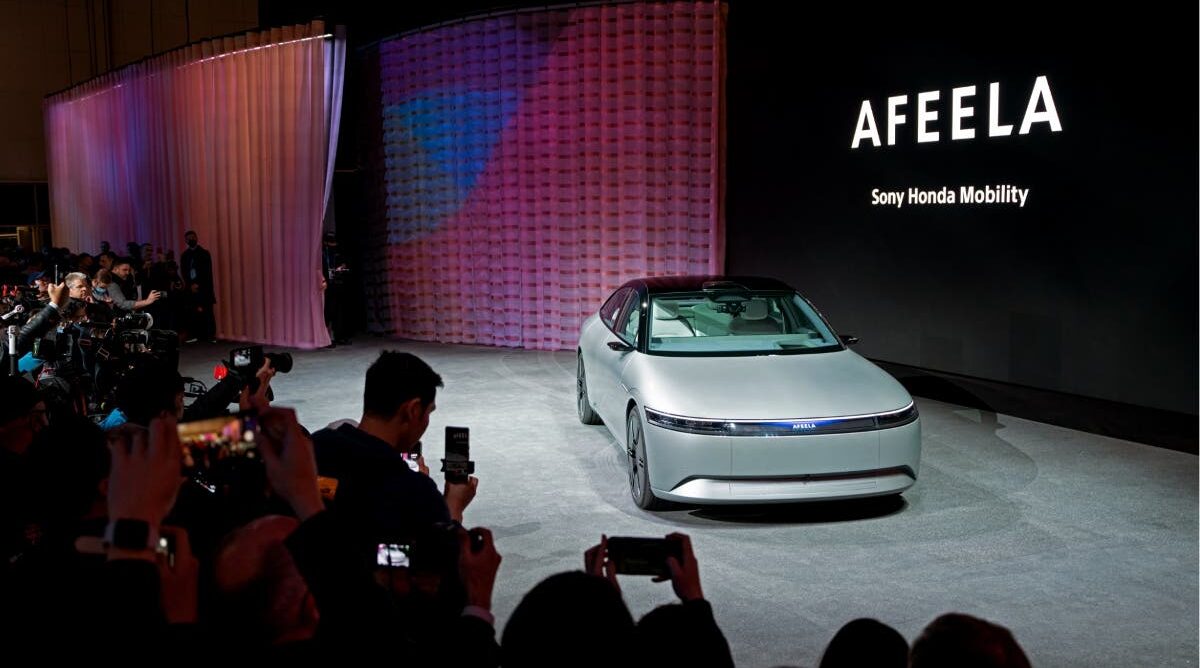
Afeela — the $90,000 battery electric PlayStation on wheels from Sony and Honda — is dead. The car was perhaps an attempt by Sony to match whatever Apple was doing with its stillborn Project Titan that burned through a billion dollars over 10 years before Apple threw in the towel. Whatever the intended market for the Afeela might have been — assuming there was one at all — those potential customers will now have to look elsewhere for their automotive jollies.
Honda and Sony formed an entirely separate company, Sony Honda Mobility, to develop the car. SHM told Business Insider on Wednesday it is continuing “to discuss the path forward with its parent companies on the future of SHM.” That sounds like wishful thinking to us. There was no discernible market for the car in the first place.
The announcement came as no surprise to industry analysts. Seth Goldstein, a senior equity strategist and EV industry specialist at Morningstar, told Business Insider: “This aligns with Honda rethinking its EV plans, especially in the US market.” He said Honda is probably shifting toward building more hybrids while it reassesses how to build profitable EVs without relying on government incentives.
The only electric Honda remaining in the US is the Prologue, which is built on the GM Ultium platform in Spring Hill, Tennessee. This indicates that Honda may be reevaluating its strategy for entering the US EV market, and the Afeela's cancellation suggests they are not confident in their ability to compete.
The only surprise and question here is why now? Honda showcased the Afeela at the this year’s CES show in Las Vegas. We know that things happen quickly, but that show was less than three months ago. Maybe SHM had already paid for display space at CES and couldn’t get a refund?
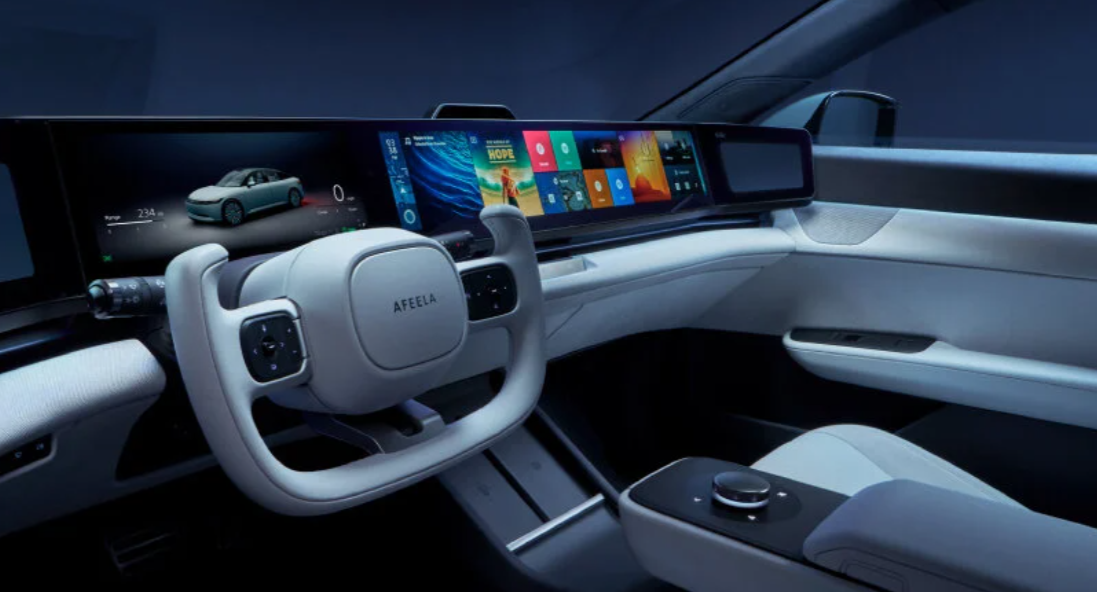
Sony did add the car to Turismo 7, its car racing game for PlayStation. It appears that will now be the only way anyone can ever “drive” the Afeela. The actual car was scheduled to be available to customers later this year and was expected to come equipped with a number of screens, including one on the hood.
Pulling the plug on a vehicle so close to launch is “definitely not the industry norm,” Adam Bernard, a former director of competitive intelligence at General Motors, told Business Insider. “A last-minute pull is very unusual,” he said. This highlights the risks and challenges that automakers face when launching new EV models.
The cancellation highlights a growing divide in how automakers are approaching the US EV market. Toyota — long seen as a laggard in fully electric vehicles — has recently accelerated its EV plans, underscoring how differently the longtime rivals are navigating the transition after both delayed for years.
Goldstein said Toyota’s experience with hybrid systems and battery development may make it easier to adapt its lineup, while Honda now faces a more fundamental reset. This suggests that Honda needs to reevaluate its strategy and focus on building more hybrids before attempting to launch new EV models.
The sudden cancellation of the $90,000 battery electric PlayStation on wheels highlights a growing divide in how automakers are approaching the US EV market.