A month ago, Donut Lab in Finland made headlines by announcing its development of a solid-state battery. The company's claim was met with skepticism from armchair experts around the world, who questioned whether it was actually a battery or just a supercapacitor. Some critics even went so far as to say that the device couldn't survive high or low temperatures due to not using lithium and its inability to retain charge over time.
To counter these doubts, Donut Lab partnered with VTT, a respected Finnish testing laboratory, to put the battery through rigorous testing. The company has since published the results on its website, inviting readers to review the specifics for themselves.
One of the main criticisms of the Donut Lab device was that it didn't behave like a traditional battery but rather like a supercapacitor. However, the latest test results from VTT have dispelled this notion once and for all. According to the test data published on March 3, 2026, the device's ability to retain charge when not in use has been thoroughly tested.

The Donut Lab CTO, Ville Piippo, addressed these concerns directly, stating that the latest test proves the device is indeed a battery. Unlike supercapacitors, which lose their charge quickly when not in use, the Donut Battery can maintain its charge for significantly longer periods of time.
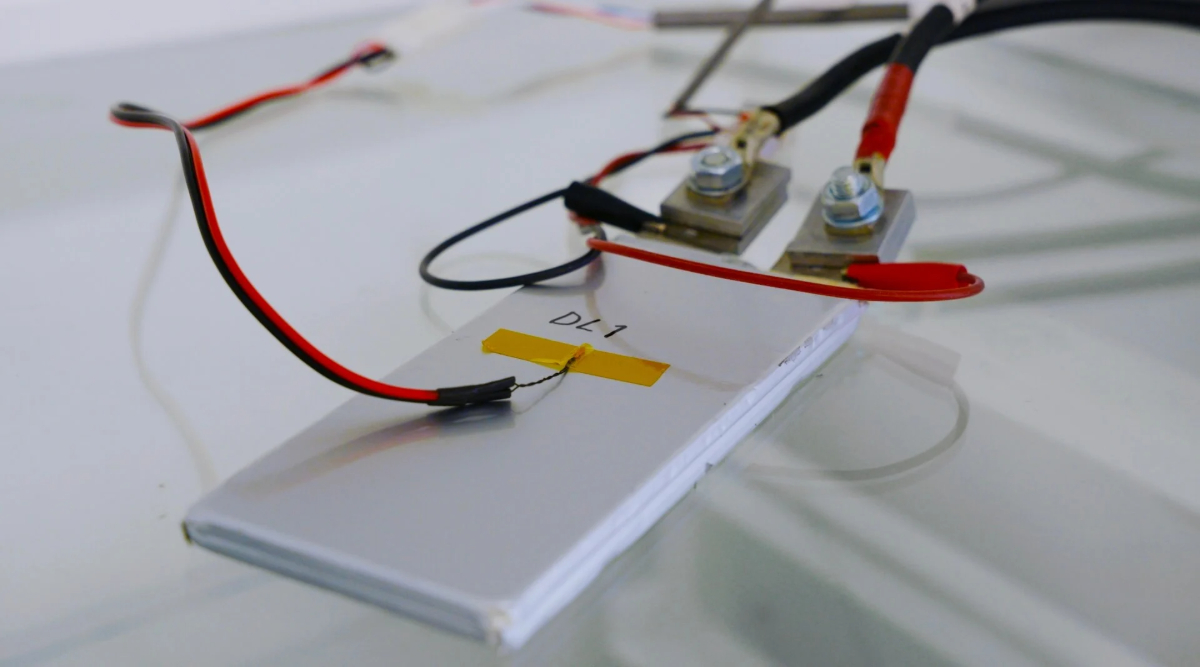
The company's testing setup involved connecting the battery to a research laboratory's battery tester and repeatedly measuring cell voltage every 10 seconds. This simple yet effective method allowed researchers to evaluate the device's performance under various conditions.
In addition to the capacity test, Donut Lab also charged the battery to approximately 50 percent charge and left it connected for ten days. The resulting data showed that the battery cell voltage stabilized during the first 10 hours after charging, followed by further stabilization over the next nine days.
The company's results demonstrate that the Donut Battery behaves exactly as a traditional battery should. If this were a supercapacitor, the charge would have fallen linearly much faster during the same time period, contradicting the test findings.
Donut Lab has now made five test protocols public, including confirmation of fast charging capabilities and the ability to survive high-temperature discharges. These results mark an important milestone in the development of solid-state batteries and pave the way for future innovations.
As the automotive industry continues to shift towards more sustainable energy solutions, advancements like these are crucial for reducing emissions and increasing efficiency. The success of Donut Lab's solid-state battery is a testament to the potential of innovative technologies in transforming our transportation landscape.
The development of solid-state batteries is a crucial step towards increasing energy density and reducing charging times in electric vehicles.