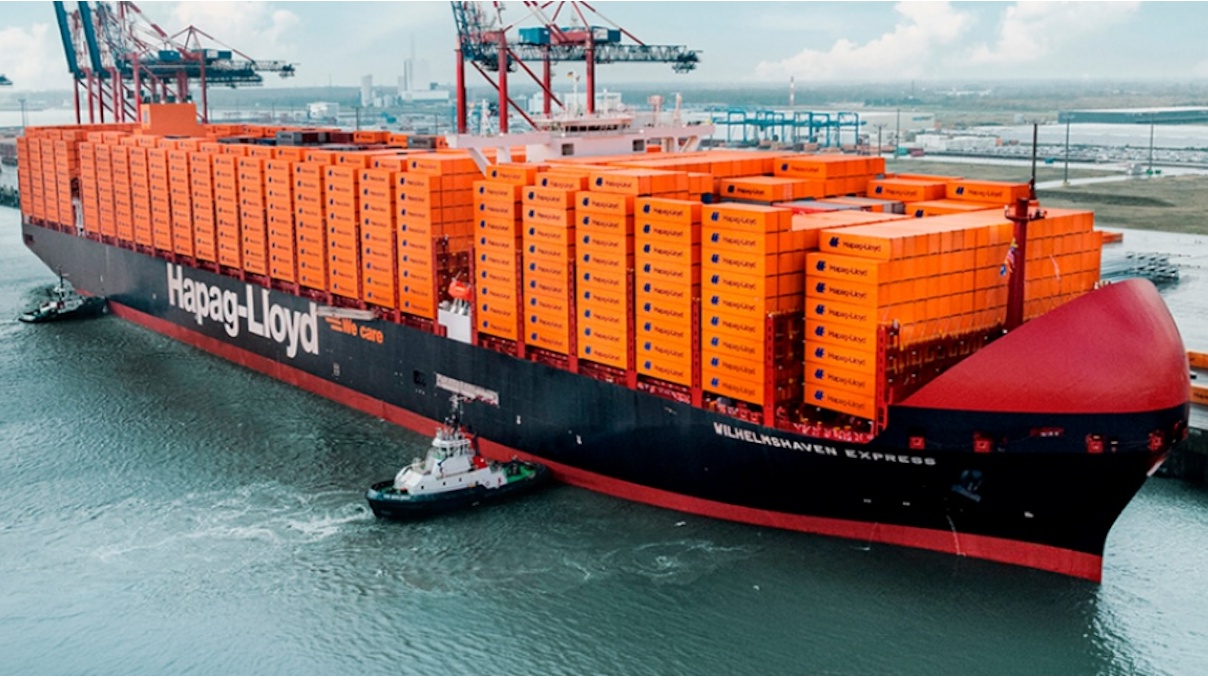
Despite a 8% increase in container volumes to 13.5 million twenty-foot equivalent units (TEUs), Hapag-Lloyd's profits plummeted in 2025 due to weaker ocean shipping rates and higher costs. The company's liner shipping revenues rose to $20.6 billion from $20.3 billion the previous year, but earnings before interest, taxes, depreciation, and amortization (EBITDA) fell to $3.5 billion from $4.9 billion. This decline in EBITDA was largely attributed to a decrease in average freight rates, which dropped 8% to $1,376 per TEU. The lower rates were seen as a result of growing capacity and increasing trade imbalances, making it challenging for carriers to maintain profitability.
The company's partnership with Maersk on the cooperative Gemini service contributed to the growth in container volumes. However, this growth was not enough to offset the negative impact of higher costs resulting from operational disruptions caused by new tariff policies, ongoing security tensions in the Red Sea, start-up expenses for the Gemini Network, and port congestion. These factors led to a decrease in earnings before interest and taxes (EBIT), which more than halved to $1 billion from $2.7 billion.
Hapag-Lloyd's Chief Executive Rolf Habben Jansen stated that 2025 was a good year for the company with solid results, despite the challenges faced by the industry. The company grew its volumes and outperformed the market, with the Gemini network delivering 90% schedule reliability and customer satisfaction reaching another record high.

The company invested significantly in fleet efficiency and modernization to further decarbonize its operations, which contributed to its success. Additionally, its growing terminals portfolio increasingly contributed to the success of its liner business. However, these efforts were not enough to mitigate the impact of weaker ocean shipping rates and higher costs.
The forecast for 2026 is equally uncertain, with Hapag-Lloyd predicting pre-tax earnings in the range of -$1.5 billion to $500 million due to the highly volatile development of freight rates and the conflict in the Middle East.
The decline in Hapag-Lloyd's profits serves as a reminder of the challenges facing the shipping industry. As carriers navigate these uncertain times, they must adapt to maintain competitiveness and ensure long-term sustainability.
The impact of weaker ocean shipping rates and higher costs on carrier profitability is becoming increasingly evident. Carriers must find ways to mitigate these effects and invest in initiatives that promote efficiency and decarbonization.
The partnership between Hapag-Lloyd and Maersk on the Gemini service highlights the importance of cooperation in the shipping industry. However, this success is not enough to offset the challenges faced by carriers in terms of profitability.
As the shipping industry continues to evolve, carriers must prioritize initiatives that promote efficiency, decarbonization, and competitiveness. This will be crucial in ensuring long-term sustainability and profitability in an increasingly uncertain market.
The decline in Hapag-Lloyd's profits highlights the challenges of navigating volatile ocean shipping rates and increasing costs. As the industry continues to grapple with capacity issues, geopolitical tensions, and security concerns, carriers must adapt to maintain competitiveness.