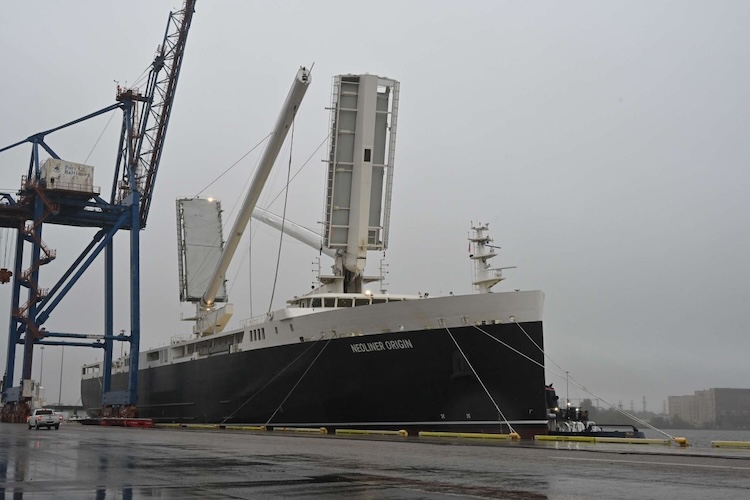
The maritime industry is taking steps to reduce its carbon footprint, and one innovative solution is the deployment of sail-equipped cargo vessels. A new wind-powered ship, the Neoliner Origin, will be joining commercial trans-Atlantic service in a round-trip rotation from Montoir, France to Baltimore in the U.S., and Halifax, Canada.
The Marseilles-based carrier CMA CGM has chosen this eco-friendly option to reduce greenhouse gas emissions by 80% to 90% during voyages. This move is part of efforts by the International Maritime Organization to reduce shipping's harmful emissions. As a result, European- and Asia-based carriers are aggressively pursuing alternative fuels such as ammonia, hydrogen, and liquefied natural gas to power cargo ships.
The Neoliner Origin will accommodate dry cargo, out-of-gauge shipments, and refrigerated containers, providing a versatile service for customers. The ship's hybrid diesel-wind propulsion system allows it to sail at reduced speeds to conserve fuel and reduce emissions. This approach is becoming increasingly important as the Trump administration blocked a move by the IMO to establish a carbon tax for shipping in 2025.
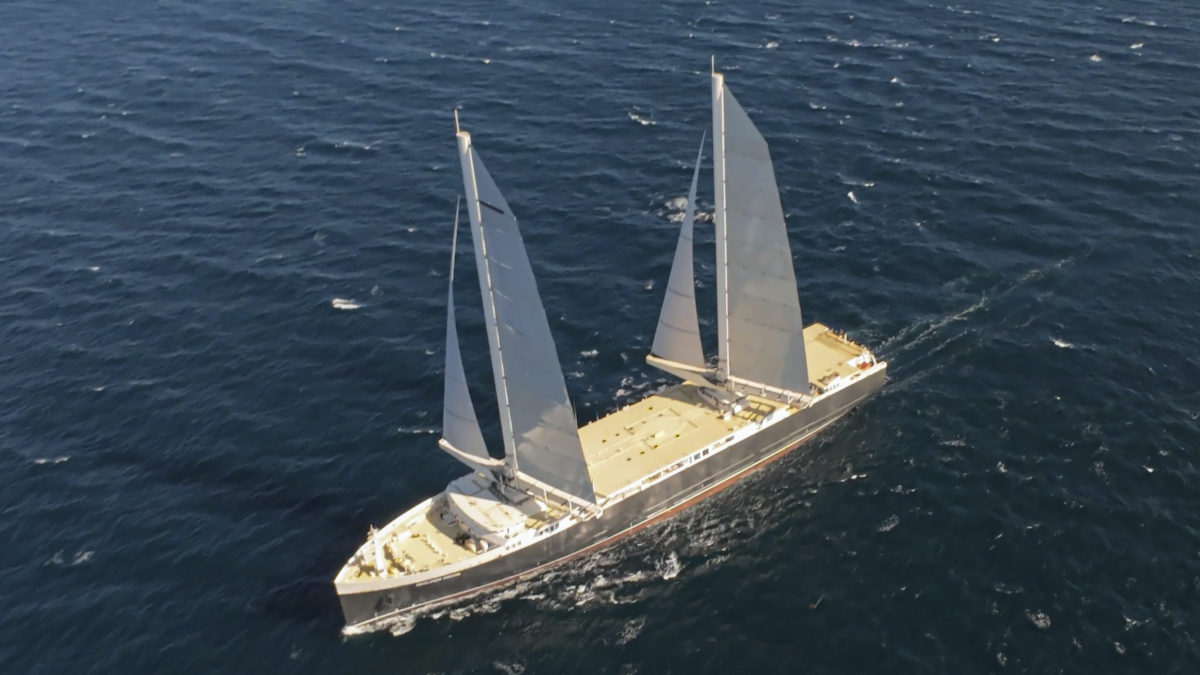
The Neoliner Origin was built in Turkey by RMK Marine Shipyard and measures 446 feet in length, with a capacity to carry over 5,300 tons of vehicles and farm and construction machinery or 265 twenty-foot containers on three decks. The ship's sail area is substantial, with 32,000 square feet of rigging on two 295-foot masts, providing 60% to 70% of the vessel's propulsion when needed.
When sailing at reduced speeds, the Neoliner Origin will typically operate at a speed of 11 knots to conserve fuel and reduce emissions. This approach is becoming increasingly important as the maritime industry looks to reduce its carbon footprint. The ship's hybrid diesel-electric engines will provide additional power when needed, ensuring a reliable and efficient service.
The Neoliner Origin has undergone testing, with one test sailing taking place in October. The first departure from Baltimore is scheduled for April 24, and the first departure from Montoir set for May 16. This marks an exciting new chapter in commercial trans-Atlantic shipping, as wind-powered vessels like the Neoliner Origin join the fleet.

The introduction of wind-powered vessels like the Neoliner Origin marks a significant shift towards more environmentally friendly shipping practices. As the maritime industry continues to evolve, it will be interesting to see how this technology is adopted and implemented in the coming years.
This move by CMA CGM demonstrates its commitment to reducing emissions and promoting sustainability in the shipping industry. The success of the Neoliner Origin will depend on various factors, including market demand, fuel prices, and regulatory changes.
The future of maritime transportation looks bright, with innovations like wind-powered vessels set to play a key role in reducing greenhouse gas emissions and promoting sustainable practices.
The introduction of wind-powered vessels like the Neoliner Origin marks a significant shift towards more environmentally friendly shipping practices.