


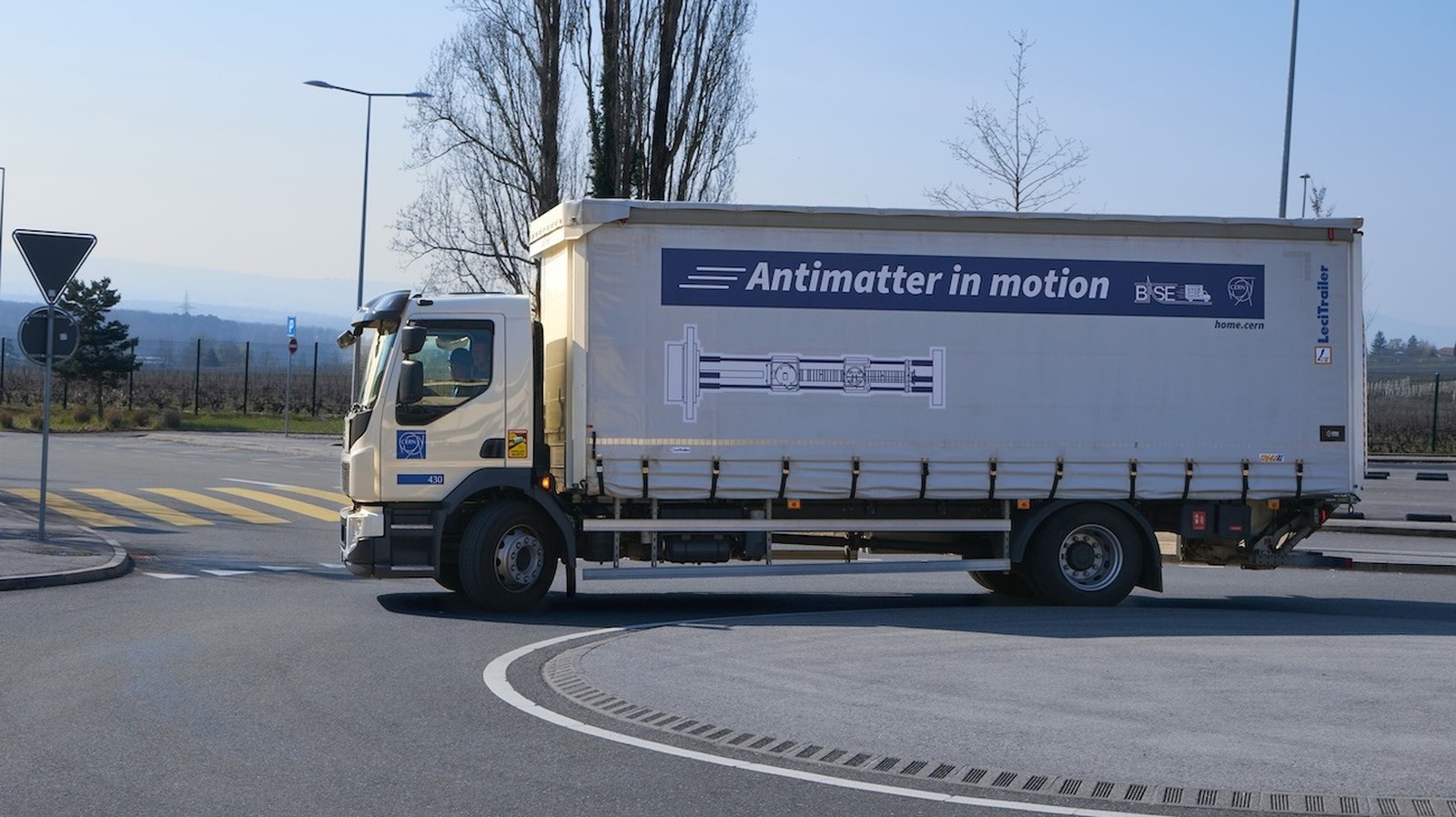
CERN scientists have successfully taken antimatter on its very first road trip, marking a significant milestone in the field of antimatter research. The BASE project, which aims to study the properties of antiprotons, has developed a portable version of the equipment necessary to keep antimatter particles stored safely. This achievement is a testament to the ingenuity and dedication of scientists working on this cutting-edge project.
The CERN laboratory, located on the border of France and Switzerland, is the only place in the world where tiny amounts of antimatter can be created for research purposes. However, the equipment used to create antimatter generates magnetic fields that limit the precision of measurements, making it difficult to keep the particles around for extended periods.
To overcome this challenge, scientists built BASE-STEP, a more portable version of the equipment necessary to store antimatter safely. Weighing about a ton and requiring a truck to transport it, BASE-STEP is designed to absorb up to 1 G of acceleration in any direction, enabling it to smooth out bumps in the road as well as the normal forces of driving.
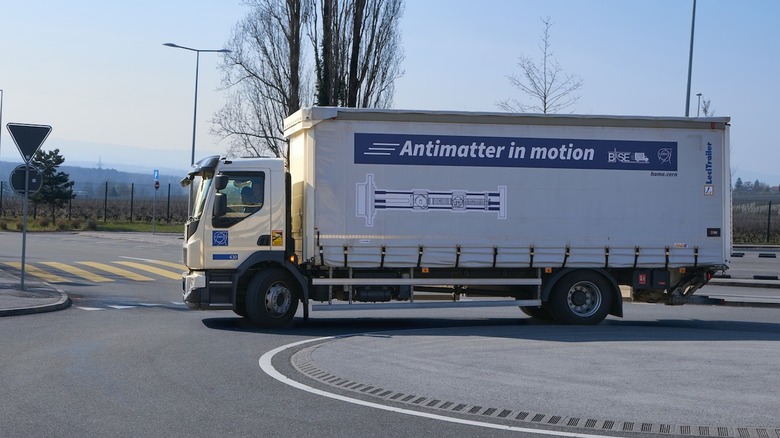
The test was successful, with all 92 antiprotons stored inside BASE-STEP surviving the drive around the CERN campus for about 90 minutes. This achievement is a crucial step toward transporting antimatter to research laboratories across Europe.
BASE-STEP used onboard power for this test, but will require a generator to keep running for extended drives. The goal is to transport antimatter to a research laboratory in Germany, which is approximately eight hours away.
The development of BASE-STEP marks an important step toward enabling other research facilities around Europe to participate in antimatter research. This achievement demonstrates the potential for collaboration and knowledge-sharing in the scientific community.
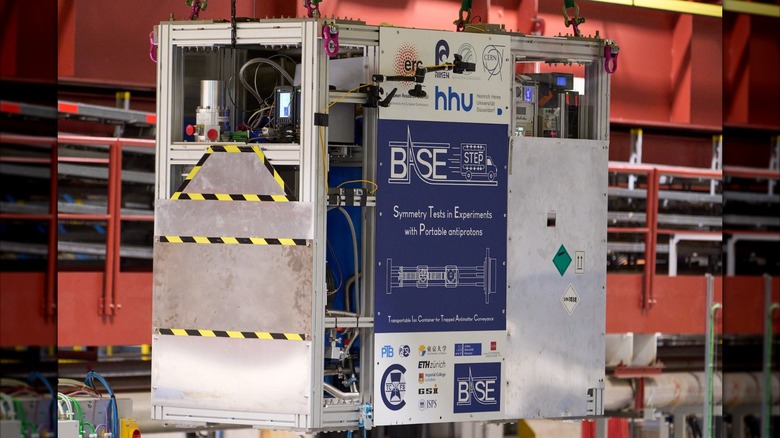
The use of liquid helium to cool the vacuum chamber containing the antimatter particles is a critical component of the experiment. The temperature required is just a few degrees above absolute zero, highlighting the extreme conditions necessary for storing and transporting antimatter.
While the test was successful, it's essential to note that transporting antimatter poses significant challenges due to its tendency to annihilate with matter. Scientists must carefully balance the need for precision measurements with the risks associated with handling this highly unstable material.
The BASE project is a prime example of how scientific collaboration and innovation can lead to groundbreaking discoveries. As researchers continue to push the boundaries of what's possible, we can expect even more exciting developments in the field of antimatter research.
This achievement marks an important step toward enabling other research facilities around Europe to participate in antimatter research.