


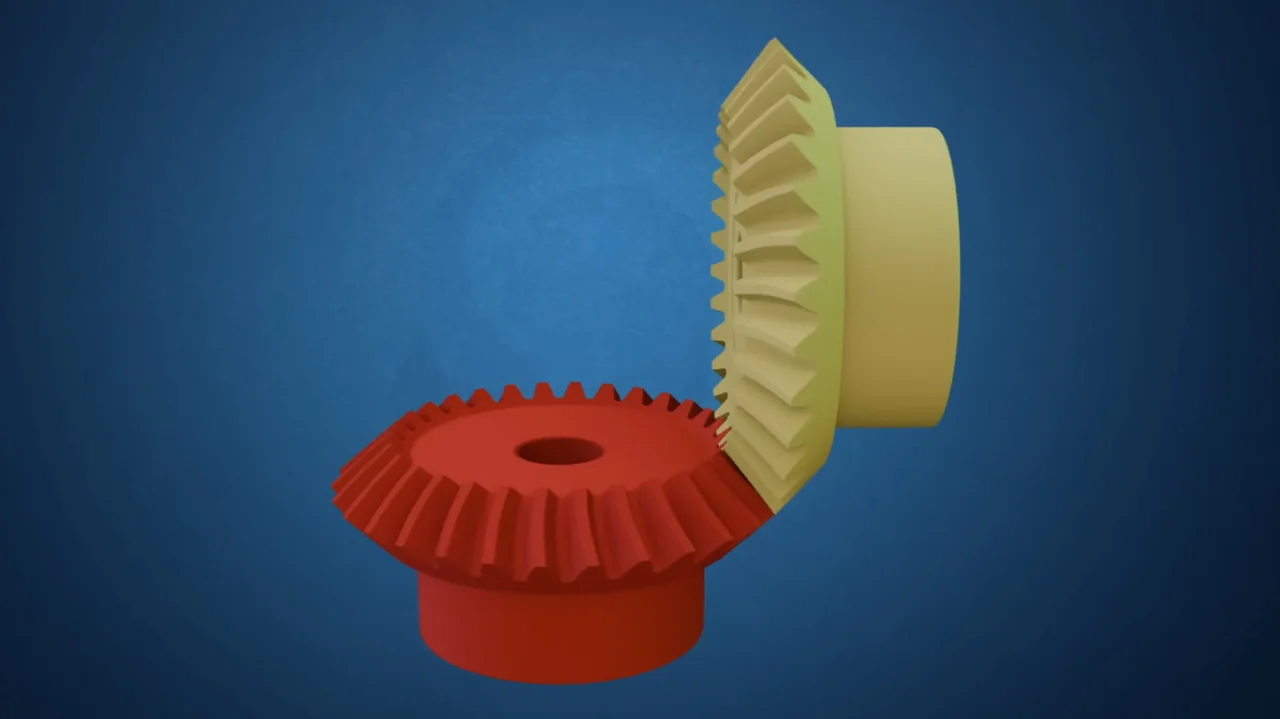
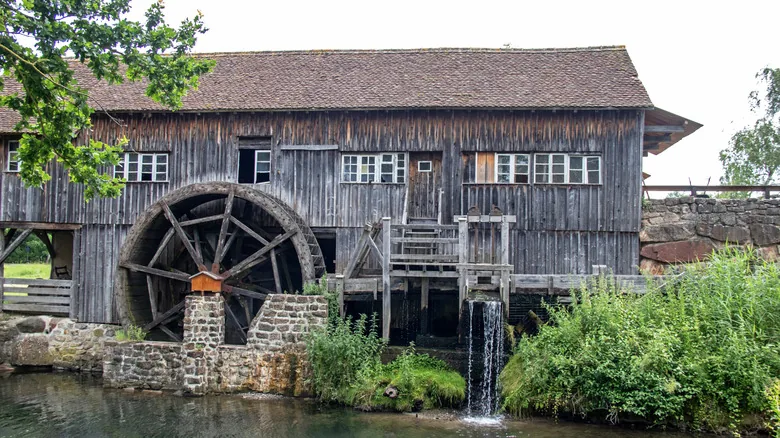
The concept of harnessing rotational power to send it to wheels at a 90-degree angle has been around for centuries. The ancient Roman engineer Vitruvius is credited with developing this technology sometime during the first century B.C. His innovative design used a vertical face wheel with cylindrical teeth and a cylindrical lantern pinion to redirect the horizontal axis of a water wheel to a vertical one, turning a grain wheel. This seemingly simple invention marked the beginning of a new mechanical age, paving the way for engineers to power various machines with subsequent gearing.
The use of right-angle gear drives has had a profound impact on the automotive industry. By sending rotational power from the engine to the wheels at a 90-degree angle, cars can navigate corners with ease, making them more agile and responsive. This technology has been refined over the centuries, with engineers continually improving upon Vitruvius' design to create more efficient and effective gear drives.
Early gears were made of wood, but as manufacturing processes improved, cast iron became the common material for gear drives. However, cast iron gears had limitations, such as cracking due to constant use. To address this issue, engineers developed cast iron wheels with mortises filled by wooden teeth. The introduction of helical gears further improved the design, allowing for full cast iron gears and reducing noise, vibration, and harshness compared to straight-cut gears.
The development of modern differentials has taken 90-degree torque to the next level. Unlike their predecessors, modern differentials can control the distribution of power to both wheels on an axle, improving traction and stability. This technology has enabled cars to accelerate out of corners with greater ease, making them more enjoyable to drive.
Despite its widespread use, 90-degree torque is often overlooked in discussions about car engineering. However, it's a testament to human ingenuity that this fundamental concept has been refined over centuries to become an essential component of modern vehicles.
The evolution of 90-degree torque has also had a significant impact on the automotive industry's focus on performance and handling. By enabling cars to navigate corners with ease, manufacturers have been able to create more agile and responsive vehicles that deliver exceptional driving experiences.

In addition to its practical applications, 90-degree torque has also played a role in shaping the development of various car technologies. For example, the use of differentials has enabled the creation of advanced all-wheel-drive systems that can distribute power to both wheels on an axle.
The widespread adoption of 90-degree torque has had far-reaching consequences for the automotive industry. As cars become increasingly sophisticated and capable, engineers must continually push the boundaries of what is possible with this fundamental technology.
As we look to the future, it's clear that 90-degree torque will remain a crucial component of car engineering. With ongoing advancements in materials science and manufacturing processes, manufacturers are expected to continue refining this technology to create even more efficient and effective gear drives.
The development of 90-degree torque has revolutionized the automotive industry, enabling cars to navigate corners with ease.


