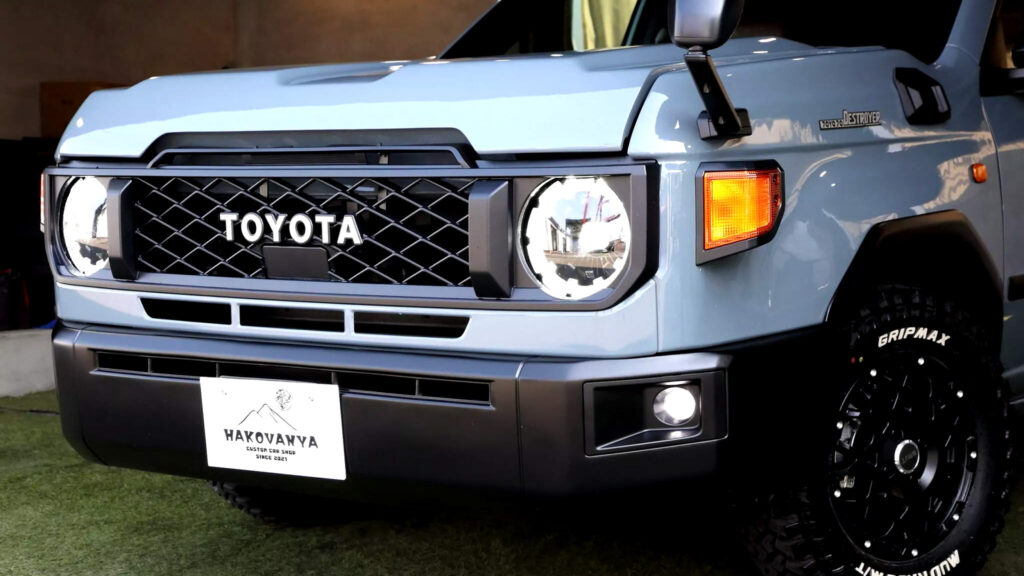
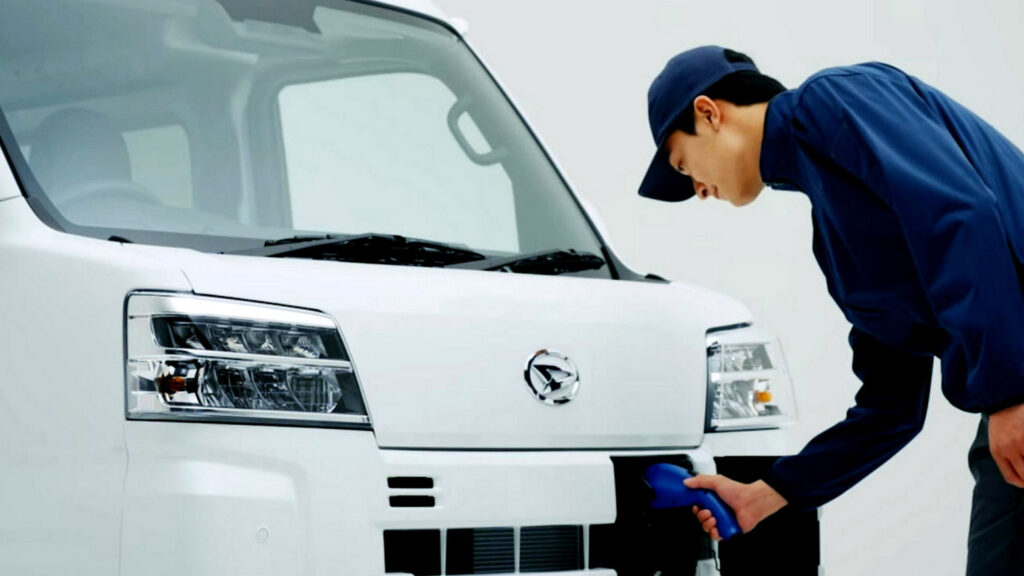
Japan's long-awaited electric kei vans from Toyota, Daihatsu, and Suzuki have officially made the leap from concept to production. The three brands have confirmed the market launch of their collaborative battery-powered van lineup: the Toyota Pixis Van BEV, the Daihatsu e-Hijet Cargo, and the Daihatsu e-Atrai RS. Suzuki's equivalent, the nearly identical e-Every, is also on the way.
These production models arrive almost three years after the original trio debuted in prototype form back in 2023. The Toyota Pixis Van BEV starts at ¥3,146,000 (about $20,300 at current exchange rates) in Japan, nearly three times the cost of its entry-level gasoline counterpart, which begins at ¥1,100,000 (roughly $7,100). The Daihatsu e-Atrai RS comes in higher still, starting from ¥3,465,000 ($22,400).
Engineers have applied BEV-specific structural reinforcements to the chassis, promising better handling thanks to the lower center of gravity, and improved ride comfort thanks to the new trailing-link rigid-axle rear suspension and the optimised spring rates. The kei vans are identical under the skin, riding on the Daihatsu New Global Architecture (DNGA) platform with a new powertrain developed jointly by Suzuki, Daihatsu, and Toyota. A single rear-mounted electric motor produces 63 hp (47 kW / 64 PS) and 126 Nm (93 lb-ft) of torque, matching the output of the turbocharged 660cc three-cylinder gasoline engine, with an added 35 Nm (26 lb-ft) of torque.

6 kWh, allowing a WLTC range of 160 miles (257 km) between charges. This is 36 miles more than the targeted figure during development, and should be enough for urban deliveries. A full charge is completed in around 6 hours from a standard 6 kW outlet, while a 50 kW fast charger will take it to 80% in 50 minutes.
The EVs are compatible with Vehicle-to-Home (V2H) technology. Suzuki's e-Every is nearly identical to the other three models, and production will take place at Daihatsu's plant in Nakatsu, Japan. Toyota is targeting 50 sales per month, while Daihatsu expects to move around 300 units monthly.
The electric kei vans from Toyota, Daihatsu, and Suzuki offer a practical solution for urban deliveries, with improved efficiency and reduced emissions. However, the higher cost may be a barrier for some customers.