


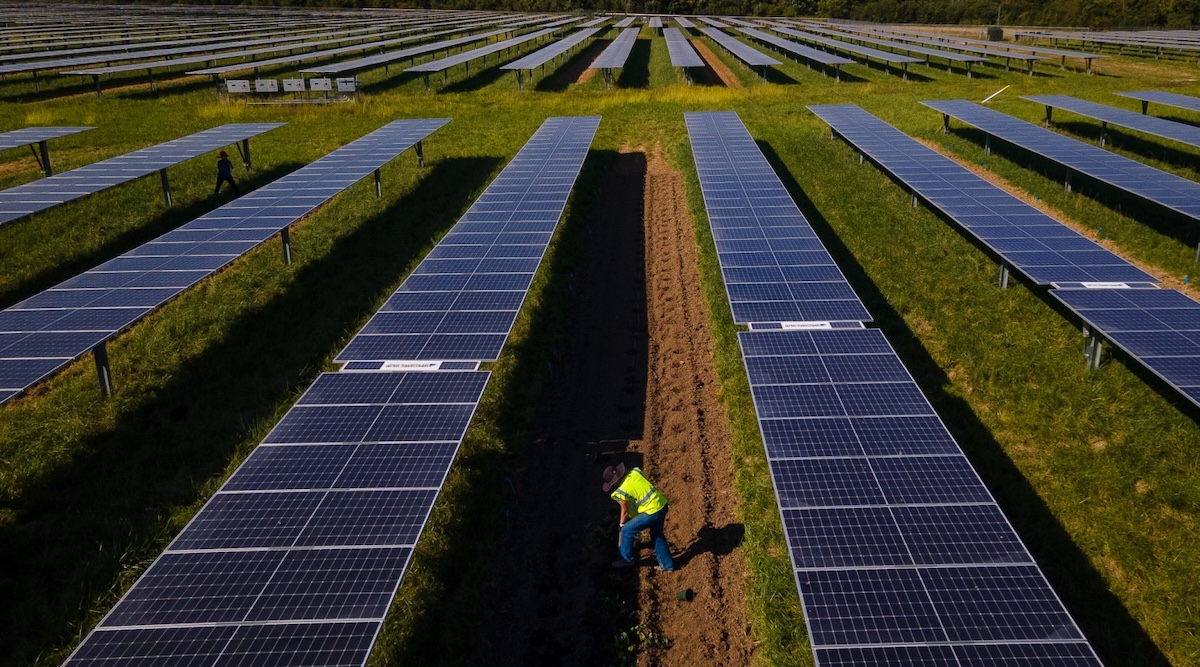
Agrivoltaics, the practice of growing crops and generating solar energy on the same land, has been gaining attention in recent years for its potential to improve soil health and conserve water. However, researchers have now turned their focus to another benefit: wind protection. A new study published in the journal Agricultural and Forest Meteorology explores the impact of agrivoltaics on wind damage to US farms, revealing a significant opportunity for farmers to reduce erosion costs and protect their crops.
The study, conducted by researchers affiliated with the Sibley School of Mechanical and Aerospace Engineering at Cornell University, found that wind can cause substantial damage to soils and crops depending on various factors such as wind speed, duration, crop species, growth stage, soil conditions, and cover. In fact, the estimated costs of wind erosion in the agricultural sector are estimated to be over $9 billion annually.
Farmers have long recognized the benefits of using windbreaks, such as densely spaced trees or shrubs, to reduce soil loss and increase crop yields. However, many windbreaks on US farms are not well-designed or optimized for soil protection, with barriers preventing adoption due to land-use tradeoffs and competition for resources between crops and windbreaks.

The question remains whether solar panels in an agrivoltaic array can provide the same or better wind protection compared to natural windbreaks. The researchers acknowledge that there is a lack of understanding on this topic, particularly when it comes to soil conditions under tilted panels.
Previous studies have focused on the impact of solar PV systems on soil, radiation, and temperature, but airflow through a solar facility has largely been overlooked. Computational fluid dynamics models have provided some insights into the wind protection benefits of vertical solar panels, but more research is needed to fully understand their potential.
The study's findings highlight the need for further research into the impact of agrivoltaics on wind damage and soil conditions. By exploring the benefits of solar panels in agrivoltaic arrays, farmers may be able to reduce erosion costs and protect their crops from wind damage.
As the agricultural sector continues to grapple with the challenges of climate change, innovative solutions like agrivoltaics are becoming increasingly important. By harnessing the power of solar energy while also providing wind protection, farmers can improve soil health, conserve water, and increase crop yields.
The potential benefits of agrivoltaics extend beyond just wind protection, however. The practice has been shown to improve soil fertility, reduce greenhouse gas emissions, and provide new revenue opportunities for farmers.
Ultimately, the success of agrivoltaics will depend on further research into its impact on wind damage and soil conditions. By addressing these knowledge gaps, we can unlock the full potential of this innovative farming practice and create a more sustainable food system for the future.