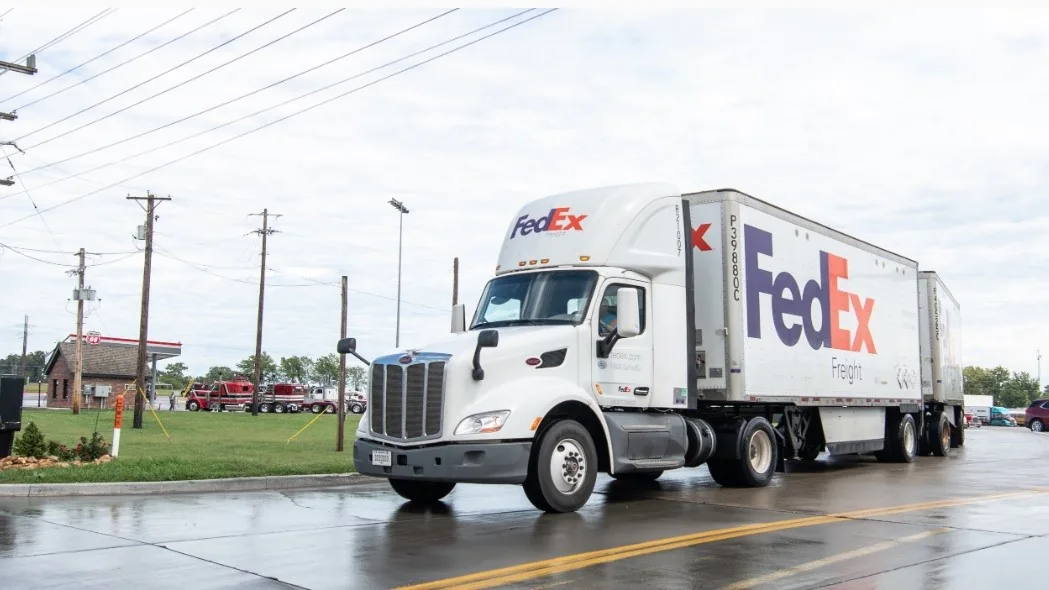
The separation of FedEx Freight from its parent company, FedEx Corp., marks a significant shift for the nation's largest less-than-truckload carrier. By focusing on standalone operations, FedEx Freight aims to approach the market with a narrowed commercial focus and unlock shareholder value for both entities. This move is expected to have a profound impact on the logistics industry as a whole, forcing carriers to re-evaluate their strategies and priorities.
The investor day in New York City provided a framework for FedEx Freight's operations ahead of its June 1 spinoff. The company outlined 'medium-term' financial expectations, forecasting compound annual growth rates of 4% to 6% for revenue and 10% to 12% for adjusted operating income. These projections imply high-20% incremental margins at the midpoints, using the expected 2026 fiscal year baseline of $8.7 billion in revenue and $1.1 billion in adjusted operating income.
The growth in revenue is anticipated to come from a combination of yield and volume increases. Anticipated revenue increases, weighted toward higher yields, along with cost reductions, are expected to generate 300 basis points of adjusted operating margin improvement. This would move the company's operating margin from roughly 12% currently to 15% over the medium term.

However, there is a near-term margin headwind from spin-related costs and fees associated with unwinding existing service agreements. Management has signaled that this will result in a 50-bp margin headwind, which will need to be addressed through cost-cutting measures or revenue growth.
The long-term goal for FedEx Freight is to generate 50 cents in operating income for each $1 of gross profit. This ambitious target suggests a focus on operational efficiency and cost reduction, as well as a commitment to driving revenue growth.
FedEx Freight has made significant progress in building its dedicated LTL sales team, which now includes over 500 representatives. The company is targeting small- and midsize shipper accounts, which typically produce higher margins, and is also focusing on the healthcare, grocery, and energy (data centers) verticals.
The company is modernizing contracts and pricing models to reflect a more LTL-specific operation. It has unwound 99% of its bundled-pricing agreements, which will allow it to focus on providing tailored services to its customers.
John Smith, incoming president and CEO, stated that FedEx Freight is 'moving forward from a position of strength and a renewed focus and flexibility to build on our competitive advantages, accelerate our growth trajectory, and unlock our full potential.' This sentiment suggests a commitment to innovation and customer-centricity.
The company outlined various optimization and technology initiatives aimed at improving operational efficiency and driving revenue growth. These efforts will be crucial in helping FedEx Freight achieve its ambitious financial targets and establish itself as a leader in the LTL carrier market.