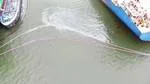
The Port of Antwerp, a major hub for shipping in Europe, has been affected by an oil spill that has spread into the river Scheldt. The incident occurred during a bunkering operation at the Deurganckdock, one of the port's docks. As a result, shipping traffic around the port has been partially halted due to concerns over environmental safety.
The partial halt on shipping traffic is a significant disruption to the normal flow of cargo and passengers through the port. With 60 to 80 ships typically handling business daily, any delay can have far-reaching consequences for the global economy and trade. The impact of this incident will likely be felt across various industries reliant on the Port of Antwerp.
The source of the spill has since been stopped and contained, according to the port's statement. However, pollution from the oil spill has spread into the Scheldt river, raising concerns over the potential environmental damage. Efforts are underway to mitigate the effects of the spill and restore normal operations as soon as possible.
The Port of Antwerp is a vital component of Europe's shipping infrastructure, with cargo tonnage surpassing that of Rotterdam, the largest port in the region. The port's strategic location on the North Sea makes it an essential hub for international trade. Any disruption to its operations can have significant economic implications.
A spokesperson for the Port of Antwerp-Bruges could not provide immediate details on how long shipping traffic would remain halted or how many ships would be affected by the incident. The port's priority is ensuring the safety of its employees, cargo, and the environment. Any decision regarding the resumption of normal operations will be made in consultation with relevant authorities.
The oil spill at the Port of Antwerp serves as a reminder of the risks associated with maritime transportation and the importance of implementing robust safety measures to prevent such incidents. The incident highlights the need for ongoing vigilance and cooperation between shipping companies, regulatory bodies, and environmental agencies.
As the situation unfolds, it is essential to monitor the progress made in containing the spill and restoring normal operations at the port. The impact of this incident on the global economy and trade will be closely watched by s and policymakers alike.
In the meantime, efforts are focused on mitigating the effects of the oil spill and preventing further environmental damage. The Port of Antwerp is working closely with relevant authorities to ensure that its operations are carried out in an environmentally responsible manner.
The incident underscores the importance of prioritizing environmental protection and safety in the shipping industry. As the world's economies continue to rely on international trade, it is crucial that measures are taken to prevent such incidents from occurring in the future.