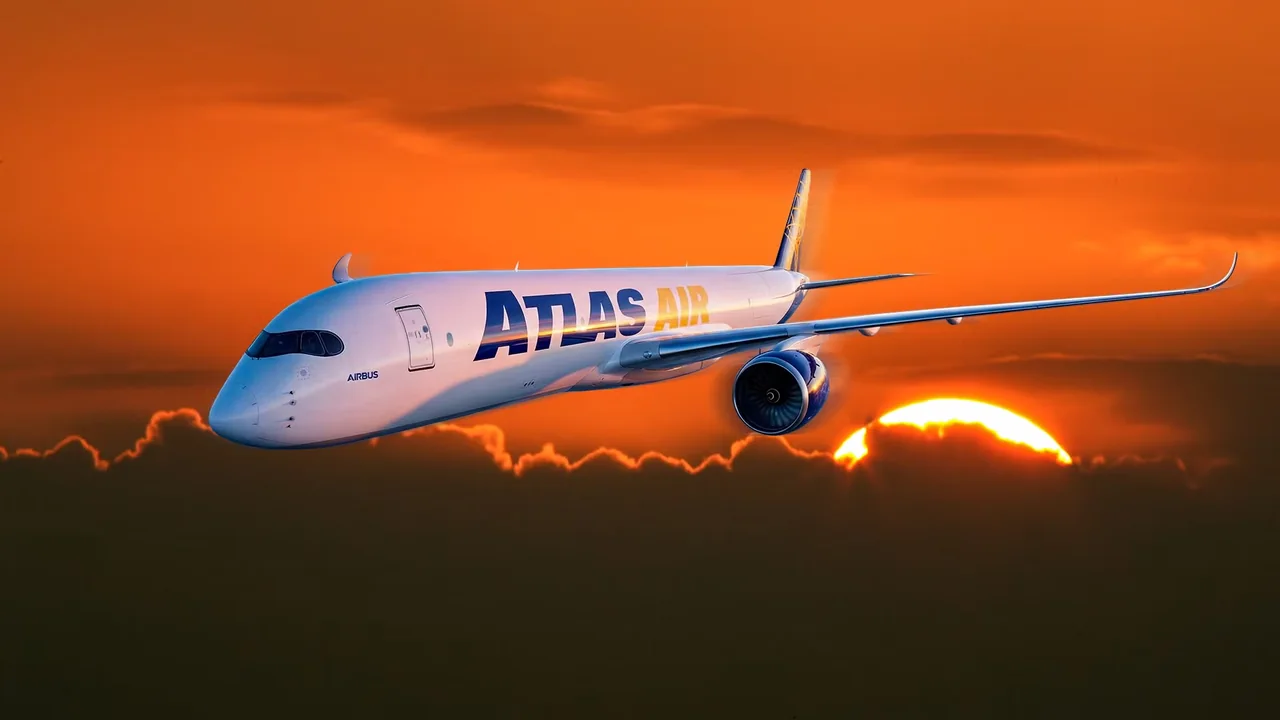
Atlas Air Worldwide, one of the world's largest freighter operators, has made a significant decision to break its long-standing relationship with Boeing. The airline has opted to switch from an all-Boeing fleet to include Airbus aircraft, citing delayed deliveries and production issues as key factors in its decision. This move marks a pivotal shift in the cargo industry, where timing, efficiency, and regulatory compliance are now paramount over brand loyalty.
The airline's reliance on Boeing was once a cornerstone of its operations, but persistent program delays have made it difficult to maintain its traditional fleet structure. The delayed delivery of the Boeing 777-8F, which is now expected to enter service around 2028, has created uncertainty for Atlas Air and forced the company to reevaluate its long-term plans.
As a result, Atlas Air has placed firm orders for 20 Airbus A350Fs, with deliveries scheduled from 2029 to 2034. This move will enable the airline to replace aging Boeing freighters and maintain its global capacity, while also addressing the growing pressure of emissions rules and regulatory compliance.

The decision highlights the importance of efficiency gains in cargo operations, as airlines seek to minimize their environmental impact while maintaining their competitiveness. The Airbus A350F is well-suited to meet these demands, offering a more fuel-efficient alternative to traditional Boeing freighters.
Furthermore, Atlas Air's move towards diversification signals a broader shift in the cargo market, where suppliers are no longer seen as a fixed point of loyalty. Instead, airlines are now seeking partners who can offer reliable and efficient solutions that align with their long-term growth strategies.
The impact of this decision will be felt beyond Atlas Air, as it sets a precedent for other cargo operators to reevaluate their relationships with traditional suppliers. As the industry continues to evolve, it is likely that we will see more airlines adopting diversified fleet strategies in response to changing market demands.

In terms of specific challenges, Atlas Air faces a significant transition period as it phases out its aging Boeing 747 freighters. The aircraft's high maintenance costs and reduced efficiency make them increasingly difficult to justify in today's operating environment.
The airline must now find ways to bridge the gap between old and new capacity, balancing fleet renewal with the need to maintain its global scale. This challenge will require careful planning and coordination, as Atlas Air seeks to ensure a smooth transition to its new Airbus A350F fleet.
As the cargo industry continues to evolve, it is likely that we will see more airlines adopting similar strategies in response to changing market demands. The shift towards diversification highlights the importance of reliability and efficiency in cargo operations, and sets a precedent for suppliers to adapt to these evolving needs.

The shift towards a more diversified fleet strategy highlights the importance of reliability and efficiency in cargo operations.