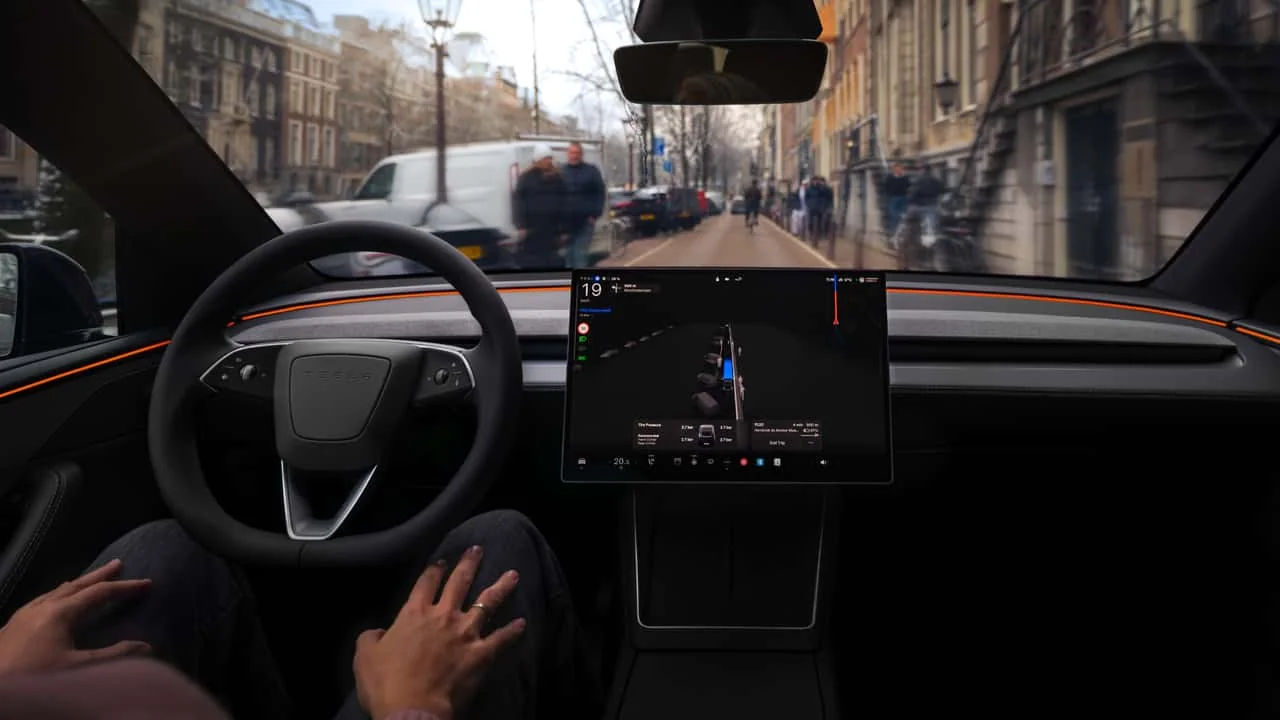
Tesla's Full Self-Driving (FSD) system has finally received approval in the Netherlands, a move that is being hailed as a major breakthrough for the electric vehicle manufacturer. The approval, which was granted by the Dutch government, allows Tesla to begin testing and deploying its FSD system in the European market. This milestone is seen as a significant step forward for Tesla's ambitious plans to revolutionize the automotive industry with autonomous vehicles.
The approval of Tesla's FSD system is also being viewed as a major victory for the company, which has been working tirelessly to perfect its autonomous driving technology. The Dutch government's decision to grant approval underscores the growing recognition that autonomous vehicles are an essential part of the future of transportation. With this milestone achieved, Tesla can now focus on expanding its FSD system beyond the Netherlands and into other European markets.
However, while the approval in the Netherlands is a significant achievement, it also highlights the need for more comprehensive regulatory frameworks to support widespread adoption of autonomous vehicles. The fact that Tesla's FSD system has only received approval in one market so far underscores the complexity and challenges of regulating autonomous vehicles across different jurisdictions. As such, it remains to be seen whether Tesla can replicate this success in other European markets.
The approval of Tesla's FSD system also raises important questions about the future of transportation in Europe. With the rise of autonomous vehicles, there is a growing need for more efficient and sustainable transportation systems that can reduce congestion and emissions. Tesla's FSD system has the potential to play a major role in achieving these goals.
Furthermore, the approval of Tesla's FSD system highlights the importance of collaboration between regulators, industry leaders, and technology companies. The Dutch government's decision to grant approval underscores the need for more effective communication and cooperation between stakeholders to ensure that autonomous vehicles are developed and deployed in a safe and responsible manner.
In addition, the approval of Tesla's FSD system also raises important questions about the role of human oversight in autonomous vehicle systems. As autonomous vehicles become increasingly prevalent on our roads, there is a growing need for more effective safety protocols to prevent accidents and ensure public trust. Tesla's FSD system has been designed with multiple layers of safety and redundancy to mitigate these risks.
The approval of Tesla's FSD system marks an important step forward in the development of autonomous vehicles, but it also highlights the need for continued innovation and investment in this area. As the technology continues to evolve, there is a growing need for more effective regulatory frameworks to support its widespread adoption.
In conclusion, the approval of Tesla's FSD system in the Netherlands marks a significant milestone for the company, but it also underscores the complexity and challenges of regulating autonomous vehicles across different jurisdictions. As such, it remains to be seen whether Tesla can replicate this success in other European markets and achieve its ambitious plans to revolutionize the automotive industry with autonomous vehicles.
Ultimately, the approval of Tesla's FSD system highlights the importance of continued investment in research and development, as well as effective collaboration between regulators, industry leaders, and technology companies. By working together, we can create a safer and more sustainable transportation system for all.
The approval of Tesla's Full Self-Driving (FSD) system marks a significant milestone for the company, but it also highlights the need for more comprehensive regulatory frameworks to support widespread adoption of autonomous vehicles.