
Ukraine has emerged as a global hub for military drone technologies, driven by the need for innovative solutions in the face of conflict. The country's expertise in battery-electric and gasoline-powered UAVs has now expanded to include hydrogen fuel cells, which offer several advantages over traditional power sources. By leveraging green hydrogen, Ukrainian innovators can create secure, flexible, and localized supply chains that are less vulnerable to global market fluctuations.
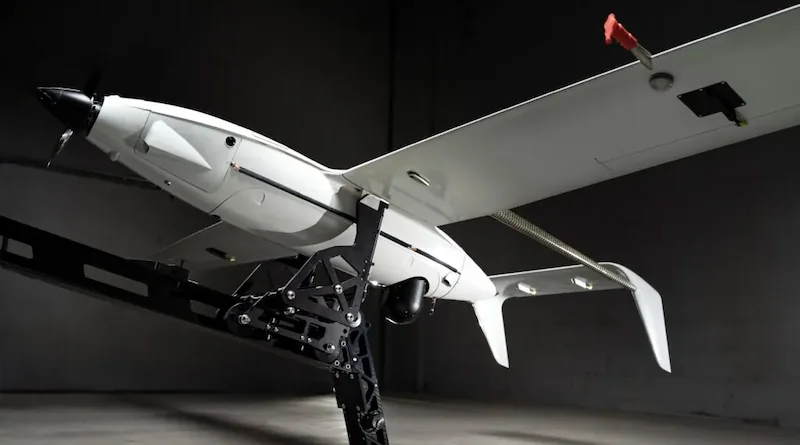
Skyeton is a Ukrainian drone firm making significant strides in the development of zero-emission military drones. Its gasoline-powered Raybird reconnaissance drone boasts an impressive 28-hour flight duration, but internal combustion engines have limitations when it comes to noise and heat signatures. The company's persistence with fuel cells despite having internal combustion engines in its arsenal suggests a commitment to exploring alternative power sources.
The use of hydrogen fuel cells reduces both the noise and heat signature of UAVs, allowing for more efficient operation at higher altitudes and longer durations compared to batteries. This is particularly advantageous for reconnaissance missions that require extended periods of surveillance.
In January, Skyeton released details about its work on a full-scale fuel cell reconnaissance UAV, which began flying combat missions with a duration topping 10 hours. The company's R&D efforts have focused on resolving several key challenges, including climate resilience, hydrogen permeability, and infrastructure logistics.
Skyeton's engineers have made significant strides in addressing these issues, ensuring the hydrogen-hybrid power plant can operate effectively in various climates. The company has implemented solutions to improve connections, pressure reduction, and ergonomics for the operator, making the UAV more reliable and efficient.
The hybrid Raybird (ACS-3) is designed as a self-sufficient solution, with two scenarios for logistics: pre-filled tanks that can be swapped like cartridges or a compact mobile unit that produces hydrogen on-site as needed. This modular approach enables Skyeton to provide a flexible and adaptable solution for military operations.
Green hydrogen, which is produced through electrolysis using renewable electricity, offers an attractive alternative to conventional hydrogen sourced from natural gas or coal. While currently more expensive, the renewable energy angle provides water electrolysis with the advantage of remote, self-sustaining operation independent of global fuel market fluctuations.
The development of green hydrogen technology has significant implications for the military drone industry, enabling the creation of secure and flexible supply chains that can operate independently of traditional fuel sources. As Skyeton continues to push the boundaries of zero-emission drone technology, its innovations are likely to have a lasting impact on the industry.
As the world shifts towards more sustainable and environmentally friendly solutions, Ukraine's leadership in military drone tech with zero-emission fuel cells is poised to make a significant difference. The country's commitment to innovation and sustainability is set to shape the future of the military drone industry and beyond.