
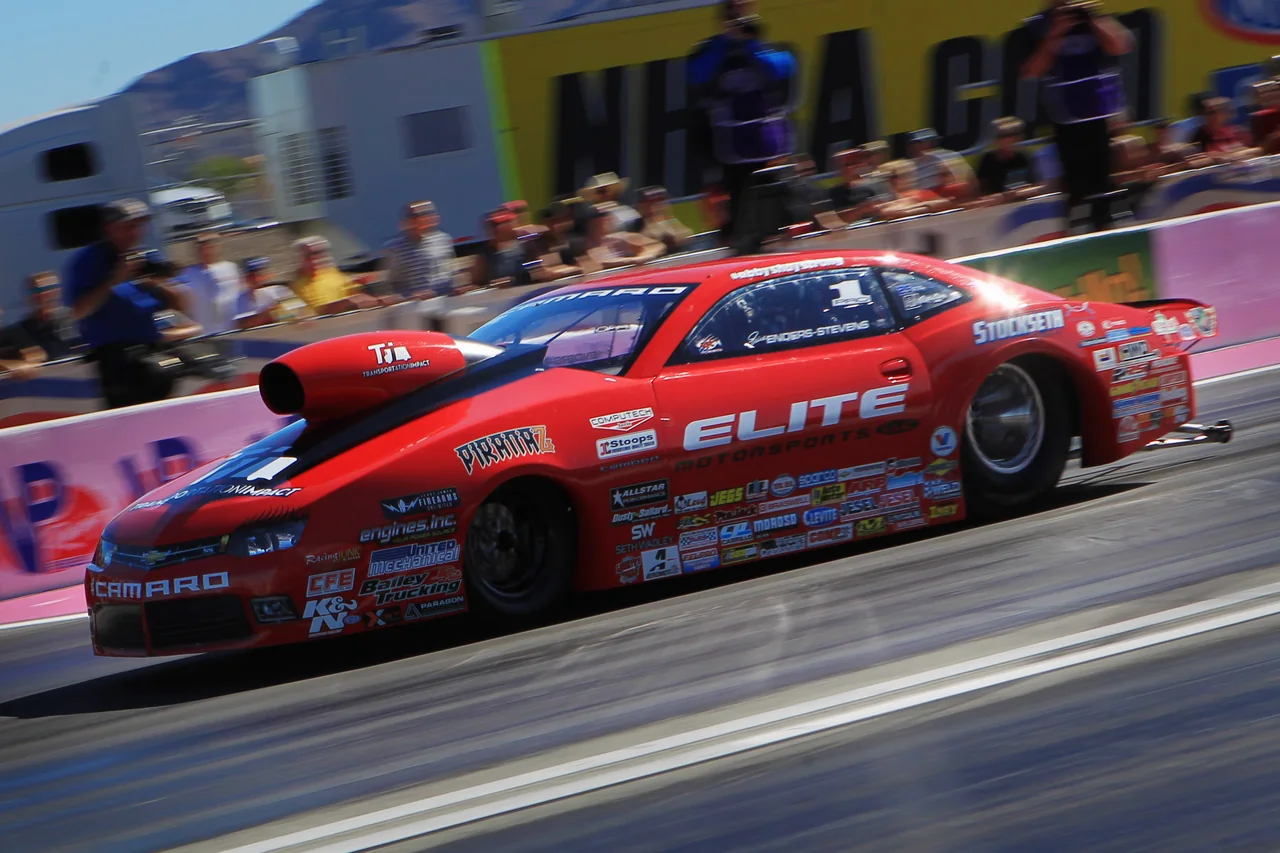
The National Hot Rod Association's (NHRA) decision to revert back to hood scoops in the Pro Stock class has sent shockwaves throughout the racing community. A decade ago, the NHRA made the switch to Electronic Fuel Injection (EFI), but now they are bringing back a more traditional approach. The change is set to take effect in 2027, and it will see the single forward-facing throttle body replaced with two top-mounted four-barrel-style throttle bodies.
The move has drawn mixed reactions from drivers and teams, with some expressing concerns about increased costs and others seeing it as an opportunity for parity and lower expenses. The new rule change is expected to have a significant impact on the sport, particularly in terms of engine performance and overall competitiveness.
Eric Latino, principal of KB Titan Racing and Pro Stock driver, has been vocal about his opposition to the change. He believes that the move will not result in the promised parity and lower costs, but rather will only serve to widen the performance gap between top teams and smaller outfits.

Latino argues that his team's work ethic and commitment to excellence are what set them apart from their competitors, and he is skeptical that other teams can replicate their success with the new rules. He warns that the sanctioning body should listen to programs like KB Titan Racing if they want to see significant gains in performance.
The change has also sparked debate about the role of technology in the sport. Latino notes that his team's use of CNC machines and advanced machine shop equipment has given them a significant advantage, and he believes that other teams will struggle to keep up with the new rules.
Matt Latino, Eric's son and teammate, shares his father's skepticism about the impact of the rule change on costs and competitiveness. He notes that while some smaller teams may be able to compete more closely with top outfits, it is unlikely that they will be able to bridge the gap entirely.

The Latinos' comments highlight the complex dynamics at play in the NHRA Pro Stock class. As the sport continues to evolve, teams must navigate a delicate balance between innovation and cost-effectiveness. The new rules are likely to have far-reaching consequences for drivers, teams, and the sport as a whole.
Despite some concerns about increased costs, many teams see the rule change as an opportunity to level the playing field and increase competitiveness. However, it remains to be seen whether this will ultimately lead to greater parity and lower expenses in the long run.
As the NHRA Pro Stock class prepares for its new era under the hood scoops, drivers and teams are bracing themselves for a potentially bumpy ride. With increased costs and uncertainty about performance gains on the horizon, it is clear that the next few years will be crucial in determining the future of this iconic racing series.