
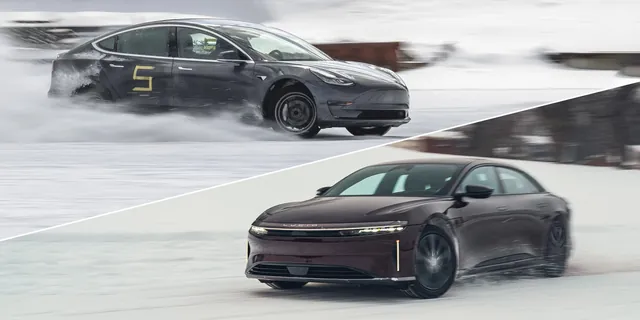
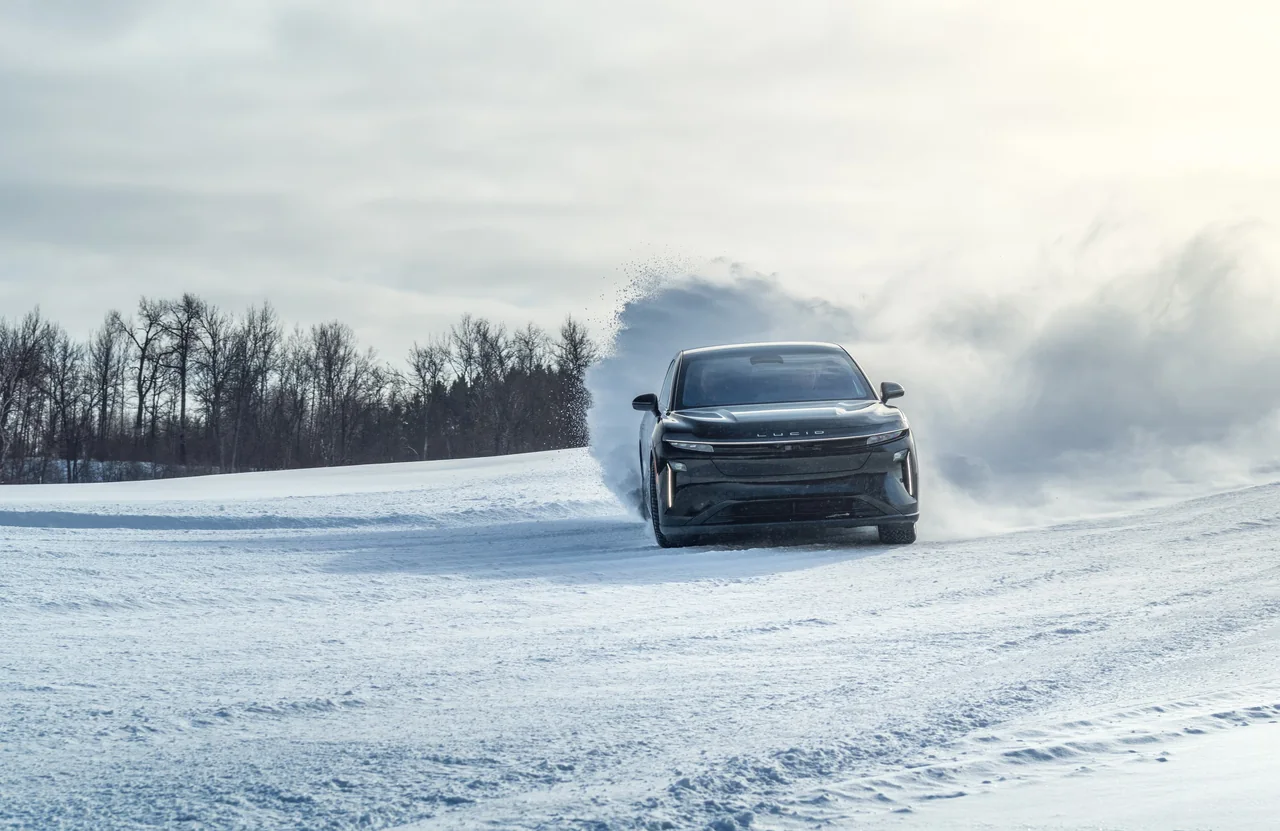
When it comes to driving in freezing temperatures on ice and snow, electric vehicles (EVs) might not be the first choice that comes to mind. However, their fast-acting motors can react and adjust to variable traction much quicker than internal-combustion engines or stability-control systems. To better understand the benefits of EVs in extreme winter conditions, Lucid invited us to join a group of its vehicle dynamics and controls engineers at its winter testing site in Baudette, Minnesota.
The site, known as TRC Minnesota, is a sprawling winter proving ground used by various automakers to test vehicles on 20 different snow and ice courses. Winter temperatures regularly dip deep into the negatives, with temperatures reaching -15°F (-26°C) during our visit. We spent time with Lucid's latest system in its Gravity SUV, which features an integrated motor-control and traction/stability-control system that reacts quickly to changes in grip.
The system can adjust the motors 1000 times per second, making it a key factor in the vehicle's responsiveness. We also had the opportunity to test the Air sedan and Sapphire models, which showcased the benefits of EVs in snowy conditions. The Camber Course at TRC Minnesota proved to be a highlight, with the Air Sapphire riding on Michelin Pilot Alpin PA5 winter tires proving nothing short of magic.

The two rear motors in the Sapphire allowed for incredible vehicle control, making it feel natural and fun to drive in slippery conditions. We also tested the Gravity SUV, which didn't have the same level of authority as the Air Sapphire but still used the brakes to direct torque side to side. In comparison, the Tesla Model Y and Porsche Macan 4S struggled on their factory all-season tires, highlighting the benefits of EVs in snowy conditions.
However, we did notice that regenerative braking can initiate too much oversteer on ice in rear-motor EVs, an issue that can be mitigated by turning off regen braking in slippery conditions.
While EVs have traditionally been associated with reduced traction and control in snowy conditions, modern EVs like Lucid's Gravity SUV are showing that this is no longer the case. The key to their success lies in their fast-acting motors and integrated systems, which allow for quick adjustments to variable traction. As the automotive industry continues to evolve, we can expect to see more EVs that excel in snowy conditions.