
The Canadian government's revived proposal for a high-speed rail network has garnered significant attention, with a defined station set, development partner, and early capital estimate of C$60 billion to C$90 billion. However, the project remains in its infancy, with an unfinished alignment, unresolved city approaches, and a construction start date slated for 2029-2030. This timeline is notable, as it marks a departure from the country's previous attempts at faster rail, which have been met with varying degrees of success.
The Alto proposal, currently the most concrete Canadian version in years, aims to connect Toronto and Québec City via a high-speed line. While this project has garnered significant support, it is essential to consider the lessons learned from Canada's past attempts at high-speed rail. The country has revisited variants of faster rail in the Québec City–Toronto corridor multiple times, with varying degrees of success.
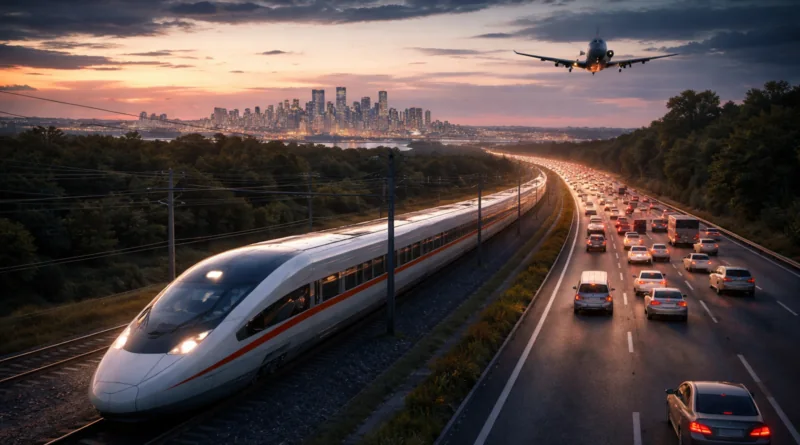
One of the primary arguments in favor of the Alto proposal is its potential to improve the nation's intercity passenger rail service. Currently, VIA Rail's on-time performance has been poor, and the basic reason for this is well understood: passenger trains operate largely on infrastructure they do not control, subject to freight interference and network congestion. A dedicated electrified passenger railway would be cleaner, more reliable, and more useful than the system Canada has today.
The proposed high-speed rail line would contain a substantial portion of Canada's population, politically important urban centers, and national economic activity. This makes it an attractive option for improving the nation's transportation infrastructure. However, there are also concerns about corridor density, which could impact the project's feasibility.
One of the most significant challenges facing the Alto proposal is its alignment. While a defined station set and development partner have been established, the alignment remains unfinished. Resolving this issue will be crucial to the project's success.
Another concern is the construction start date, which has been slated for 2029-2030. This timeline may seem ambitious, but it is essential to consider the complexities involved in building such a massive infrastructure project. The project's early capital estimate of C$60 billion to C$90 billion highlights the significant investment required.
The Alto proposal also addresses the need for improved reliability and cleaner transportation options. By dedicating passenger trains to their own infrastructure, the proposed high-speed rail line would be less susceptible to freight interference and network congestion.
Despite these challenges, there is a real public-interest case for the project. The Toronto–Ottawa–Montréal–Québec City corridor contains a large share of Canada's population, politically important urban centers, and national economic activity. Improving this infrastructure would have significant benefits for the nation's economy and citizens.
The Alto proposal marks a meaningful step up from the long Canadian tradition of discussing better rail while remaining trapped in freight-owned rights-of-way and incremental upgrades. By taking a more comprehensive approach to high-speed rail, Canada can create a modern transportation system that meets the needs of its growing population.
Ultimately, the success of the Alto proposal will depend on its ability to address these challenges and deliver a reliable, efficient, and clean transportation system for Canadians. With careful planning and execution, this project has the potential to transform Canada's transportation infrastructure and improve the lives of its citizens.
The proposed high-speed rail line between Toronto and Québec City faces challenges in its alignment, city approaches, and construction start date.